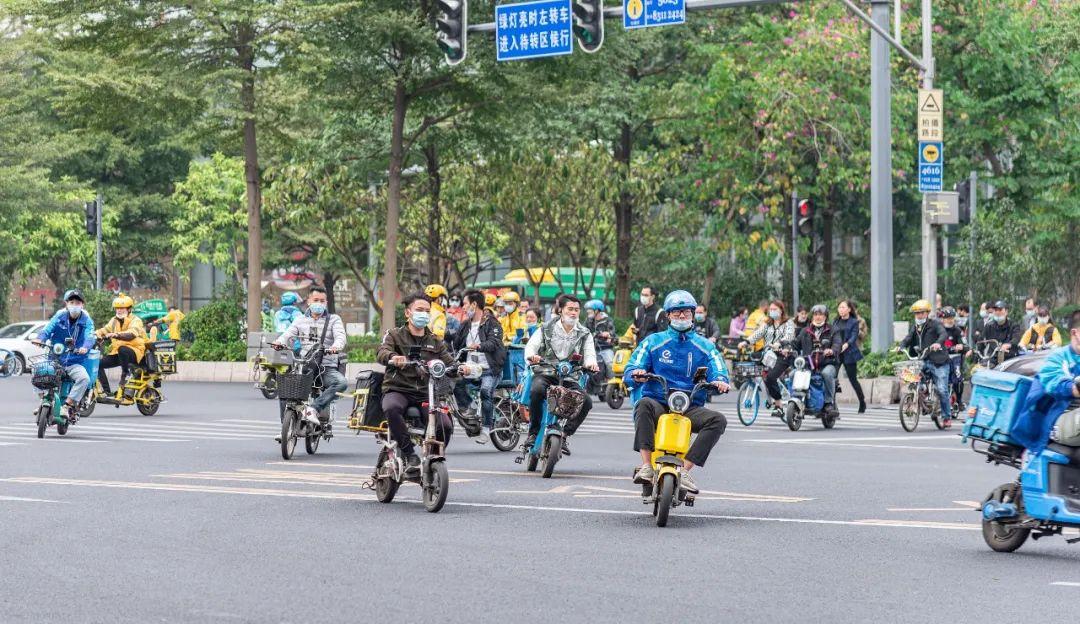
China's youth employmentchallenge is increasingly about more than whether young people can find work.It is also about how they enter the labor market, what kind of careers they canbuild, and whether their work provides a foundation for long-term security. Aseconomic restructuring, changing corporate practices and artificialintelligence reshape the organization of work, more young people are enteringemployment through platforms, short-term projects, freelancing and otherflexible arrangements. This shift, which can be described as the "gigification"of youth, may become an important variable in China's future socialtransformation.
The scale of flexibleemployment in China is substantial, although estimates vary according to howthe category is defined. The2025 China Blue-Collar Employment ResearchReportestimates that the broadly defined flexible workforce reached around280 million in 2025 and could rise to 320 million in 2026. (1) This broadcategory includes individual business owners, traditional casual workers andpeople working through digital platforms. It should not, however, be treated asa single, uniform group. The more important development is the growing role ofplatform-based and project-based work as an entry point into the labor marketfor younger people, including university graduates.
This trend is unfolding asthe supply of young workers remains high and conventional career-entry channelsface pressure. China is expected to have 12.7 million university graduates in2026. (2) At the same time, the surveyed unemployment rate among urbanresidents aged 16 to 24, excluding students, reached 18.9% in August 2026,while the rate for those aged 25 to 29 was 7.5%. (3) Against this backdrop,flexible employment offers some young people a way to earn an income withoutfirst securing a conventional full-time position.
Yet the shift is not simply amatter of young people choosing greater freedom. It also reflects changes inhow companies organize labor. Employers increasingly break down work that wasonce performed within a stable position into specific tasks that can beoutsourced, dispatched or allocated through platforms. Research by Zhang Dandanat Peking University's National School of Development has highlighted thegrowing use of dispatched labor in manufacturing, particularly in industrialclusters in the Yangtze River Delta and Pearl River Delta. (4) Flexibleemployment is also extending beyond basic manual work into technical,professional and digitally mediated roles.
The2024 Report on China'sNew Forms of Flexible Employment, jointly published by Jinan University'sInstitute of Industrial Economics and Zhaopin, illustrates this change. Amongjob seekers in online flexible-employment sectors such as media, e-commerce,knowledge services and livestreaming, people under 30 account for more than70%. Those with a bachelor's degree or above make up 56.2% of onlineflexible-employment job seekers, compared with 38.1% in location-based flexiblepositions. (5) These figures suggest that the gig economy is no longer simplyabsorbing surplus low-skilled labor. It is increasingly becoming a routethrough which educated young people enter the labor market.
Artificial intelligence mayaccelerate this process. Rather than replacing entire occupations in one step,AI can automate or reorganize individual tasks within existing jobs. Contentmoderation, data annotation, online customer service, digital production and AItraining are examples of work that can be divided into measurable tasks anddistributed through digital systems. The boundary between a job and acollection of tasks is therefore becoming less distinct. A worker mayincreasingly earn income by completing projects for multiple clients ratherthan by occupying one position within a single organization.
This transformation bringsopportunities, but also risks. Flexible work can offer autonomy and provideaccess to income when conventional jobs are scarce. For some professionals,including designers, programmers and consultants, project-based work can supportskill development and build a recognizable professional reputation. But wherework is repetitive, low-paid and offers little opportunity to acquiretransferable skills, flexibility can become a trap. Workers may earn money inthe short term without building the experience, credentials or career capitalneeded to improve their future earning capacity.
Income inequality withinplatform-based sectors makes this concern particularly clear. The2024 ChinaBlue-Collar Employment Survey Reportdescribes a highly uneven distributionof income in livestreaming: the top 0.25% of streamers reportedly receive morethan 90% of industry revenue, while 93% earn less than RMB 3,000 a month. (6)Ride-hailing also shows intense competition. The number of licensed driversincreased much faster than average monthly order volume between 2020 and 2024,adding pressure to workers' earnings. (7) The gig economy may therefore widenaccess to work while leaving many workers with unstable incomes and limited bargainingpower.
Social protection is anotherpart of the picture, but it is not the only issue. The2025 ChinaBlue-Collar Employment Research Reportindicates that participation inbasic medical insurance and occupational injury protection among flexibleworkers has improved. However, confidence in retirement planning andexpectations of career development remain much weaker. (8) This points to a broaderquestion: can flexible employment provide a future, rather than merely animmediate source of income?
Japan offers a useful, thoughnot directly comparable, reference. Non-regular employees accounted for 36.8%of Japan's employed population in 2024. (9) The category includes people whochoose flexible work as well as those who would prefer regular employment, soit should not be equated automatically with insecurity. Japan's declining birthrate also cannot be attributed to non-regular employment alone. Its totalfertility rate fell to 1.14 in 2025, amid a combination of economic, social anddemographic factors. (10) Nevertheless, the Japanese experience highlights whychanges in employment stability and career expectations deserve attention whenconsidering young people's decisions about housing, marriage and havingchildren.
In China, the implicationsextend beyond individual careers to population mobility and urban development.The country had 301.15 million migrant workers in 2025, and intra-provincialmovement accounted for a growing share of migration. (11) As more people workacross platforms, projects and multiple locations, the traditional link betweena stable employer and access to urban life becomes less reliable. A person mayhave an income and live in a city without having the long-term employmentrelationship that once helped connect work, social insurance, housing and otherpublic services.
This calls for a shift in theway cities think about employment and integration. The traditional "work-unitcity" organized many aspects of urban life around the employer. A "platformcity," by contrast, would need to connect people to work through platforms, toeveryday support through communities, and to public services through theirstatus as residents. China has begun exploring more portable forms ofprotection, including occupational injury insurance pilots for workers in newforms of employment. By the end of 2025, these pilots had expanded to 17provinces and covered 23.25 million people. (12) The challenge is to makesocial protection and public services follow workers as they change platforms,jobs and locations.
The gigification of youth istherefore not merely a new employment pattern. It signals a possible transitionfrom a labor market organized around positions to one increasingly organizedaround tasks, projects and capabilities. The key test is whether thistransition allows young people to accumulate skills, build sustainable careersand establish stable lives. For cities and policymakers, the task is to ensurethat flexible work does not mean fragile futures, and that people can remainsecure urban residents even without a traditional work unit.
References
(1)China New Employment Forms Research Center, Capital University of Economics andBusiness, and China Association for Employment Promotion.2025 ChinaBlue-Collar Employment Research Report. June 2026. The figures are reportedin a secondary overview by the Japan Institute for Labour Policy and Training.
(2)State Council Information Office of the People's Republic of China / Xinhua."China Expects 12.7M College Graduates in 2026." November 21, 2025.
(3)Reuters. "Chinese Youth Jobless Rate Hits One-Year High in August." September17, 2026.
(4)Zhang Dandan. "The Often-Overlooked Trend of Gigification in Manufacturing."Related research by the National School of Development, Peking University,2024.
(5)Institute of Industrial Economics, Jinan University, and Zhaopin.2024Report on China's New Forms of Flexible Employment. 2025.
(6)China New Employment Forms Research Center.2024 China Blue-CollarEmployment Survey Report. 2025.
(7)China New Employment Forms Research Center.Employment Resilience in UrbanMobility: The Employment Landscape and Occupational Performance of Ride-HailingDrivers. 2025.
(8)China New Employment Forms Research Center, Capital University of Economics andBusiness, and China Association for Employment Promotion.2025 ChinaBlue-Collar Employment Research Report. June 2026.
(9)Japan Ministry of Health, Labour and Welfare.Measures for Non-RegularEmployees, based on the 2024 Labour Force Survey.
(10)Japan Ministry of Health, Labour and Welfare.2025 Vital Statistics (FinalFigures). September 30, 2026.
(11)National Bureau of Statistics of China.2025 Migrant Workers MonitoringSurvey Report. April 30, 2026.
(12)State Council of the People's Republic of China.Report on FlexibleEmployment and the Protection of Workers in New Forms of Employment,submitted to the Standing Committee of the National People's Congress, December2025.
_____________
Dr. Liu Lidan is a researcher fellow at ANBOUND, an independent think tank.


