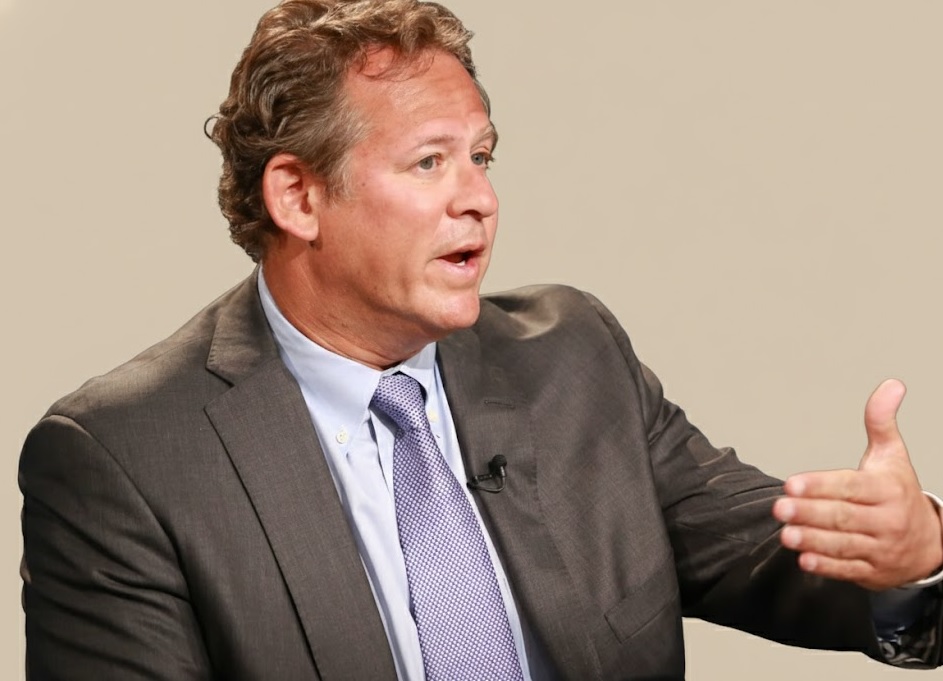
As tensions between U.S. President Donald Trump and Federal Reserve Chair Jerome Powell continue to escalate, markets have debated who will become the next Chair of the Fed. Rick Rieder, BlackRock’s Global Chief Investment Officer for Fixed Income, previously seen as a long-shot candidate, has emerged as a highly watched dark horse. According to Fox News, Rieder’s interview with Trump reportedly went “big positive”. On the prediction platform Polymarket, as of January 24, the probability of Rieder becoming Fed Chair had surged to 54%, far ahead of the second-place contender, Kevin Warsh, at 29%. At the beginning of the year, Rieder’s odds stood at just 4%. This shift is not merely a piece of personnel news. Rather, it reflects a deeper and structural change in the philosophy of U.S. financial market governance. Figures from the front lines of financial markets, the so-called “market-oriented” camp, are increasingly and systematically entering the core institutions of the American financial system.
Based on his resumé, Rieder differs markedly from previous Fed chairs. Unlike Ben Bernanke and Janet Yellen, who represent the archetypal academic central banker, or technocrats who have spent their careers embedded in the policy apparatus, Rieder was shaped almost entirely within the financial markets. He spent more than two decades at Lehman Brothers early in his career, overseeing proprietary trading, credit, and capital commitments. After the financial crisis, he joined BlackRock, where he has long managed one of the world’s largest fixed-income portfolios and has repeatedly been recognized as a star fund manager by the industry. This background means that his approach to macroeconomic issues is grounded not in theoretical modeling or institutional design, but in asset prices, liquidity conditions, and market reactions.
Notably, Rieder’s stance on monetary policy aligns closely with Trump’s. He has publicly argued that the Fed should cut interest rates to an “equilibrium level” of around 3%, contending that the damage inflicted by today’s high rates on the housing market, lower-income households, and fiscal sustainability now clearly outweighs their marginal benefit in restraining inflation. In his view, inflation running modestly above target is not necessarily something to fear; if it helps stabilize employment and debt dynamics, it can be an acceptable and pragmatic outcome. This more tolerant attitude toward deficits and inflation is plainly more appealing to political forces that prioritize growth, employment, and asset prices. Moreover, Rieder has emphasized easing debt burdens through economic growth, an approach that closely mirrors Trump’s own thinking. Seen in this light, it is hardly surprising that he has emerged as a favored candidate.
However, Rieder’s significance goes beyond whether he personally will take the helm of the Fed. More importantly, he embodies a broader trend, i.e., the collective rise of market-oriented figures within U.S. financial institutions. Treasury Secretary Scott Bessent and SEC Chair Paul Atkins in the current administration are emblematic of this shift.
Bessent himself comes from the investment industry, having spent many years in hedge funds and asset management, which explains his strong emphasis on the role of financial markets. Since taking office, he has called for deep reforms of the financial regulatory framework and advocated scrapping the dual capital requirement structure proposed in 2023, in order to ease unnecessary burdens on banks, especially small and mid-sized institutions. Fiscal wise, he has placed great weight on market feedback in managing the pace and maturity structure of U.S. Treasury issuance, stressing a gradual approach and the need to avoid disrupting trading. At the same time, he has explicitly proposed expanding structural demand for U.S. Treasuries through financial innovations such as stablecoins, effectively using these market instruments directly as tools for debt management. What these positions share is a common philosophy that rather than constraining markets, they seek to scale up and strengthen them through institutional adjustments, using more robust financial markets to address the concrete challenges facing the U.S.
The orientation of SEC Chair Atkins, who comes from a financial advisory background, is equally clear. He does not deny the importance of regulation, but stresses that it should provide markets with a clear and predictable framework, rather than create uncertainty through enforcement actions. In the area of crypto assets, he favors minimal but effective regulation, explicitly recognizing the legitimacy of decentralized finance and encouraging trading, custody, and innovation activities to return to the United States. His logic is not one of laissez-faire deregulation, but of reshaping the rules to bring innovative financial markets within the U.S. system and convert them into a source of competitive advantage. In this respect, his approach closely mirrors Bessent’s idea of using stablecoin markets to address demand for U.S. Treasuries.
This orientation stands in sharp contrast to that of the previous administration. Former Treasury Secretary Yellen’s main concerns consistently centered on financial system stability, risk control, and regulatory consistency. While she acknowledged the importance of markets, she placed even greater emphasis on constraints and discipline. Former SEC Chair Gary Gensler, by contrast, became known for aggressive regulation, using frequent enforcement actions to create a deterrent effect. This approach sparked controversy, particularly in digital assets, over what critics described as “regulation by enforcement”. As one lawyer put it, Gensler’s reign can be summed up as “fear”, where every startup, exchange, or asset management firm worried about being hit unexpectedly. In addition, Powell has made it clear that investors and lenders should take note that the Fed would no longer continue to “coddle” markets. By comparison, the current team is clearly more focused on market vitality, room for innovation, and the efficiency of capital formation.
Viewed against this backdrop, Rieder’s policy thinking no longer appears isolated. He has repeatedly stressed the need to respect markets and adopt a market-oriented approach. For example, in interviews he has argued that the last thing a central bank should do is trigger market volatility and that it should make every effort to avoid becoming the source of market disruption. He has also maintained that extreme monetary policies such as negative interest rates do more harm than good, and that once systemic stability is restored, policymakers should step back and allow the system to operate on its own. Some analysts have further suggested that, under Rieder’s leadership, the Fed might seek to “democratize” access to its liquidity facilities by allowing a broader range of financial institutions to participate in open market operations. This is a classic market-oriented perspective, i.e., respecting the market’s dominant role while ensuring that policy provides a backstop, thereby promoting overall expansion and prosperity across the financial system.
Thus, the emergence of Rieder as a dark-horse candidate for Fed chair points to a deeper shift, that the U.S. is systematically converting its financial market advantages into instruments of national competitiveness. A highly vibrant and liquid financial market can be used not only to ease the constraints of high debt and buttress the international standing of the dollar, but also as a powerful lever in geopolitical and financial competition. In fact, U.S. external economic policies, especially the tariffs, are rooted in the same logic, which is leveraging the country’s vast domestic consumer market as a bargaining chip to shape global industrial and capital flows. Regardless of whether Rieder ultimately takes the helm, the growing convergence in thinking across core financial institutions such as the Fed, the Treasury, and the SEC is becoming increasingly clear. Financial markets are no longer seen merely as objects to be regulated and restrained; they are increasingly becoming a central pillar of U.S. strategy.
Final analysis conclusion:
Amid intensifying tensions between Trump and Powell, BlackRock executive Rick Rieder’s emergence as a dark horse candidate for Federal Reserve chair highlights a clear shift in U.S. financial governance. Market-oriented figures with frontline experience, such as Rieder, Bessent, and Atkins, emphasize respect for market forces and a move away from enforcement-driven regulation, seeking instead to strengthen financial markets. Through this approach, they aim to alleviate debt pressures, reinforce the dollar system, and enhance national competitiveness, turning America’s financial market advantages into a core component of its broader strategic toolkit.
______________
Peng Maosheng is a researcher at ANBOUND, an independent think tank.


