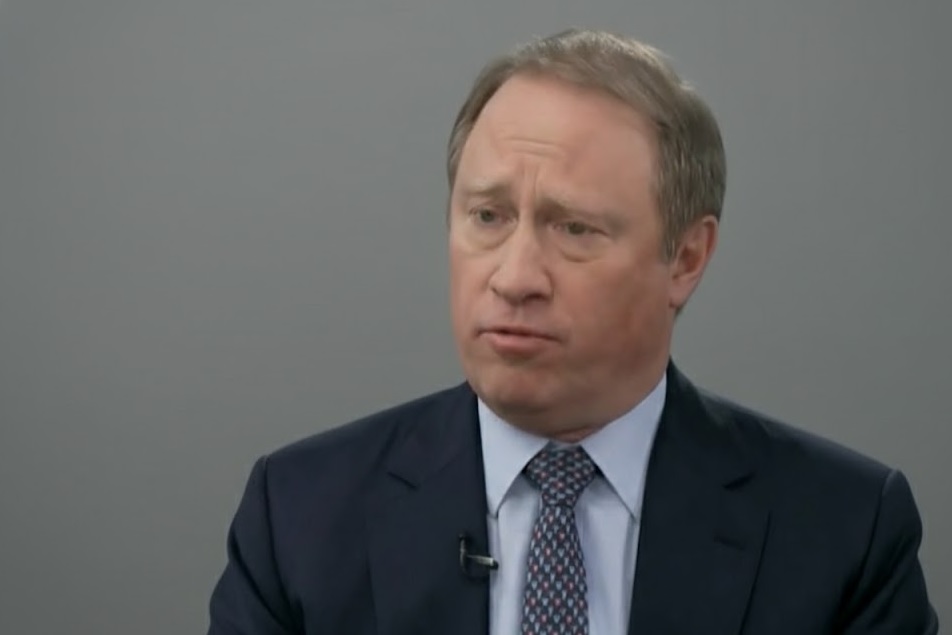
In Wall Street’s finance industry, where an unspoken rule is to “go with the trend”, a series of moves by Morgan Stanley CEO Ted Pick has consistently made him unconventional. Known for a composure that borders on obsessive rationality, Pick joined Morgan Stanley in the early 1990s and has spent more than three decades deeply embedded in the firm. Rising from the ranks as a junior trader, he was tempered by core businesses, including equity capital markets and institutional securities. In January 2024, he formally succeeded James Gorman as CEO, and in October of the same year, he was further elected chairman, having fully witnessed and actively participated in Morgan Stanley’s journey through multiple financial cycles. According to the company’s third-quarter 2025 earnings report, net revenue reached USD 18.22 billion, up 19% year-on-year; net profit rose 28% year on year to USD 4.1 billion and increased 15.8% quarter-on-quarter. Net profit margin stood at approximately 22.5%, an improvement of 1.7 percentage points from 20.8% in the same period of 2024.
He neither chases short-term market manias nor blindly mirrors peers’ expansion strategies. Instead, guided by the mindset of finding opportunity in crisis and maintaining vigilance in during the booming period, as well as exercising strategic discipline amid controversy, he has forged growth paths in an uncertain environment. From rebuilding the trading division after the 2008 financial crisis to cutting headcount after taking office, while selectively expanding into cryptocurrencies and private markets, Pick’s decisions may appear unconventional at first glance. In essence, however, they reflect a coherent philosophy centered on long-term value creation and disciplined risk management, shaped by a leadership style that favors pragmatism over showmanship, precision over haste, and coordination over internal rivalry. This approach has become central to a Wall Street institution’s ability to navigate economic cycles.
First, proactively cutting costs amid an expansionary cycle. While his Wall Street peers were busy rebuilding teams and racing to capture market share during the recovery, Pick’s decision to prioritize layoffs and cost discipline stood out as distinctly unconventional. In March 2025, with no clear signs of an impending downturn and competitors still ramping up hiring, Pick led the first large-scale workforce reduction of his tenure, planning to eliminate roughly 2,000 positions across all divisions. Only the firm’s 15,000 core financial advisors were exempt. The move sparked widespread surprise across an industry largely focused on expansion. At the time, policy adjustments under the Trump administration had introduced short-term uncertainty, but most banks were still betting on a rebound in deal activity. Rivals such as Goldman Sachs had discussed workforce reductions, yet largely postponed implementation. By contrast, Pick’s plan was already in motion well before market volatility intensified.
Even more striking, this “slimming down” was not a reactive response to deteriorating performance, but a deliberate structural optimization. Alongside the layoffs, Morgan Stanley expanded its core investment banking teams, positioning itself to secure critical talent ahead of a market recovery. The result was a contrasting strategy of trimming non-core roles while reinforcing core capabilities. This approach is strikingly different from Wall Street’s usual mindset of either expanding or contracting wholesale. By eliminating obsolete roles and accelerating the adoption of AI-driven alternatives, the firm improved its efficiency ratio by 300 basis points to 72%, laying the groundwork for a subsequent surge in performance.
Pick’s cost controls appeared even more counterintuitive during periods of strong performance. In the third quarter of 2025, Morgan Stanley delivered standout results; its equity trading revenue surpassed Goldman Sachs, investment banking revenue rose 44%, and the wealth management division attracted USD 81 billion in net new assets. Yet rather than easing cost controls, Pick continued to enhance operational efficiency through targeted workforce optimization. The strategy proved prescient. As U.S. equity market volatility intensified later in 2025 and some of its counterparts found themselves under profit pressure after unchecked expansion, while Morgan Stanley, supported by a stable cost structure, maintained a return on tangible common equity of 17.5%, demonstrating resilience and risk resistance across the cycle.
Second, opening new risk frontiers within a conservative establishment. As CEO of a traditional Wall Street powerhouse, Pick has repeatedly ventured into areas considered “controversial” within the industry’s conservative circles. His push into cryptocurrencies stands out as a particularly counterintuitive example. For years, large banks largely steered clear of crypto assets, wary of their extreme volatility and regulatory uncertainty; even those that participated did so only through indirect exposure. Pick, however, moved in the opposite direction. In 2025, he led Morgan Stanley in developing plans to offer direct spot trading in cryptocurrencies such as Bitcoin and Ethereum on its E*Trade platform, positioning the firm as one of the first major U.S. banks to provide such services.
At first glance, the decision appeared aggressive, but in reality it reflected a precise grasp of both policy and market inflection points. Pick astutely identified the Trump administration’s shift toward positioning the United States as a global hub for cryptocurrency, alongside a gradual easing of regulatory barriers, and moved decisively into a market long overlooked by large financial institutions. Even more strategically, he chose to roll out the initiative through the E*Trade platform. This allowed Morgan Stanley to leverage E*Trade’s existing retail client base while insulating its core wealth management franchise from direct exposure, creating a prudent framework of risk containment paired with market experimentation. This unconventional move that deploys capital into controversial assets at a policy turning point enabled Morgan Stanley to secure a first-mover advantage in retail crypto trading and differentiate itself from competitors such as Charles Schwab.
In private markets, Pick demonstrated a similarly counterintuitive approach centered on delayed gratification. During his first nearly two years as CEO, he declined numerous acquisition opportunities that promised quick returns, adhering to a principle that the bar for non-organic growth must remain exceptionally high. It was not until October 2025 that he authorized his first acquisition, the purchase of EquityZen, a private company equity trading platform. This approach stood in stark contrast to his predecessor James Gorman’s rapid expansion through serial acquisitions, as well as to Goldman Sachs’ aggressive contemporaneous push into venture capital investments. By acquiring EquityZen and pairing it with partnerships with equity management platforms such as Carta, Morgan Stanley successfully built a comprehensive private-company equity trading channel, meeting liquidity needs for startup employees while offering scarce investment opportunities to high-net-worth clients. This has created an ecological barrier that is difficult to replicate.
Third, holding fast to contrarian investment thinking amid volatility. When markets turn volatile, most institutions focus on soothing investor sentiment and avoiding near-term risks. Pick, however, took the opposite approach, treating cyclical pullbacks as a “healthy signal” and guiding the market toward a more rational interpretation of declines. In November 2025, U.S. technology stocks came under heavy selling pressure, with giants like NVIDIA suffering sharp losses and market anxiety spreading rapidly. Pick publicly warned that global equity markets might be heading toward a correction, though he also advised investors to "embrace sporadic declines, characterizing them as healthy developments rather than signs of crisis". This stance that refuses to cater to market sentiment and instead speaks candidly about risk, runs counter to the conventional CEO playbook of reassurance and stabilization, but instead is a clear sign of his deep conviction in the rhythms of economic and market cycles.
Pick’s contrarian mindset was even more evident in his asset allocation strategy. While markets were aggressively chasing growth stocks and betting on the rapid realization of policy tailwinds, he led Morgan Stanley to adhere to a dual core framework of “strong cash flows + policy alignment”. The firm avoided excessive leverage during easing cycles and resisted over-tightening during periods of policy normalization. During the Federal Reserve’s rate-cutting cycle in 2025, many peers sharply increased their exposure to growth equities. Morgan Stanley, by contrast, maintained a longer-duration bond bias while selectively allocating to deeply discounted convertible bonds and dividend-yielding assets. This positioning allowed the firm to benefit from ample liquidity conditions while mitigating the downside risks of a growth-stock correction. As concerns over policy shifts began to mount, Pick moved preemptively by reducing exposure to rate-sensitive assets and increasing allocations to infrastructure-related sectors poised to benefit from fiscal stimulus. This shows his ability to stay calm when others panic and to remain cautious when others get greedy.
This approach proved even more valuable during times of crisis. As far back as the 2008 financial crisis, Pick, then head of equity capital markets, demonstrated uncommon courage. When Blackstone’s stock plummeted from its IPO price of USD 30 to a low of USD 3, he did not abandon the partnership. Instead, he continued providing critical support, ultimately earning deep, long-term trust that spanned more than a decade. After taking the helm at Morgan Stanley, he carried forward this same “building trust in crisis” philosophy, maintaining the firm’s core relationships with institutional clients through turbulent periods.
At its core, Pick’s unconventional approach reflects rational decision-making that penetrates appearances and targets essence. His contrarian layoffs were aimed at optimizing the cost structure; his foray into controversial assets sought to capture policy-driven opportunities; and his candid communication of market risks was intended to uphold long-term value. All of these ultimately drove sustainable growth.
What may appear to defy industry norms actually helped avoid the pitfalls of short-term speculation and built a core resilience against market cycles. In today’s increasingly complex global financial landscape, Pick’s counterintuitive approach offers a clear lesson, that true investment wisdom lies not in following market trends, but in maintaining discipline amid the noise, seizing opportunities amid controversy, navigating cyclical uncertainty with contrarian thinking, and creating lasting value through a long-term perspective. This, above all, is what has allowed Morgan Stanley under Pick’s leadership to consistently stay ahead amid market volatility.
Final analysis conclusion:
In a Wall Street environment defined by the unspoken rule of “going with the flow”, Morgan Stanley CEO Ted Pick’s strategic moves have consistently been unconventional. His layoffs of staff during the booming period were aimed at optimizing the cost structure, while his ventures into controversial assets sought to capture policy-driven opportunities. In addition, his candid communication of market risks was intended to protect long-term value and drive sustainable growth. What might appear to defy industry norms in fact helped the firm avoid the traps of short-term speculation and build a core resilience capable of weathering market cycles.
______________
Xia Ri is an Industry Researcher at ANBOUND, an independent think tank.


