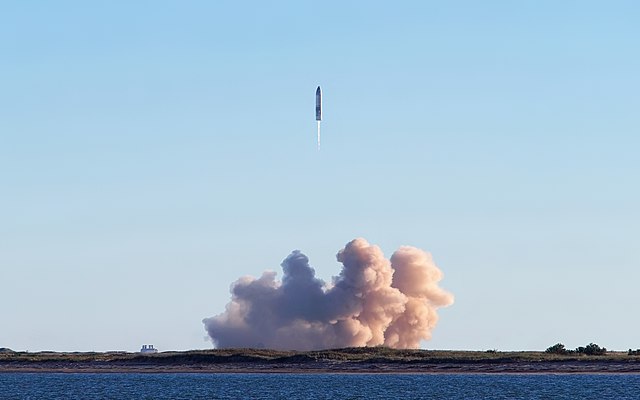
By the end of 2025, SpaceX’s heavy-lift launch vehicle program, Starship, had gone through a turbulent cycle of repeated failures interspersed with intermittent successes. In 2025 alone, the system conducted at least five fully stacked test flights, of which only two achieved their intended objectives. Notably, this included, for the first time, deploying eight simulated satellites into space and completing a controlled landing. At the same time, the upper stage suffered multiple disintegrations or explosions either near orbital insertion or during reentry, triggering recurring technical rework and investigative delays. Nevertheless, the 11th test flight delivered incremental progress in validating booster return burns and the spacecraft’s thermal protection system. It also marked the conclusion of the current prototype-phase testing campaign, providing valuable experience to inform the development of higher-performance future iterations.
Elon Musk has publicly stated that Starship is expected to significantly increase its launch cadence over the next few years, potentially reaching a theoretically high-density launch capability in the longer term. Taken together, these advances point to a deeper strategic contest that seeks to reshape the global landscape of transportation, energy, and security.
First, there will be the restructuring of high-efficiency transportation and global supply chains. The core significance of the Starship program lies in its ability to transcend the traditional divide between spaceflight and terrestrial transportation systems, fundamentally redefining the technological logic of “space–time efficiency”. Historically, every major leap in transportation technology, from the steam engine to the jet engine and high-speed rail—has profoundly reshaped humanity’s geographical perception and economic networks. The “Earth point to point” transportation concept proposed by Starship envisions using suborbital flight to dramatically compress travel times between any two locations on the globe. This is not merely an extreme optimization of speed and cost. In fact, it also carries the potential to completely reorganize the spatial and temporal order of existing global production chains, logistics networks, and capital flows. If such ultra-efficient transportation can be operated sustainably in terms of both cost and safety, the traditional aviation industry dominated by global aerospace giants such as Boeing and Airbus would face a fundamental challenge. The geopolitical and economic significance of conventional airports and route networks could be supplanted by an entirely new system of “orbital gateways”. Ultimately, this transformation may give rise to a new global configuration of hub cities, whose strategic value will depend less on traditional aviation connectivity and more on the distribution of space launch and reentry infrastructure.
This will then lead to the transformation of energy systems and of technological innovation. Starship uses liquid oxygen and methane as propellants, a high–energy-density combination that, in theory, supports greater reusability and higher energy efficiency. If this propulsion system can in the future be integrated with a closed-loop synthesis process powered by large-scale renewable energy, it would not only offer a new pathway to reducing overall carbon emissions in aviation and spaceflight, but could also evolve into a renewable, high-density energy solution in its own right. Such a development would move beyond the narrow scope of emissions-reduction technologies, driving energy systems away from traditional resource dependence toward a spatialized, circular manufacturing model. This transition could have far-reaching implications for global energy leadership. Countries capable of building and controlling synthetic propellant supply chains may gain new forms of strategic energy leverage, while traditional oil-exporting nations could be forced to reconsider and reposition their roles within the evolving global energy order.
Finally, the power in the geopolitical domain will undergo vertical reconfiguration. At the geopolitical level, Starship’s suborbital and orbital transit capabilities challenge long-standing political frameworks built around airspace sovereignty and traditional aviation rules. Suborbital flight trajectories traverse the boundary between the atmosphere and near-Earth space and, in theory, are not constrained by conventional notions of sovereign airspace, nor are they easily intercepted or effectively regulated by existing defense systems. This technology introduces unprecedented time agility and global rapid-delivery capabilities. Once mature, military concepts such as “global rapid strike” could be fundamentally redefined, transforming the strategic power-projection capacity of major states and driving a structural shift away from traditional models of horizontal expansion that rely on overseas bases, carrier strike groups, and similar assets. In an emerging competition over “orbital sovereignty”, states or entities that command advantages in launch capability and orbital scheduling may gain control over critical strategic time variables, thereby securing relative geopolitical advantages.
The flight-test data accumulated by the Starship program to date both highlight a major breakthrough direction for reusable launch systems and expose the profound challenges of highly complex system integration and reliability. Despite repeated failures and setbacks, and despite the fact that large-scale launch operations and full reusability will still require overcoming multiple technical and institutional bottlenecks in the coming years, the reliance on frequent testing and rapid iteration is consistent with SpaceX’s engineering philosophy and contributes to the long-term maturation of the technology. From a longer-term strategic perspective, if engineering progress continues, and if costs and safety performance improve significantly while the system is gradually integrated into global transportation and energy infrastructures, its potential impact on global industrial structures, the organization of economic space, and the landscape of strategic competition should not be underestimated.
The U.S. military has publicly expressed its interest in leveraging Starship technology to enable “Rapid Global Mobility” (RGM), the ability to deliver tens of tons of equipment, supplies, or even troops to virtually any location on Earth within an hour. Once realized, such a capability would profoundly alter the traditional strategic balance. U.S. power projection would shift from a predominantly terrestrial and maritime model to an orbital dimension, significantly reducing reliance on overseas base networks and carrier strike groups. The strategic importance of securing maritime lines of communication would likewise be diminished. Confronted with this form of “supra–space-time military power”, existing defense logics would be forced to undergo fundamental revision. Under such circumstances, air-defense missiles, early-warning systems, and even airspace control regimes would lose much of their effectiveness, as Starship’s flight profile operates between the atmosphere and the edge of orbit, which is beyond the reach of conventional aerial interception, yet insufficient to trigger existing space-defense treaty mechanisms. The emergence of this form of “orbital sovereignty” signals that great-power competition is shifting away from horizontal geographic expansion toward a contest over control of time itself. Whoever controls the launch window controls the initiative in time.
For China, this development is both a challenge and an opportunity. The challenge comes from the asymmetry in strategy and technology. Leveraging SpaceX’s integrated civil–commercial model, the U.S. has already built a closed-loop advantage in reusable launch vehicles, orbital communications networks such as Starlink, and satellite logistics and control. This implies that future Earth–orbit–Earth transportation and data flows may come under U.S. control. Once such a system-level dominance is established, it could constitute a new international technological barrier. Therefore, China will need to accelerate the development of its own independent orbital transportation and reentry recovery systems, establishing end-to-end capabilities spanning launch vehicles, energy systems, and control networks. This is not only a requirement of space competition, but also a matter that touches on national security and the stability of global supply chains.
At the same time, the Starship revolution offers China certain opportunities in terms of institutions and strategic thinking.
China possesses a complete manufacturing system and the world’s broadest range of industrial application scenarios, both are essential conditions for the commercialization of “orbital logistics”. If, in the future, Starship-style transportation systems can be rapidly absorbed and improved by China’s private space sector, the country could well be the first to achieve large-scale deployment in the field of “point-to-point suborbital transportation on Earth”, thereby counterbalancing the United States’ “technology-first” approach with an “application-first” strategy.
At the same time, China’s national policy framework on energy transition, carbon neutrality, and renewable fuels provides institutional support for the circular use of liquid methane. By establishing strategic coupling among renewable energy, energy storage, and space propulsion systems, it could leverage technological spillovers to challenge existing power structures in the global energy discourse.
Finally, at the institutional level, China could consider proactively advancing international initiatives on “orbital corridor governance” and “space traffic rules”, steering space governance from an ungoverned state toward an order of shared governance. This is not only a practical necessity to prevent any single country from monopolizing orbital sovereignty, but also a strategic opportunity to shape the legitimacy of the future international order. Just as China’s advocacy of the Five Principles of Peaceful Coexistence in the last century helped lay the ideological foundation for the diplomacy of developing countries, proposing a “Chinese approach” in the fields of space law and orbital governance today would help China gain institutional discursive power in future competition over the international order.
In responding to this revolution, it will be necessary for China not to confine itself to the aerospace industry alone, but rather view it as an extension of the national modernization system as a whole. What Starship represents is a new form of “composite productive capacity” that encompasses advanced manufacturing, energy conversion, materials science, artificial intelligence, and global logistics systems. China possesses all the essential elements required for this composite transformation, from ultra–large-scale manufacturing capabilities and energy infrastructure to policy coordination mechanisms. The key question is whether these resources can be integrated through a national strategic approach to generate systemic, cross-sector innovation. For example, China could promote pilot projects based on the concept of “orbital ports”, establishing ground nodes that integrate space launch, energy synthesis, and intelligent transportation. It could also support private space enterprises in entering global markets through capital and policy guidance. At the international level, China could also consider advancing negotiations on an “orbital logistics agreement” to incorporate space transportation into the governance framework of global supply chains.
Final analysis conclusion:
The significance of Starship may ultimately extend far beyond the aerospace domain. It is, in effect, an efficiency revolution in the way human civilization operates, as well as a new game of power. What Musk has launched in the name of entrepreneurship is a profound test of the geopolitical structure that the party that controls the commercial gateways to space will be able to redefine the logic by which Earth itself functions. For the world, this may signal the emergence of a new technological center. For China, it is not only a threat but also a window of opportunity. Only by advancing institutional innovation, achieving technological breakthroughs, and shaping international rules in parallel can China, in the coming orbital era, avoid passively accepting externally imposed rules or being marginalized by technology. This, in the end, allows it to rewrite the boundaries of power between Earth and space.
______________
Zhou Chao is a Research Fellow for Geopolitical Strategy programme at ANBOUND, an independent think tank.


