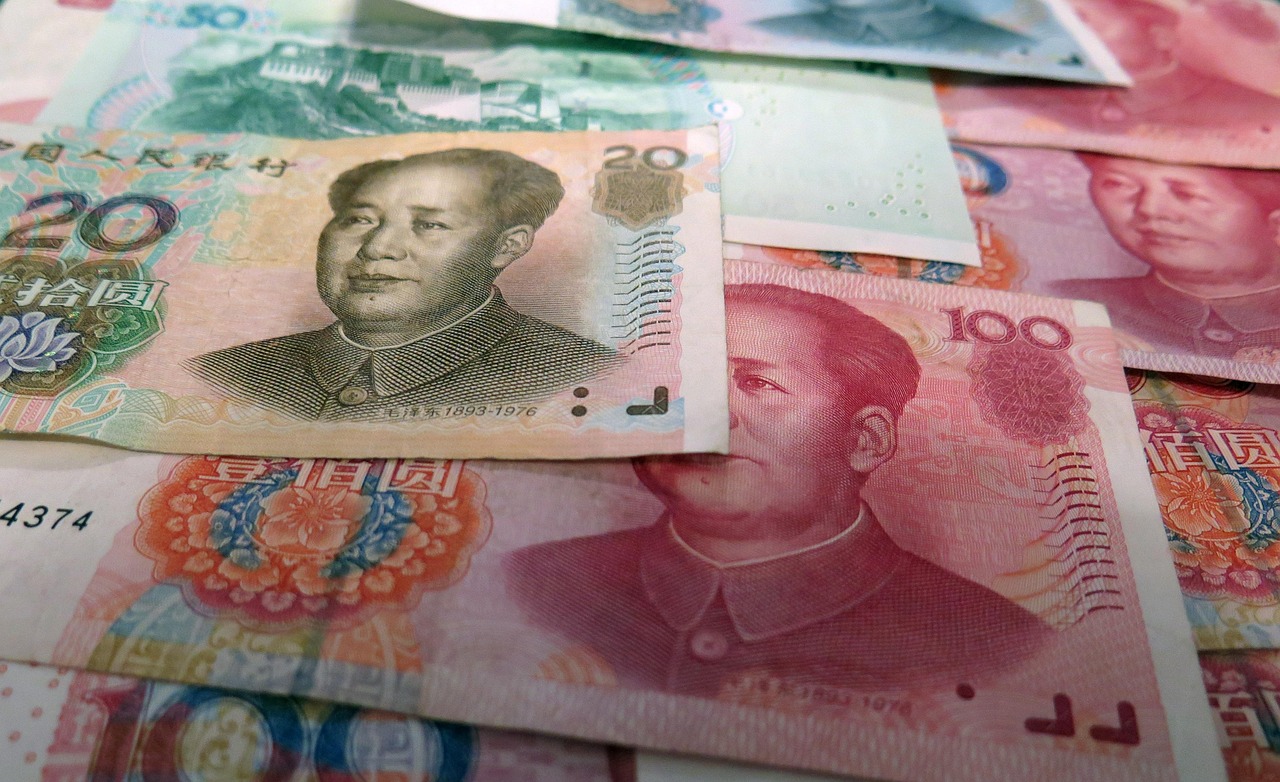
By the end of 2025, the exchange rate of the Chinese yuan or renminbi has undergone noticeable fluctuations. Currently, the offshore yuan against the U.S. dollar has been rising steadily, reaching around 7.00, briefly dipping below 7, and marking its strongest level in over 15 months. The onshore yuan has also broken the 7.01 mark, moving closer to 7. Latest market data from December 30 shows that the onshore yuan exchange rate has followed the offshore yuan's lead, appreciating to below 7. Additionally, the yuan's central parity rate against the U.S. dollar has been raised for several consecutive days, signaling the authorities' intention to guide the yuan's orderly appreciation.
From the market's perspective, factors such as the weakening of the U.S. dollar and the stabilization of China's economy have jointly contributed to the strengthening of the Chinese currency. This trend opens up a window for potential yuan appreciation in the coming year, which could improve the external environment facing the yuan and the Chinese economy. Some even believe that the yuan's appreciation signifies China's success in the "currency war," which may benefit its internationalization in the future.
However, researchers at ANBOUND argue that the yuan's appreciation against the U.S. dollar reflects expectations of greater stability in China's "internal circulation" economy, as well as shifts in the global monetary landscape. Despite these developments, the challenges facing China's external circulation have not disappeared. Rather, they are undergoing new changes. Relying on exchange rate manipulation should not be a policy choice for a large-scale market like China. Instead, maintaining the stability of the yuan's exchange rate remains a crucial option for ensuring economic stability.
The recent strengthening of the yuan began in May and has accelerated in the second half of the year, mainly driven by both internal and external factors. The recent shift has simply reached a point that has drawn significant attention, but it may not cause substantial disruption, and there could be fluctuations in the future. In the short term, factors such as trade settlements and corporate accounting have led to an increase in demand for the yuan towards the year-end, influencing the exchange rate. In recent years, the yuan's fluctuations have shown a certain degree of seasonality. In previous years, the year-end trade settlement peak led to increased demand for the yuan, which in turn pushed its appreciation. Additionally, after the "ceasefire" in the U.S.-China trade war, external conditions have become more stable, and the proposal of the G2 by U.S. President Donald Trump has also contributed to restoring confidence in the yuan. As for the impact, whether the yuan appreciates or depreciates, both scenarios have their advantages and disadvantages for China. A rapid appreciation would be detrimental to exports and external circulation, while excessive depreciation would harm the expansion of domestic demand, including consumption and investment. In a large market like China, the significance of exchange rate stability is even greater.
In 2025, the most significant change in the currency market came from the U.S. dollar. The U.S. dollar experienced a clear shift in 2025, with the dollar index dropping by approximately 9.9% over the year, marking its worst annual performance since 2003. As researchers from ANBOUND pointed out in September, the strengthening of the yuan is not an isolated trend, but rather part of a broader upward movement in non-U.S. currencies. At the same time, the yuan's movement, compared to other currencies, has actually been relatively muted. For instance, the yuan has appreciated by 4.6% against the U.S. dollar this year, while the euro has risen more than 14% against the dollar, and the British pound has gained over 8%. The Japanese yen, which has seen significant fluctuations, has gained 0.5% over the year though it depreciated more than 8% against the dollar in the second half, while the South Korean won has fallen by over 7%. Data from the China Foreign Exchange Trade System (CFETS) shows that on December 19, 2025, the CFETS yuan index, which tracks basket currencies, stood at 97.88, down about 4.1% from the beginning of the year. In other words, in 2025, the yuan's appreciation was relative. It appreciated against the U.S. dollar, but depreciated against most European currencies, while strengthening against major Asian currencies.
The foundation of exchange rate fluctuations lies in economic fundamentals, reflecting a country's creditworthiness and competitiveness. However, exchange rate changes do not always signify changes in the economy; they are also influenced by a series of factors such as trade, capital flows, interest rate differentials, and geopolitical events. Hence, currency appreciation does not necessarily indicate an improvement in the economy. For example, the appreciation of the euro contrasts with Europe's sluggish economic performance, while the weakening of the yen has actually continued to fuel the expansion of Japan's stock market. As for the U.S. dollar, there is also an anomaly. Despite strong GDP data in the U.S., the dollar index has not risen. From the market's perspective, on one hand, the narrowing interest rate differential between the U.S. dollar and other major currencies, due to the ongoing interest rate cuts by the Federal Reserve, is likely to weaken the dollar. On the other hand, the dollar has been weakening since May, partly due to the impact of trade policies under the Trump administration. At the same time, concerns over the potential erosion of the Fed's independence have led to worries that the U.S. government might use interest rate cuts to further expand the national debt, increasing the credit risk associated with the dollar. Interestingly, a similar logic can be seen with the Japanese yen. Despite the Bank of Japan raising interest rates, the yen has fallen to its lowest level in over 20 years. This is because interest rate hikes alone are insufficient to offset the risk premium associated with Japan's large-scale fiscal expansion.
Of course, the determination of a currency's creditworthiness is not solely based on economic growth but also on the stability of existing assets and the speed at which debt levels expand. When considering the yuan within this context, its appreciation carries both positive and negative implications. On the one hand, the yuan's appreciation provides more room for monetary policy easing, which, in turn, supports the recovery of the real economy and helps stabilize the value of existing assets. However, the downside is that this may lead to an expansion of debt levels, which could weaken the Chinese currency's credit foundation in the future. This is especially true if it does not create additional space for fiscal expansion. If broad fiscal expansion outpaces economic growth, it is likely to increase government debt ratios, thereby weakening the creditworthiness of the yuan.
This is also one of the warnings raised by a senior researcher at ANBOUND, who cautions that the expansion of government debt must be considered with limits. Given the current difficulties faced by local government debt, it is likely that any fiscal increments after debt resolution will be further constrained. This principle applies not only to the U.S. dollar but also to the Chinese yuan.
In this regard, it is still too early to claim that the yuan has "won the currency war." While Trump’s idea of a U.S.-China "G2" framework suggests a shift in global dynamics, considering the power disparity between the two countries, the yuan is still far from a position where it can compete with the dollar on equal terms. The stability of the yuan’s existing asset value and its debt risk vulnerabilities are actually more severe than those of the U.S. dollar or the Japanese yen. This means that even if the yuan appreciates, the space for further appreciation is limited. Excessive appreciation could lead to consequences similar to Japan’s "bubble" collapse in the 1990s. Although the geopolitical tension between China and the U.S. may have temporarily eased, the lack of a formal agreement means that tensions could flare up again at any time. This ongoing instability will continue to influence the relationship between the yuan and the dollar.
Within the context of economic growth, i.e., GDP, the appreciation of the yuan leads to a decrease in import prices, which can attract more investment and help expand domestic demand. However, this poses a challenge to an already strained export sector. Especially with the depreciation of the yen and the South Korean won, Chinese export businesses may find it harder to remain competitive in European and American markets. This could keep the economy stuck in a cycle within China, making it tough to break out. Similarly, the depreciation of the yuan has its own set of challenges. While it may benefit exports, it has a suppressive effect on domestic demand, which is not conducive to the construction of a unified domestic market. It also encourages capital outflow, which weakens the value foundation of existing assets. Therefore, whether the yuan appreciates or depreciates, each scenario brings its own set of pros and cons for economic growth, making it difficult to choose one path. In fact, researchers at ANBOUND have consistently noted that, given China’s already substantial economic size, which is the second largest in the world, exchange rates should not be used as a tool to influence the economy. Instead, maintaining exchange rate stability is far more important.
Although the central parity rate of the yuan, as a policy indicator, has been continuously rising, the Chinese central bank has set the currency’s central parity rate significantly below market expectations, with a deviation that has reached a record high. This "over-expected pricing" can be understood as the central bank’s attempt to guide market expectations through pricing signals, with the aim of promoting a gradual appreciation of the yuan. This suggests that the counter-cyclical factor is already at play to prevent the yuan from fluctuating too quickly. In the short term, yuan appreciation may lead to an increase in yuan holdings, which is beneficial for advancing the internationalization of the yuan. However, the volatility brought by currency speculation can cause sharp fluctuations in the yuan’s value, which is not conducive to long-term investment and trade. It also poses risks to the yuan's stability and can increase shocks to the Chinese economy. In the long run, the stability of the yuan is actually more significant for its internationalization.
Looking into the new year, the yuan’s movement will still be influenced by fluctuations in the U.S. dollar. After the Fed cut interest rates and the dollar weakened, the narrowing of the interest rate differential between the U.S. and China has favored the yuan’s appreciation. Additionally, the "ceasefire" in the trade war has brought a phase of stability to China’s foreign trade, which could further support the yuan’s rise. In the long term, the yuan's exchange rate will continue to be determined by the fundamental stability and progress of the Chinese economy, as this is the foundation of the yuan’s creditworthiness. However, on one hand, the external environment remains complex, with uncertainties in the U.S.-China trade relationship and the possibility of intermittent trade or geopolitical conflicts. On the other hand, domestic demand remains insufficient, and confidence has not fully recovered. These factors will continue to influence the yuan’s trajectory.
Final analysis conclusion:
Given that the foundation of the yuan's exchange rate lies
in stable economic growth, many market investors are generally optimistic about
the Chinese currency's appreciation. However, neither appreciation nor
depreciation always signifies its direct relations with economic growth or the capital
market orientations. It is instead a reflection of the combined influence of
assets, liabilities, and economic growth on the currency's creditworthiness. In
the context of the complex changes brought about by de-globalization, for
China, maintaining the stability of the yuan is far more important than
focusing on its appreciation or depreciation. It is also to ensure the currency
remains reliable and sustainable, particularly in an environment where global
trade dynamics and economic conditions are increasingly uncertain.
______________
Dr. Wei Hongxu is a Senior Economist of China Macro-Economy Research Center at ANBOUND, an independent think tank.


