In 2025, Taiwan's economy delivered an impressive performance. According to the latest data released by relevant departments in Taiwan, the revised year-on-year GDP growth rate for the third quarter of 2025 reached 8.21%, significantly higher than the initial estimate of 7.64%. This marks the third consecutive quarter of accelerating growth (5.54% in Q1, 7.71% in Q2), and has led to an upward revision of the full-year growth forecast to 7.37%, an increase of 2.92 percentage points from the original estimate. This would represent the highest growth rate in 15 years since 2010.
ANBOUND's founder Kung Chan pointed out that when Mainland China implements its geopolitical strategies and translates them into industrial policies, special attention must be given to the "leverage effect". Due to this effect, many strategic industries will not necessarily succeed simply because they are considered essential and pursued at all costs. The presence of the leverage effect requires that strategic policies be carefully designed in order to be effective, minimizing the economic side effects to the greatest extent. Taking the current high growth of Taiwan's economy as an example, it is clear that the leverage effect has played a significant role, allowing it to benefit greatly amid the fierce global competition in the semiconductor industry.
Taiwan's core manufacturing position in the global artificial intelligence (AI) industry chain, its complete semiconductor industry ecosystem, and the precise support of policy dividends have enabled it to successfully seize the historical opportunity brought by the AI industry's explosion. This has led to comprehensive growth in exports, investment, and industrial collaboration. From a data perspective, Taiwan's explosive export growth is the primary driving force, while the exponential rise in AI demand is the most crucial factor behind it. Coupled with increased industrial investment and enhanced industry collaboration, these factors have jointly contributed to its strongest economic growth in 15 years.
Taiwan's economy has traditionally been export-driven, and in 2025, its export growth demonstrated a structural surge, with the core driving force entirely coming from the strong performance of AI-related tech products. Data shows that in the first half of 2025, its exports grew by 25.92%, while imports rose by 20.49%. Among these, the year-on-year export growth rates for information and communication products, as well as audiovisual products and electronic components, reached 63% and 22%, respectively. These two product categories together accounted for 36% and 34.8% of total exports, collectively contributing over 70% to the overall export growth. In the second half of the year, the growth momentum accelerated even further. In September, Taiwan's export orders surged 30.5% year-on-year, reaching approximately USD 70.22 billion, marking the 8th consecutive month of growth. Among these, the order value for information and communication products was USD 17.6 billion, while electronic products reached USD 19.01 billion, with year-on-year growth rates of 7.0% and 10.5%, respectively. Relevant Taiwanese departments predict that in the fourth quarter of 2025, goods exports will reach USD 172.3 billion, with a year-on-year growth rate of 36.84%, bringing the year's economic growth to a strong conclusion.
Behind this export growth trend is the global surge in the AI industry, which has sparked a boom in the construction of computing power infrastructure. In the midst of the global race for computing power, major cloud service providers (CSPs) such as Microsoft, Google, and Amazon have accelerated the deployment of AI data centers, leading to an exponential increase in demand for AI servers, high-end chips, and related components. Taiwan, as a key supplier of these core products, has leveraged its mature manufacturing capabilities and rapid response capacity to become a supply hub in the global AI industry chain. In the case of AI servers, driven by the demand from leading companies like NVIDIA, Taiwan's AI server supply chain has been rolling out new products, and the revenue in areas such as servers, networking products, and graphics cards continues to grow. Among these, the export growth rate for servers has even exceeded 60%, positioning them as the foremost drivers of export growth.
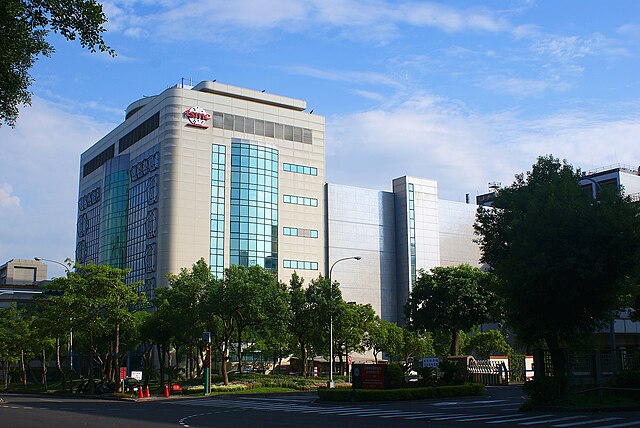
The semiconductor industry, as the core component of the AI industry chain, plays a crucial role in supporting the current economic upsurge. Taiwan's semiconductor industry is expected to exceed USD 209.8 billion in total output value by 2025, a year-on-year growth of 19.1%. Among these, the integrated circuit manufacturing sector is projected to reach USD 133.8 billion, with a growth rate of 23.1%. Notably, TSMC, as the global leader in semiconductor manufacturing, has shown particularly outstanding performance. In the third quarter of 2025, its revenue is expected to reach USD 33.1 billion, a year-on-year increase of 40.8%. The combined revenue from 3nm and 5nm processes is expected to account for 60% of the total, and the company's output growth alone is projected to contribute nearly 4 percentage points to Taiwan's GDP growth.
The policy dividend from the United States' delay in imposing tariffs on semiconductor-related products has further amplified Taiwan's export advantages in the tech sector. At the beginning of 2025, the U.S. had planned to expand the scope of trade tariffs on Mainland China, raising concerns in the market about the impact on Taiwan's semiconductor exports. However, the U.S. ultimately excluded semiconductor products from its tariff list, primarily due to the critical importance of Taiwan's semiconductor industry to the global tech supply chain, as well as the heavy reliance of U.S. tech companies on Taiwan's semiconductor products. This policy adjustment has allowed Taiwan's tech exports to the U.S. to grow against the trend. In the first three quarters of 2025, Taiwan's semiconductor exports to the U.S. reached USD 32 billion, a 12% year-on-year increase, accounting for 45% of Taiwan's total exports to the U.S.
If the demand for AI is the "catalyst" for economic growth, then the significant increase in private investment and the synergistic effects within the industrial chain have provided solid support for this growth. According to data, in the first quarter of 2025, the year-on-year growth rate for Taiwan's manufacturing sector's domestic fixed asset purchases reached a remarkable 82.3%, driving private investment performance to exceed expectations. In the second quarter, the momentum in semiconductor and capital equipment imports continued, supporting the overall stable performance of private investment in the first half of the year. This investment boom has been primarily concentrated in the tech industry, particularly in areas such as advanced semiconductor processes and AI-related equipment.
TSMC's capacity expansion is a core example of the growth in investment. In response to the explosive demand for AI chips, TSMC has not only accelerated the construction of its existing 2nm factory but also plans to build three additional 2nm wafer fabs around the Southern Taiwan Science Park. This will bring the total planned 2nm production capacity in Taiwan to 10 fabs. Currently, the F22 factory in the Nanzi Science Park in Kaohsiung has entered mass production, with a monthly capacity of 10,000 wafers. The P2 factory began equipment installation on August 1, and it is expected to start trial production by the end of the year, with monthly production capacity increasing to 30,000 to 35,000 wafers by year-end. This large-scale investment not only directly drives capital formation but also spurs the synergistic growth of the upstream and downstream industrial chains. From equipment procurement and material supply to engineering construction, it has created a massive ripple effect across the industry.
The completeness of Taiwan's semiconductor industry chain has further amplified the growth effect. In addition to TSMC's dominant position in manufacturing, companies such as ASE (Advanced Semiconductor Engineering) lead the global market in packaging and testing, while UMC (United Microelectronics Corporation) holds a strong position in mature process technologies. Combined with the synergistic support from complementary industries such as printed circuit boards (PCBs) and precision machinery, Taiwan has developed a complete industrial ecosystem spanning "design - manufacturing - packaging - testing – supporting". This integrated ecosystem enables Taiwan to quickly respond to global AI industry demands, ensuring efficient connections across the entire process from chip manufacturing to end-device assembly. This not only boosts delivery efficiency but also creates an irreplaceable competitive barrier. Data shows that Taiwan holds a 60% share of the global advanced chip market, and its share in the AI/HPC (High-Performance Computing) wafer market is as high as 74%. Taiwan's monopoly in key areas such as CoWoS (Chip-on-Wafer-on-Substrate) packaging technology has further solidified its core position in the global supply chain.
Overall, the high growth of Taiwan's economy in 2025 is undoubtedly the result of the convergence between the global AI industry explosion driven by U.S.-China competition and Taiwan's own industrial advantages. Global geopolitical dynamics have sparked a wave of high-tech investment in Taiwan, which, in turn, has fueled its economic growth. In this context, AI-driven export growth, the technological monopoly of the semiconductor industry, and the synergistic effects within the industrial chain have together formed the core logic behind the economic upswing, reflecting Taiwan's crucial role in the global tech supply chain. Furthermore, U.S.-China competition has positioned high-tech as the main arena of strategic rivalry, significantly increasing demand for Taiwan's high-tech products and expanding its market.
Final analysis conclusion:
In the context of deglobalization and the restructuring of international supply chains, high-tech industries have become the primary stage for strategic competition. Taiwan, with its central manufacturing role in the global AI industry chain, has successfully seized the historic opportunity presented by the AI industry's explosion. From a data-driven perspective, the explosive growth in exports has been the core driver, with the exponential rise in AI demand serving as the most critical factor behind it. Coupled with increased industrial investment and synergistic collaboration across industries, these factors together have driven Taiwan's strongest economic growth in the past 15 years.
______________
Xia Ri is an Industry Researcher at ANBOUND, an independent think tank.


