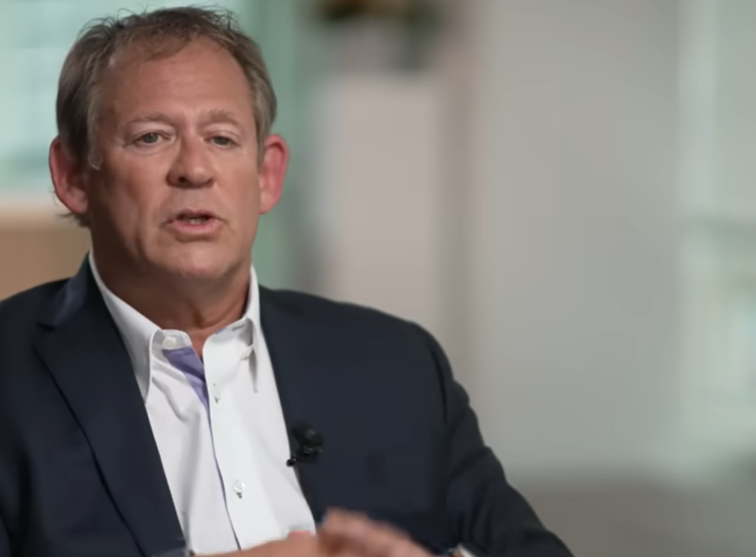
Among the current candidates for Chair of the U.S. Federal Reserve, Rick Rieder of BlackRock stands out as the only contender coming from the financial industry rather than the traditional policy community. U.S. Treasury Secretary Scott Bessent has formed a favorable impression of Rieder during the selection process for the next Fed Chair. According to earlier public reports, Bessent's vetting of candidates has focused on issues such as interest-rate policy, the withdrawal of crisis-era stimulus measures, and the Fed's governance structure. In his interview, Rieder offered clear, market-oriented views on these core topics, earning Bessent's praise.
Unlike the other four candidates, Rick Rieder is not a typical "insider" political figure, but rather a practitioner representing the asset-management industry. As BlackRock's Global Chief Investment Officer (CIO) for Fixed Income, he has long overseen fixed-income investing and has extensive experience in market micro-structure, portfolio construction, and risk management. Since joining BlackRock in 2009, he has served as Global CIO for Fixed Income, managing roughly USD 2.4 trillion in assets. Prior to that, he spent 21 years at Lehman Brothers (1987–2008), and in 2008 led a team in spinning out to form the hedge fund R3 Capital, where he served as President and CEO.
Rieder has also participated in policy discussions as an external expert, including serving as Vice Chairman of the U.S. Treasury Borrowing Advisory Committee and as a member of the Fed's Investor Advisory Committee on Financial Markets. These experiences have given him deep market insight without tying him to traditional political factions, allowing him to approach policy with a more pragmatic, data-driven mindset. This background also explains why Rieder's candidacy rests on his professional expertise rather than political capital.
First, Rieder's argument in favor of rate cuts both aligns with the Trump administration's policy preferences and reflects the practical reality that the bond market is currently well-positioned to generate high-yield portfolios. In his view, prevailing coupon and yield-to-maturity levels in fixed income offer investors solid returns in the range of 6.5% to 7%, making the asset class highly attractive for portfolio rebalancing under an environment of expected rate cuts. If the Fed eases policy, lower short-term rates would help re-steepen the yield curve, leading to a rebound in the prices of long-duration bonds and corporate credit. This, in turn, would reduce corporate financing costs and expand opportunities for balance-sheet reallocation. For policymakers, this suggests that rate cuts could quickly bolster risk appetite for bond allocations and draw institutional capital back into the market, thereby supporting broader financial stability. Politically, easing also aligns with an administration seeking a more accommodative monetary environment to spur economic growth, making this stance naturally appealing to political actors pursuing reelection or aiming to create more room for expansionary fiscal policies.
Second, in addressing the weakness in the U.S. labor market, Rieder argues that rate cuts can provide necessary support. In his view, the weak employment backdrop requires appropriately accommodative monetary policy to offset rising unemployment risks, lest the income growth and consumer demand suffer further. Rieder believes that lowering interest rates to stimulate economic activity can help stabilize jobs and household income, thereby mitigating the labor market's softening trend. He has also pointed out the significant polarization of wealth and income currently present in the economy, which is intensifying downward pressure. For this reason, he argues that in such an environment the Fed should maintain an accommodative stance to prevent labor-market deterioration from inflicting more serious damage on the broader economy.
In the real estate sector, Rieder is particularly focused on the challenges created by high interest rates. He points out that elevated mortgage rates have brought the U.S. housing market almost to a standstill, and that the income required to purchase a home is now twice what it was in 2019. Housing affordability has fallen to near-historic lows, and homebuilder sentiment has dropped to its lowest level since the global financial crisis. In light of these conditions, Rieder stresses the need to increase liquidity and affordability in the housing market. He believes that moderate rate cuts could effectively alleviate the structural pressures caused by high financing costs, helping restore balance between housing supply and demand. This view also reflects Rieder's sensitivity to the effects of interest-rate policy on the real economy.
When addressing the tariff effects of protectionist trade policies, Rieder adopts a pragmatic, clear-eyed stance, one that has earned him broad recognition on Wall Street. He has noted in interviews that U.S. tariffs on imported goods contributed to the recent uptick in inflation, as importers are passing these costs on to consumers and thereby pushing prices higher in the short term. However, he also emphasizes that once these one-off factors are stripped out, core inflation continues to follow a steady downward trajectory. For this reason, Rieder views the inflationary impact of tariffs as temporary rather than a source of persistent inflation pressure. He further urges the Federal Reserve to base its policy decisions on real economic data and to make a proper assessment of the costs associated with trade frictions, cautioning against overstating their long-term effects or rigidly clinging to the 2% inflation target.
Lastly, Rieder argues that the Fed should adopt a more diversified monetary policy toolkit to respond effectively to a rapidly evolving economy. He believes that in the current environment in which the Fed is aggressively shrinking its balance sheet, relying solely on the policy rate is no longer sufficient to tackle such complex conditions. He suggests that the Fed should make full use of both interest-rate and liquidity tools and shift toward a lower real-rate path that places greater emphasis on job growth, thereby providing stronger support for the economy and the labor market. In other words, he views interest rates more as instruments for managing economic conditions rather than as policy goals in themselves. He also advocates the flexible use of balance-sheet expansion and other unconventional tools, alongside rate policy, to enhance economic momentum and strengthen labor-market performance.
All in all, Rick Rieder has drawn attention for his professional expertise and pragmatic views, and his nontraditional background highlights the value of fresh thinking from outside the policy establishment. From advocating rate cuts to support the bond market and employment, to directly addressing tariff-driven inflation, to promoting measures that would revive the housing market, and finally to calling for a more comprehensive set of policy tools, Rieder's fiscal and monetary perspectives consistently reflect a respect for economic fundamentals and data. These qualities make him a genuine dark horse among the candidates for Fed Chair. Whether or not Rieder ultimately secures the position, the broader shift his candidacy represents, from a Fed focused primarily on institutional independence to one increasingly attentive to the needs of economic development,is a trend worth continued observation and analysis.
Final analysis conclusion:
Rick Rieder has emerged as a strong contender for Federal Reserve Chair thanks to his pragmatic, data-driven, market-oriented views. He argues that rate cuts can help stabilize the bond market and employment, ease pressures in the housing sector, and that tariff-related inflation should be assessed based on real economic impacts. His advocacy for flexible use of interest-rate and liquidity tools also reflects an innovative perspective from outside the traditional policy circle. Whether or not Rieder ultimately wins the appointment, his candidacy itself signals a shift at the Fed from prioritizing strict policy independence to placing greater emphasis on supporting economic development.
_____________
Siyu Bian is an Economic Research Fellow at ANBOUND, an independent think tank.


