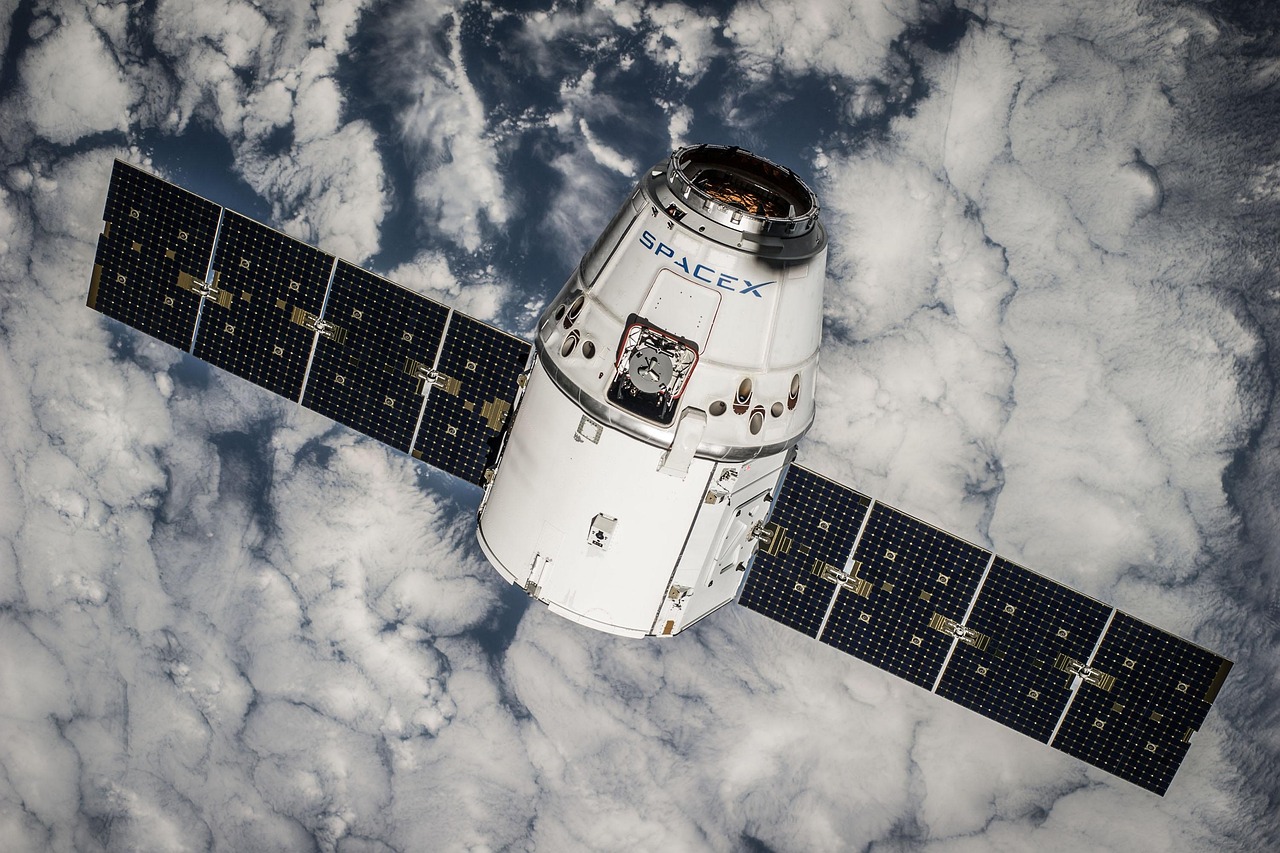
The term “New Space Economy” (NSE) has become one of the most prominent buzzwords of the past decade. It refers to the disruptive, commercially driven transformation now taking place in the space sector. This is in sharp contrast to the traditional, government-led “Old Space” era. Several forces are driving the rise of this concept. First, there is the technological maturation, especially breakthroughs in small, low-cost satellite systems and reusable rocket technology. Second, the influx of private capital, with venture investors pouring significant funds into space startups. Third, the emergence of innovative business models, including satellite internet, space tourism, and dedicated small-satellite launch services.
With SpaceX completing the first commercial spacewalk in human history, China unveiling its first space-tourism program at the 27th China International Hi-Tech Fair (CHTF), and the EU advancing its multibillion-euro IRIS² constellation, the NSE has evolved from a frontier-tech concept into a central force reshaping global industry. At its core, it seeks to build a commercially oriented, market-driven economic system that integrates aerospace manufacturing, space-based services, resource development, and digital technologies. This encompasses the entire value chain from upstream materials and key component R&D, to midstream rocket launches and satellite-constellation deployment, to downstream applications such as satellite communications, space tourism, space-based computing, and deep-space resource exploration. Its fundamental vision is to make space more accessible, diversify market participation, and promote shared use of resources, that is, transforming space from an exclusive realm of exploration into a shared economic domain for humanity and injecting fresh momentum into global economic growth.
How then, will the size of NSE be in the future?
Current estimates for the market size over the next decade come primarily from forecasts by major analytical institutions such as Morgan Stanley and Bank of America. They project that the global space economy, including launch services, satellite manufacturing, ground equipment, and application services, could reach USD 1 trillion to as much as USD 3 trillion by the mid-2030s or by 2040. As for the revenue already being generated today, estimates as of late 2024 indicate that the global NSE, counting both government budgets and commercial activities, has reached USD 550–600 billion.
China’s NSE started relatively late. Successful private rocket launches remain very few, and the industry is still far from achieving economically viable reusability with powered return and landing. Therefore, if one measures the NSE strictly by distinguishing commercial activity from government-led programs, China’s actual commercial output is close to zero, indicating that it is still in its early developmental stage.
In this trillion-dollar blue-ocean race, how will the future unfold?
The openness of space has become the key determinant of both the quality of NSE’s development and global competitiveness. Its breadth and depth will directly define the boundaries and potential heights of the industry. ANBOUND’s founder Kung Chan notes that the space long encircled by missiles and fighter jets, protected jointly by air force and defense systems, is in fact a vast emerging market. Once this space is opened to broader participation, it will immediately generate substantial economic benefits. The essence of space openness lies in breaking the traditional aerospace sector’s technological, market, and resource barriers. Unlike the conventional “application–approval–exclusive use” model of closed airspace management, the explosive growth of the NSE will depend heavily on China’s institutional efforts to open its “high frontier” in space. It is only through such openness that can really bring the scale effects and innovation momentum.
According to data from the International Telecommunication Union, low-Earth orbit can accommodate only about 60,000 satellites, yet the number of low-orbit satellites already planned globally exceeds 100,000. This sharp mismatch between the scarcity of orbital resources and the explosive growth in demand can only be resolved through a scientifically designed and orderly mechanism for space openness. From a regulatory perspective, the United States has made the most notable institutional adjustments. To advance space openness, the U.S. has streamlined approval processes and allowed private companies to conduct routine test flights within designated airspace. This has accelerated the iteration of key technologies such as reusable rockets, and this is one of the main reasons that the U.S. has taken the lead in the NSE.
The opening of space is a prerequisite for the NSE to break through developmental bottlenecks and achieve large-scale growth. According to Kung Chan, opening the sky at a higher dimension is essentially an expansion and extension of a nation’s “high frontier”. The concept of the high frontier was proposed in the 1970s by American space expert and strategist Gerard K. O’Neill, who believed that the ultimate solution to humanity’s resource and environmental challenges lay beyond Earth, specifically, in harnessing extraterrestrial resources and building large, self-sustaining space settlements like the O’Neill Cylinders. These would allow human civilization to extend beyond Earth’s gravity and into the domain of the high frontier. His vision later inspired strategic entrepreneurs such as Elon Musk, whose continued efforts have gradually brought aspects of this concept closer to reality.
In building China’s own high frontier, space openness must balance both security and development. In its active participation in an orderly opening of space, it is equally essential for China to ensure that security considerations are integrated alongside developmental goals.
As the pioneer of the NSE, the U.S. owes its leading position largely to the ecological advantages created by open access to air and space. Through legislation such as the Commercial Space Launch Act and the Space Resource Exploration and Utilization Act, the U.S. has built a flexible and orderly regulatory environment that allows private companies to participate in core areas, including rocket launches, space station operations, and even deep-space resource extraction. This forms a virtuous cycle in which the government provides the platform and enterprises drive innovation. NASA has accelerated SpaceX’s breakthrough in reusable rocket technology by opening access to launch-site airspace and technical documentation. This in turn has enabled the U.S. to secure first-mover advantage in low-Earth-orbit satellite constellations. Today, the Starlink program alone accounts for around 70% of all low Earth orbit (LEO) satellites, creating a substantial barrier in orbital resource allocation. On the other hand, what deserves even closer attention is the deep integration of U.S. space openness with military applications. Through the Starshield program, Starlink satellites now provide military communication and Earth-observation services, demonstrating significant operational value during the Russia–Ukraine conflict. This has further strengthened American strategic advantage in the competition for space and airspace dominance.
Europe, on the other hand, emphasizes regional collaborative openness, aiming to build an integrated airspace ecosystem. The European Union has invested over EUR 10 billion to launch the IRIS² program, planning to deploy 290 low- and medium-Earth-orbit satellites. The main objective of this is to break down national airspace barriers through unified airspace management and coordination mechanisms, thereby creating a communications network that covers Europe and potentially the world. This, in fact, is aiming to challenge the U.S. monopoly in low-orbit satellite communications. The UK-based company OneWeb, by sharing airspace resources with multiple European countries, has nearly completed the deployment of 660 low-Earth-orbit satellites, providing communication services to multiple government agencies. Meanwhile, Japan is focusing on both military and civilian needs. In its fiscal 2025 defense budget, it allocated JPY 283.3 billion for low-orbit satellite constellations. By taking a leading role in airspace resource planning, Japan plans to achieve breakthroughs in low-orbit internet, remote sensing, and other areas, enhancing its influence and strategic voice in the competition for airspace.
The German Federal Ministry of Defense recently released its space strategy, which focuses on three areas of action. These are identifying space-related hazards and threats, promoting international cooperation and maintaining the order of outer space, and establishing deterrence while strengthening defensive capabilities. The strategy notes that space is no longer used solely for peaceful research but is increasingly becoming a stage for conflict, strategic competition, and global power projection. As socio-economic activities such as communications, navigation, Earth observation, and time calibration become ever more dependent on space-based services, space security has emerged as an essential political task.
Germany’s space strategy aims to ensure that the country maintains capabilities for both civilian and military space operations during peacetime, crises, and wartime. It is a key measure for safeguarding national interests and reinforcing Germany’s position as a “responsible actor in space”. Close cooperation with NATO allies and international partners is considered a central pillar of the strategy. Speaking at a press conference, German Defense Minister Boris Pistorius emphasized that Germany will not pursue aggressive actions in space, but must possess the capability to conduct defensive countermeasures to protect its satellites. According to the Ministry of Defense, by 2030 the department plans to allocate EUR 35 billion from the defense budget for aerospace and space security.
Compared with the U.S. and Europe, China faces several challenges in the field of space strategy. First, the efficiency of dynamic space management needs improvement. Currently, China’s airspace approval process is still dominated by authorization, and its mechanisms for dynamic adjustment lack flexibility, making it difficult to meet the high-frequency and large-scale launch demands of commercial space activities. Second, the depth of international space cooperation is still wanting. The deployment and services of China’s satellite constellations are concentrated mainly within the country and in the regions participating in the Belt and Road Initiative (BRI). In this regard, China’s influence in global airspace resource allocation and rule-making needs to be strengthened. Third, coordination between the military and civilian space sectors is not yet fully developed. Responsibilities in space operations remain somewhat separated between the military and civilian spheres, and resource utilization efficiency needs further optimization. These issues, to some extent, constrain the large-scale development of China’s emerging space economy and do not fully match the country’s status as a major spacefaring nation, and more works need to be done to resolve them.
Final analysis conclusion:
The New Space Economy is entering a crucial phase of rapid expansion, and competition for global airspace and orbital resources has become increasingly intense. In 2024 alone, global commercial space investment reached USD 58 billion, three times the level in 2019, with about 80% directed toward sectors closely tied to greater airspace access, including low-Earth-orbit satellite constellations and reusable launch vehicles. As new business models emerge, from space tourism and space-based computing to deep-space resource exploration, the strategic importance of airspace and orbital resources will only become more pronounced, turning them into a “strategic high ground” that nations are striving to secure. For China, broadening access to airspace while balancing the imperatives of national security is no longer a matter of choice. It has become a necessity that is closely related to the nation’s competitiveness in its space industry and the country’s long-term strategic security.
_____________
He Yan is a researcher at ANBOUND, an independent think tank.


