"I'm sure it's in capable hands," Esper said during a trip to the Philippines, referring to the negotiations. "South Korea is a wealthy country. They can and should contribute more. And beyond that, I will leave it to the State Department to work out the particulars."
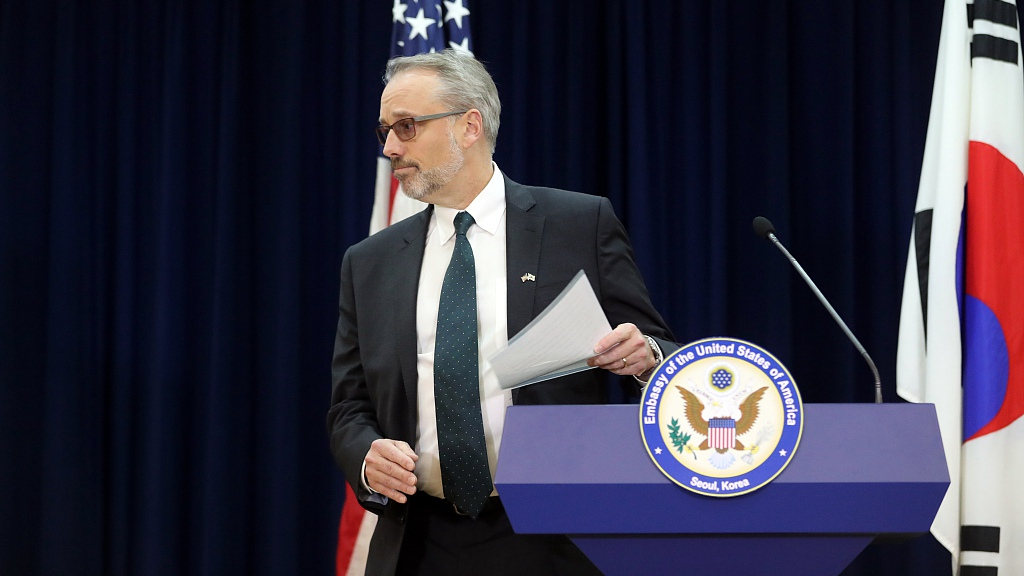
Defense cost-sharing talks between Washington and Seoul were abruptly cut short as U.S. negotiators walked out of the meeting and accused South Korea of refusing to accept "fair and equitable burden sharing," according to Yonhap.
It was reported that U.S. officials demanded up to five billion U.S. dollars a year from the ROK for the deployment of about 28,500 American troops, more than five times what Seoul agreed to pay this year under a one-year deal.
"Unfortunately, the proposals that were put forward by the Korean team were not responsive to our request for fair and equitable burden sharing," James DeHart of the U.S. State Department told local media shortly after the talks ended.
"As a result, we cut short our participation in the talks today in order to give the Korean side some time to reconsider and, I hope, to put forward new proposals that would enable both sides to work towards a mutually acceptable agreement," he added.
South Korea's chief negotiator Jeong Eun-bo vowed to work "with patience" to produce a "mutually acceptable" deal.
"It was the U.S. that walked out of the talks," Jeong told reporters.


