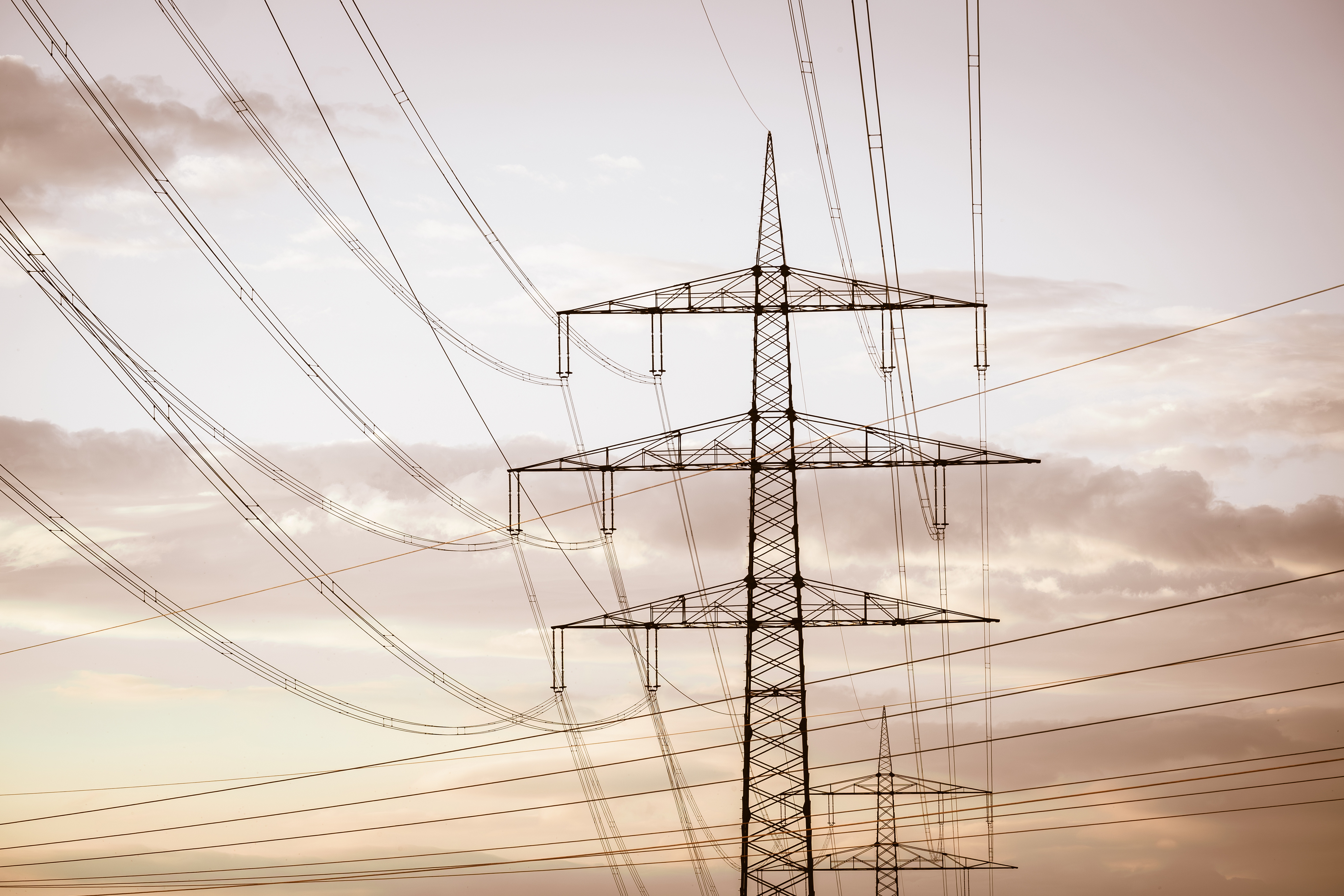
Electricity demand is rising rapidly in parts of the United States as investment in artificial intelligence (AI) data centers and manufacturing expands. On November 10, the U.S. Energy Information Administration (EIA) released its latest Short-Term Energy Outlook, forecasting that U.S. electricity consumption will reach record highs in both 2026 and 2027. According to the latest projections, annual U.S. electricity consumption will increase from 4,216 billion kilowatt-hours in 2025 to 4,306 billion kilowatt-hours in 2026, before rising further to 4,370 billion kilowatt-hours in 2027. This projected growth is approximately 2.1% in 2026 and 1.5% in 2027. The construction of AI data centers, together with the electrification of residential and commercial sectors, is a major driver of this growth in demand.
The U.S. has abundant natural gas and coal resources, as well as mature power generation technologies, including nuclear power. However, its ability to supply electricity is constrained by delays in grid development. A 2024 study by the International Energy Agency (IEA) found that approximately 70% of U.S. transmission lines had already entered the latter half of their typical 50-year service life, while the average age of large power transformers exceeded 40 years. Over the past decade, the U.S. transmission network expanded by just 3%, significantly below the 7% growth recorded in the European Union over the same period. Meanwhile, the construction of new transmission lines involves challenges related to land use, interstate approvals, the allocation of investment costs and the procurement of critical equipment. The accumulated need to replace ageing grid infrastructure, along with rapidly growing demand for additional electricity, is becoming a major constraint on the expansion of U.S. power supply.
This same issue happens elsewhere too. Europe has also faced mounting pressure from ageing grid infrastructure and delays in construction in recent years. The European Commission previously pointed out that approximately 40% of Europe's distribution networks had been in service for more than 40 years. By 2030, investment of around EUR 584 billion will be required to meet the needs of grid upgrades, cross-border interconnections and the energy transition. On November 3, 2026, the European Network of Transmission System Operators for Electricity (ENTSO-E) released its latest report. Based on plans submitted by the 27 transmission system operators that participated in the survey, Europe intends to add 2,820 power transformers, approximately 34,000 kilometers of high-voltage direct current (HVDC) underground and subsea cables, and 119 bipolar HVDC converter stations by 2035. Demand for this equipment is expected to increase sharply between 2028 and 2032. However, procurement lead times for large transformers rated at 245–420 kV in Europe have generally already exceeded 36 months, while some phase-shifting transformers require waiting periods of more than four years.
China's power grid infrastructure has become highly developed after years of construction, but pressure to expand the grid is also increasing. In recent years, China’s installed wind and solar power capacity has continued to grow. Renewable energy resources are concentrated mainly in northwestern and northern parts of the country, while major industrial and consumer markets are located in the eastern and central regions. At the same time, wind and solar generation are affected by weather conditions and day-night cycles, pointing to the fact that the timing of electricity generation does not always match actual demand. This means China needs to build more interregional transmission lines and improve the effective utilization of renewable electricity through energy storage, flexible generation and distribution network upgrades. In January 2026, the State Grid Corporation of China (SGCC) announced that its fixed-asset investment during the 15th Five-Year Plan period would reach an estimated RMB 4 trillion, an increase of 40% over the 14th Five-Year Plan period. The investment will focus on ultra-high-voltage (UHV) transmission, interregional grid interconnections, urban and rural distribution networks, and digital grid development. A 2026 report by the China Electricity Council (CEC) estimates that total national grid investment during the 15th Five-Year Plan period would exceed RMB 5 trillion.
The electricity challenges facing the U.S., Europe and China all point to the urgency of new grid construction. The IEA's Electricity 2026 report stated that more than 2,500 GW of renewable energy, energy storage and large-scale electricity consumption projects worldwide were already waiting in grid connection queues. A new data center generally takes one to three years to build, whereas planning, approval and construction of new grid infrastructure can take five to 15 years. To meet electricity demand before 2030, annual global grid investment needs to increase by approximately 50% from its current level of around USD 400 billion.
The rapid growth in demand for grid construction is creating considerable opportunities for related industries. Grid expansion requires more than building transmission lines but also involves building substations and installing supporting equipment such as transformers and high-voltage switchgear. Transformers are core components of power transmission and distribution systems, primarily responsible for converting voltage levels. In recent years, demand for grid expansion in the U.S. has risen rapidly, but its transformer manufacturing capacity has failed to keep pace, leaving the country heavily dependent on imports. A report published by the U.S. Congressional Research (CRS) Service in April 2026 showed that, between 2020 and 2024, producer prices for both distribution transformers and large power transformers in the country increased by approximately 40% after adjusting for inflation. Some reports have indicated that prices for certain transformers in the U.S. have risen by a cumulative 80% over the past five years, while delivery times for some high-capacity units have extended to four years. Shortages of critical equipment are pushing up grid construction costs and further lengthening the time required to expand power infrastructure.
Supply constraints are extending beyond transformers to other parts of the transmission system. According to the latest survey by ENTSO-E, HVDC underground and subsea cables are among the products facing the most severe supply constraints, with production capacity at some major European manufacturers already booked through 2030. HVDC converter stations require specialized converter transformers, converter valves and complex control and protection systems, and their engineering and delivery cycles may be even longer. In addition, as Europe gradually restricts the use of equipment containing sulphur hexafluoride (SF6), demand is growing for technological replacements and expanded production capacity for new environmentally friendly high-voltage switchgear. Although different types of equipment have different technical requirements and competitive market structures, manufacturers of all these products need to make advance investments in equipment, factories and professional personnel.
Some major power companies and equipment manufacturers have already begun competing for opportunities in this growing market. In March 2025, the UK's National Grid announced an HVDC supply chain framework procurement programme with a total value of approximately GBP 59 billion, covering several segments, including HVDC cables, converter equipment and engineering and construction. The first framework agreements announced for cables and converter systems covered suppliers including Prysmian, NKT, South Korea's LS Cable, Sumitomo Electric, GE Vernova, Hitachi Energy, Mitsubishi Electric and Siemens Energy. The framework agreements have an initial term of five years, with an option to extend them by a further three years.
With the rapid growth in demand for grid equipment in Europe and the U.S., international manufacturers are expanding supply through local production while strengthening their ties with local customers and supply chains. On September 15, 2026, Hitachi Energy announced an investment of USD 528 million to build a new transformer factory in Mississippi, USA, with production expected to begin in 2029. This is the company's largest single investment in the United States to date and forms part of its approximately USD 1.5 billion US manufacturing expansion programme. South Korea's Hyosung Heavy Industries is also expanding production capacity at its extra-high-voltage transformer factory in Memphis, Tennessee. In September 2026, the company disclosed that it had secured orders worth a combined approximately USD 287 million from two major U.S. technology companies for extra-high-voltage transformers to supply data center power facilities.
At the same time, multinational companies are also making use of China's manufacturing capabilities. On August 17, 2026, Hitachi Energy announced a USD 300 million investment in Hefei, Anhui Province, China, to expand production capacity for power transformers and key components, helping to ease bottlenecks in the global grid equipment supply chain.
In the latest wave of power grid development, Chinese enterprises do play a role, supported by the country’s comprehensive manufacturing supply chain and a deep pool of technical expertise. Through extensive experience in UHV infrastructure projects, China has built a robust manufacturing ecosystem, encompassing large-scale transformers, converter equipment, high-voltage switchgear, and critical components. This is while it accumulates substantial engineering know-how in the fields of extra-high voltage and ultra-high voltage power transmission. Some of these companies are now capable of participating in major international power transmission projects, competing directly with established global manufacturers such as Hitachi Energy and Siemens Energy.
Chinese manufacturer of power transformers TBEA disclosed that the value of products contracted in international markets reached USD 2 billion in 2025, a year-on-year growth of 68%. Its international turnkey projects had a combined value of more than USD 5 billion in contracts under execution, revenue not yet recognized and outstanding contractual obligations. China XD Electric's overseas business revenue increased by 54.04% year-on-year in 2025. The company also undertook part of the converter station engineering work for Chile's Kimal–Lo Aguirre HVDC transmission project, with a contract value of approximately RMB 2.767 billion. Overseas revenue accounted for 29.49% of Sieyuan Electric's total revenue in the first half of 2026, and the company has entered the supply chains of major grid operators in some developed economies. These operating figures indicate that the international business of Chinese power equipment manufacturers is beginning to expand into high-end equipment supply and large-scale engineering projects.
However, Chinese companies' advantages in technology and manufacturing do not mean they can compete with international giants on equal terms in every market. For example, China's UHV projects have primarily accumulated experience in large-capacity, long-distance power transmission, whereas offshore wind power grid connections and cross-border interconnection projects in Europe impose different requirements for flexible HVDC transmission, multi-terminal system integration and complex grid control. Companies such as Hitachi Energy and Siemens Energy have participated in grid construction in Europe and the U.S. for many years, establishing mature customer relationships, technical certification systems and equipment operation and maintenance networks in these markets. For major grid operators, critical equipment generally needs to operate reliably for decades. Procurement decisions therefore depend not only on equipment prices and technical specifications, but also on whether suppliers can provide long-term maintenance, fault response and ongoing upgrade services. These market relationships, built up over many years, mean that even new entrants with the ability to manufacture comparable products may need considerable time to earn customer recognition.
The competitive conditions in international markets are also changing. Faced with tight supplies of grid equipment, the U.S. and Europe are not relying entirely on international trade to expand supply. Instead, they are using long-term procurement arrangements, local manufacturing and industrial policies to encourage manufacturers to increase regional production capacity. Companies such as Hitachi Energy and South Korea's Hyosung can establish production facilities in the U.S. and participate directly in equipment procurement by local power companies and major technology firms. Although Chinese companies have certain advantages in cost and delivery capabilities, their exports to Europe and the U.S. remain subject to tariffs, customer certification requirements and supply chain security considerations. As a result, the advantages Chinese companies have established in engineering construction and equipment supply in markets such as Southeast Asia, the Middle East, and Latin America cannot necessarily be translated directly into competitive advantages in the mature grid markets of Europe and the U.S.
Nonetheless, Chinese companies that find it difficult to enter the European and U.S. markets for complete equipment systems directly can still participate in the global grid industry chain through the supply of key components, specialized equipment manufacturing and cooperation with international system integrators. Hitachi Energy's expansion of transformer and component manufacturing capacity in China in 2026 demonstrates that multinational companies continue to rely on China's mature manufacturing ecosystem. The growing trend towards regionalization in global manufacturing has not done away the division of production responsibilities between different regions.
Therefore, the global boom in power grid construction offers Chinese enterprises opportunities that extend well beyond simply increasing the scale of equipment exports. China’s accumulated expertise in UHV projects and equipment manufacturing provides a solid foundation for participating in the global market. That being said, further expanding competitive advantages will depend on a company’s ability to integrate into the procurement systems of various regional markets. For large-scale power transmission projects in developing economies, Chinese firms can leverage their comprehensive strengths in equipment manufacturing, engineering construction, and system integration. In contrast, entering mature markets like those in Europe and North America requires a gradual process of establishing a market presence through international certifications, localized production, long-term service, and the supply of critical components. As global grid operators place increasing emphasis on the security of long-term supply, the companies most likely to secure sustained orders in the future will not necessarily be those with the lowest production costs, but rather those capable of ensuring stable, long-term delivery and service.
Final analysis conclusion:
With the advancement of AI, the
expansion of global power grid investment could open up market growth for the
power equipment manufacturing and grid construction sectors that last for
years. Major manufacturers have already begun competing for this
market through long-term procurement agreements, localized production, and
cross-border supply chain layouts. China possesses a strong power equipment
manufacturing base, and sustained, large-scale domestic grid investment has
also created favorable conditions for related technological development.
However, future competition in global grid construction and equipment
manufacturing will depend not only on how cheaply companies can produce equipment,
but also on how they integrate into key markets' long-term procurement systems
and deliver consistent, reliable products and services locally. For large-scale
transmission projects in developing economies, Chinese companies can leverage
their integrated strengths in equipment manufacturing, engineering
construction, and system integration. For mature markets in Europe and
North America, they will need to gradually build market standing through
international certifications, localized production, long-term service, and key
component supply.
______________
Chen Li is an Economic Research Fellow at ANBOUND, an independent think tank.


