Evergrande, once China’s largest real estate developer, is now approaching the end of a nearly five-year crisis. Evergrande-affiliated companies and relevant individuals are facing criminal proceedings, while judicial authorities have formally ordered the bankruptcy liquidation of Evergrande Real Estate. According to media reports, more than 900 Evergrande-related companies in China have, to date, entered bankruptcy liquidation, bankruptcy reorganization, or compulsory liquidation proceedings. Meanwhile, more than 1,000 other companies have resolved their risks through voluntary liquidation, equity transfers, or changes in controlling or sponsoring rights. Taken together with the penalties previously imposed on Evergrande by financial regulators, as well as rulings by Hong Kong authorities concerning the debt restructuring of Evergrande-related entities, the group is now facing a comprehensive reckoning on three fronts, namely administrative penalties, criminal proceedings, and civil liquidation. In effect, these three processes are unfolding simultaneously, marking the final stage of Evergrande’s long-running crisis.
According to Evergrande's previous annual reports, as of the end of 2022, the group's total liabilities stood at RMB 2.43741 trillion, and the total value of assets held by the group was RMB 1.83834 trillion, rendering it insolvent. The net assets calculated on this basis amount to RMB -5990.7 billion. Although total liquid assets stood at RMB 1.66519 trillion, properties under development accounted for RMB 1.13608 trillion, and cash and cash equivalents were only RMB 4.334 billion. The value of the assets is likely to be heavily discounted. On the liability side, out of the RMB 2.4 trillion in total liabilities, excluding contract liabilities of RMB 721.02 billion, the figure is RMB 1.71639 trillion. This includes RMB 612.39 billion in borrowings, RMB 1,002.26 billion in trade payables and other payables, which includes RMB 596.16 billion in payables for construction materials, and RMB 101.74 billion in other liabilities. Previous analyses suggested that Evergrande's contingent liabilities, guaranteed liabilities, and other debts still totaled around RMB 400 billion. Considering that the task of "guaranteeing the delivery of housing projects" has been largely completed, the primary creditors are financial institutions and suppliers, alongside some investors in non-standard or off-balance-sheet debt.
Based on estimates of Evergrande’s assets and liabilities, the overall losses are likely to exceed RMB 1 trillion. The recovery and disposal of its assets both in China and overseas will, of course, continue, but given the scale of its liabilities, these assets are unlikely to cover more than a fraction of the losses. In the bankruptcy liquidation process, those bearing the losses will include not only the creditors, but also a large number of shareholders in Evergrande-affiliated listed companies. This will also affect some homebuyers whose properties were never delivered under the government’s "guaranteeing the delivery of housing projects" efforts. After nearly five years of waiting, restructuring, and cleanup, the saga is now approaching its outcome. Given the uncertain outlook for China’s property market, Evergrande has little realistic prospect of a comeback. With losses on this scale, it is also difficult to see strategic investors stepping in to salvage the group. Evergrande, once a symbol of China’s property boom, is therefore likely to disappear from the stage for good.
This landmark event not only signals that Evergrande, as the largest troubled real estate enterprise, is destined to be cleared out, but also indicates that the previous "three highs" (high debt, high leverage, and high turnover) model of the real estate market is facing the end. This is also an inevitable result of the development of the real estate market in the "post-land economy" era proposed by ANBOUND’s founder Kung Chan. At the same time, Evergrande stepping into history also signals that a new model and a new era for the real estate market are moving a step further, bringing hope for the market to emerge from the downturn.
Over the past few years, many expected the real estate market to rebound rapidly as it had before. However, facts have proven that, as ANBOUND previously stated, this is not an easy process. Since the real estate market reached a high of 14 trillion in sales in 2021, by the end of 2025, the floor space of newly built homes and real estate investment amounts have dropped by 50% to 60%, newly started floor space has fallen by nearly 80%, and housing prices have given up most of the gains of the previous ten years. Some analyses suggest that the magnitude of this adjustment has approached or even exceeded the cumulative correction amplitude of about 20 years after the bursting of the Japanese real estate bubble. Under these circumstances, the stabilization of the market will certainly not happen overnight, because the structure and content of the overall market, as well as the logic supporting the development of the real estate market, are undergoing tremendous changes. In fact, apart from Evergrande, many real estate enterprises in trouble, such as Country Garden and Sunac, are advancing different debt and business restructuring processes successively. Data shows that the overall losses of listed real estate enterprises that have experienced debt defaults amount to approximately RMB 8 trillion. It will take time for financial institutions and market entities, including homebuyers, to digest these losses.
At this point, aside from Vanke, which has the backing of state-owned capital, and Wanda, which has narrowly avoided trouble on several occasions but still faces some risks, the problems facing most other property developers have largely come to light. This suggests that the scope for new risks in China’s real estate market is now relatively limited, with the focus increasingly shifting toward resolving problems that have already surfaced. Against this backdrop, this may actually be a relatively favorable time for Evergrande to enter judicial reorganization, as its potential impact on the broader market—and the risk of further contagion—has become much more limited.
The sheer scale of the debt means that restructuring the property market will be anything but a straightforward cleanup. As researchers at ANBOUND have pointed out, the process is more like clearing a minefield, where even a small misstep could trigger a financial crisis. The progress of Evergrande’s bankruptcy proceedings has given the outside world a clearer sense that this risk-clearing process is moving forward, offering some hope for the broader property sector. A more thorough shakeout would allow the industry to shed troubled companies and excess capacity, helping it regain some resilience. In other words, the property market will struggle to recover in any meaningful way unless the sector is allowed to fully clear out and the risks embedded in troubled developers are dealt with. This process of cleaning up the industry and defusing those risks is, in effect, about filling the holes left in the economy. It inevitably comes at a cost, tying up resources and weighing on economic growth.
Judging from current data, in China, both sales and investment in the real estate market continue to contract. The latest data from the country’s National Bureau of Statistics (NBS) shows that from January to July this year, real estate development investment fell by 19.2% year-on-year, with residential investment falling by 19.1%. The floor space of buildings under construction fell by 12.7% year-on-year, and residential floor space under construction fell by 13.0%. Sales of newly built commercial housing fell by 11.8%, and sales revenue dropped by 13.1%. Meanwhile, the floor space of commercial housing for sale at the end of July stood at 759.11 million square meters, a year-on-year decrease of 0.8%, among which the area for sale under 3 years decreased by 3.6%. The continuous contraction of the market means that the real estate market has not yet fully stabilized, and the market is still in the process of destocking. Looking at the situation in the second-hand housing market, except for individual tier-one cities, the second-hand housing market is in a volume-expanding decline characterized by prioritizing transaction volume over price. This is actually also a market-clearing process, as individual investors are successively exiting this market where prices continue to decline. Seen from this perspective, it will likely still take time for the real estate market to truly stabilize.
As it stands, local government debt risks, real estate market risks, and small and medium-sized financial institution risks remain the three major risks repeatedly emphasized in macroeconomic risk-prevention tasks. Moreover, local government debt risks and small and medium-sized financial institution risks are closely related to real estate market risks to varying degrees. The process of Evergrande being cleared out by the market is largely the revitalization process of assets for debt resolution. At the same time, the stability of the real estate market remains related to the issue of domestic demand. After all, both consumption and investment are closely linked to the trajectory of the real estate market. If real estate, the largest household asset, remains in a state of continuous shrinkage, it will be difficult to completely repair consumer confidence and investment confidence.
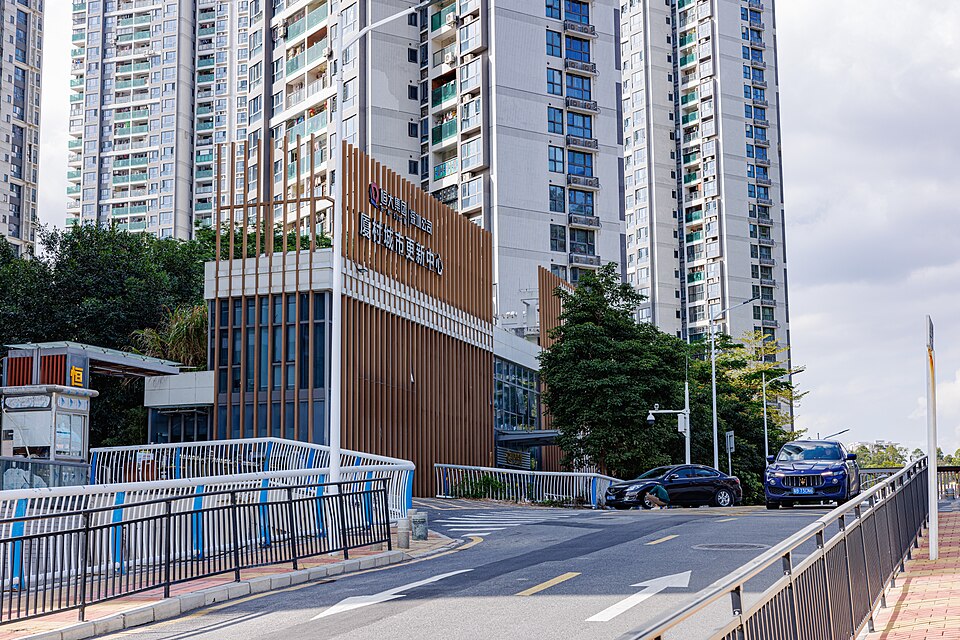
Meanwhile, amidst evolving demographic structures and fundamental shifts in urbanization, the challenges facing the real estate market are not merely cyclical, but reflect a broader transition toward a new development paradigm. As distressed developers are gradually cleared from the market, industry players will need to explore new development models. The real estate sector, too, will enter a new era increasingly centered on urban renewal.
Final analysis conclusion:
Evergrande’s entry into judicial reorganization, alongside the prospect of bankruptcy liquidation and market exit, signals that the process of industry consolidation and inventory revitalization in China is likely to accelerate. As weaker players are gradually cleared from the market, the foundations for market stabilization will strengthen. Nevertheless, risk resolution and debt deleveraging will remain a gradual process. A sustainable recovery in China’s real estate market will ultimately depend on the establishment of a new development model centered on urban renewal.
______________
Dr. Wei Hongxu is a Senior Economist of China Macro-Economy Research Center at ANBOUND, an independent think tank.


