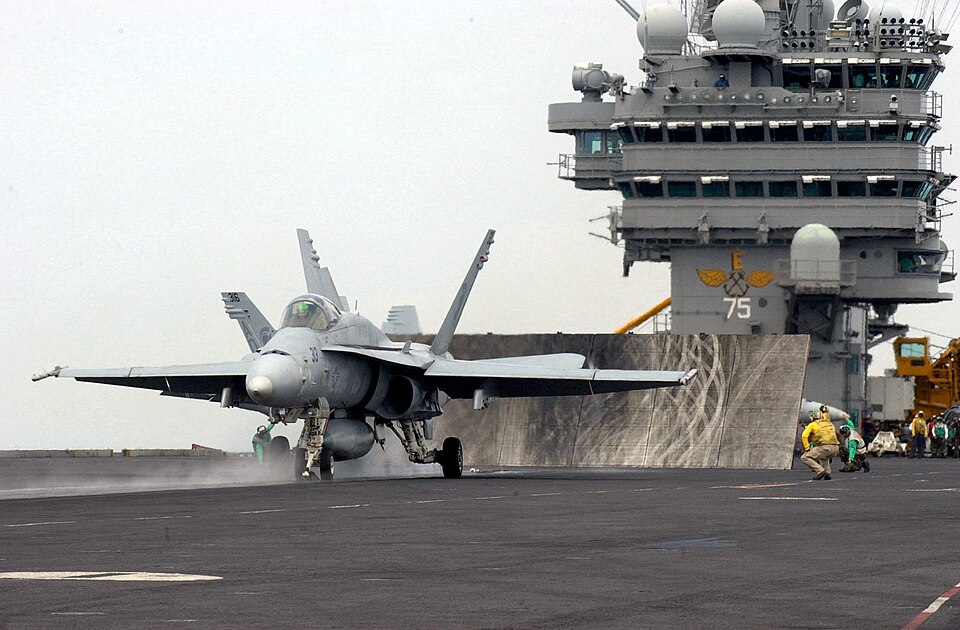
For many, the formidable military capability of the United States stems from advanced weapons and equipment, massive military spending, and the construction of a global military system. Historically, however, what truly makes the U.S. worth studying is not its perpetual technological lead, but its ability to rapidly mobilize and organize entire societal resources when facing major geopolitical conflicts and competition, and how it transforms commercial, industrial, and technological capabilities into strategic power.
World War II is a classic example in this.
Looking back at World War II today, people often focus on how many aircraft carriers, airplanes, and advanced weapons the U.S. possessed. In reality, the U.S. was not an absolute leader in military technology at the outbreak of the war. When the U.S. formally entered World War II in 1941, its military had experienced prolonged disarmament, and its defense industrial system had not yet fully transitioned to a wartime footing. By contrast, Germany and Japan held advantages in certain military technology fields. Japan's Zero fighter even surpassed comparable American equipment for a time, and a similar situation prevailed across many other equipment sectors.
Nevertheless, a true war or conflict tests a country's ability to rapidly organize resources and build a sustained, overwhelming capacity for producing military assets.
With the progression of World War II, the U.S. launched a massive industrial mobilization. Through procurement contracts, policies, and organizational coordination, the government integrated a vast number of civilian enterprises into the defense industrial system. Automobile factories, machinery plants, hardware businesses, and even some companies originally producing consumer goods began undertaking defense manufacturing tasks. Before the war, annual U.S. military firearm production stood at only 800,000 units. After the nation launched total national defense mobilization, more than 3,200 civilian factories undertook defense orders, including 860 sewing machine plants, 420 hardware and machinery plants, and 180 auto parts plants. At its peak, 120 M1 Garand submachine guns and 80 Thompson submachine guns rolled off the production lines every hour, with daily firearm output exceeding 4,800 units.
Other than firearms, civilian factories produced ammunition in batches, achieving full-chain self-sufficiency in weaponry and equipment. Throughout World War II, American civilian factories produced a cumulative total of 14.26 million military firearms and 41 billion rounds of ammunition, accounting for 92% of the U.S. military's total equipment volume. The absolute firepower advantage of the U.S. military did not stem from how formidable the troops were, but from the civilian industry backing up the entire effort.
During World War II, the famous Liberty Ship program was also a quintessential representative of this dynamic. Initially, building a single Liberty Ship took the U.S. hundreds of days. However, driven by standardized design, assembly-line production, and coordinated industrial advancement, the construction cycle continued to shrink. By the late stage of the war, the most astonishing shipbuilding record in the country’s shipbuilding industry was achieved by the Kaiser shipyard in the U.S., where a Liberty Ship, the SS Robert E. Peary, took only about 4 days, 15 hours, and 30 minutes from the laying of the keel to launching and delivery to the U.S. military.
Modern warfare is not a contest over whether a specific weapon is leading, but over who can continuously manufacture and continuously replenish consumption. Through the high degree of integration between civil and military industries, the U.S. leveraged its industrial system to transform war from a purely military competition into a competition between industrial systems.
The development of the Jeep followed a similar path. The Jeep, widely used by the U.S. military and found almost everywhere during World War II, was not entirely designed and manufactured by the military itself. Instead, after the military put forward its requirements, multiple automotive companies participated together, even though these enterprises were originally industrial competitors. Bantam handled the early design of the entire Jeep, Willys optimized its performance, and Ford participated in mass production, ultimately manufacturing over 600,000 vehicles. Calculated against the 3 million personnel of the U.S. expeditionary force in Europe, this meant roughly one Jeep for every five US soldiers.
These cases demonstrate that the greatest advantage of the U.S. during World War II was not any single defense contractor, nor any single leading weapon, but the capacity of its entire societal industrial system to rapidly switch gears under the framework of civil-military integration. It produced cars, machinery, and commercial consumer goods in peacetime, and could rapidly pivot to defense manufacturing during wartime, forming a mega, comprehensive military resource system.
This is the real advantage of America's long-term competitiveness.
Notably, the U.S. has not held a technological lead in every era, but it possesses rather strong catch-up capabilities alongside strong reorganization and planning capacity. Once a particular field is deemed to have strategic value, it is often able to rapidly mobilize capital, talent, enterprises, and research resources to form new production capacity systems and achieve supremacy. A historical lesson for this is that no matter the endeavor, once the U.S. begins to take things seriously, it will make itself a formidable rival, and such scenarios have repeated themselves throughout history.
During the period of reform and opening-up, the Chinese women's volleyball team long led the world. At that time, the Chinese women's volleyball team rapidly improved itself by introducing a renowned Japanese coach and studying the training system of the Japanese women's volleyball team. Later, the U.S. also began to attach importance to this field, introducing scientific training methods, data analysis, and modern sports management systems. The historically weak U.S. women's volleyball team rapidly grew into the primary competitor of the Chinese women's volleyball team.
Today, a similar shift is unfolding in the fields of defense technology and equipment in the U.S.
In recent years, driven by sustained military procurement support, the appeal of the market has begun to emerge. A large wave of new civil-military integrated defense technology companies has entered the arena, participating in the research and development of novel military equipment and achieving results at super-fast speeds. Among them, Castelion is a case study worth examining.
This company was not founded long ago, and its founding personnel previously worked at Elon Musk's company, endowing the firm with SpaceX's technological aspects. The company developed a hypersonic missile priced at a startlingly low USD 300,000 per unit, instantly transforming traditional hypersonic missiles into inexpensive weapons capable of heavy consumption. These traditionally cost as much as USD 40 million each. More importantly, this is not a PPT company, but a weapons firm that has already developed successfully. Reports indicate that the U.S. Army has placed orders for a large batch of supersonic missiles, preparing to integrate them into the HIMARS rocket launcher system. The U.S. Navy has also placed orders for a large batch of supersonic missiles, preparing to mount them onto aircraft carrier F/A-18 Hornet fighter jets. The company is currently expanding its factory facilities in New Mexico, preparing to vigorously scale up production capacity.
How did a technology company accomplish all of this?
In the past, high-end weapon research and development typically followed a model of high investment, long cycles, high performance, and small batches. Large defense projects often required years of R&D, incurred high costs, and yielded limited equipment quantities. While this model could manufacture advanced equipment, it suffered from long cycles, high costs, and difficulties in rapid expansion. Castelion, by contrast, drew on the development model of SpaceX, bringing the engineering culture of commercial technology companies into the defense sector. Its core pursuit was not merely chasing the ultimate performance of a single weapon, but achieving mass production of weapon systems through rapid testing, rapid iteration, cost reduction, and the combination of existing technologies.
The value of this model lies in accelerating the speed of technological transformation. In the past, defense innovation relied primarily on a small number of large defense contractors, resulting in relatively long project cycles. Moving from the proposition of a requirement to technological R&D and subsequently to equipment formation often took many years. Emerging defense technology companies place greater emphasis on engineering efficiency, introducing the rapid iteration methods of the software industry and commercial aerospace into hardware research and development. This represents a new evolution of the U.S. civil-military integration system. During World War II, the U.S. translated civilian industrial capabilities like automobile and machinery plants into defense capabilities. Today, it wishes to do the same to translate commercial technological capabilities from fields like artificial intelligence, commercial aerospace, and advanced manufacturing into national defense capabilities. More importantly, such civil-military integrated technology companies are not solitary instances. A large wave of young technology elites, eyeing market opportunities in the military equipment industry, is flooding into this market. This not only steers U.S. civil-military integration into a fast lane, but places this total technological mobilization on the critical threshold of an explosion.
In today's technological competition, the greatest innovation is the competition of system-level organizational capabilities. In fields such as AI, commercial aerospace, high-end manufacturing, and advanced materials, future competition will rely not merely on point-based technological breakthroughs in laboratories, but on who can establish an integrated system spanning technological R&D, enterprise growth, capital support, and mass production. Whoever combines these elements well and possesses the capability to combine them will hold a greater advantage.
As things stand, this has actually become a crucial direction for future global competition. For China, what needs further contemplation in the future is not only how to break through individual technologies, but more importantly, how to more efficiently establish connection mechanisms among existing technologies, capital, industries, and talent. Only by allowing innovative achievements to rapidly enter industries, enabling enterprises to grow, and letting industrial chains form scale can technological advantages truly be translated into competitive advantages.
Final analysis conclusion:
Industrial mobilization in the U.S. during World War II, alongside the rapid rise of new defense technology enterprises today, both demonstrate its ability to rapidly convert civilian industry, technology, capital, and talent into strategic capabilities. Technological competition will increasingly emphasize systemic organization and translation efficiency. Whoever can combine existing technologies more quickly to form scaled production capacity is more likely to seize the initiative in the next round of competition.
______________
Yang Xite is a Research Fellow at ANBOUND, an independent think tank.


