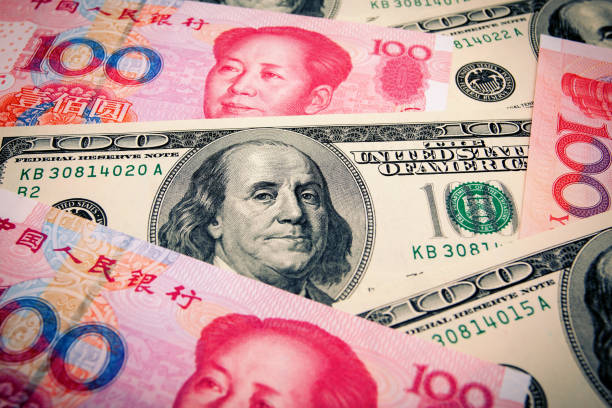
In August 2026, the United States federal government debt surpassed USD 40 trillion for the first time, again raising market concerns over the sustainability of U.S. public finances. While USD 40 trillion is undoubtedly a scale worthy of attention, judging whether an economy is approaching a fiscal crisis based solely on total debt risks overlooking a more critical question: what system ultimately bears the debt, and at what cost can that burden be sustained? According to U.S. Department of the Treasury data, federal debt consists of debt held by the public and intra-governmental holdings, the latter largely comprising Treasury securities held by federal accounts such as Social Security. Overseas investors are a major component of debt held by the public. In June 2026, Japan, the United Kingdom, and Mainland China held approximately USD 1.12 trillion, USD 940 billion, and USD 630 billion in U.S. Treasury securities, respectively. The Federal Reserve is also a major holder, with holdings of U.S. Treasury securities standing at approximately USD 4.49 trillion as of June 24, 2026. Therefore, the U.S. does not rely purely on overseas funds to support its government debt. Instead, it has formed a vast debt-bearing system comprising diverse entities, including domestic financial institutions, households, pension funds, foreign official and private investors, and the central bank.
The uniqueness of this structure comes from the international currency status of the U.S. dollar. U.S. Treasury securities serve not only as a U.S. government financing tool but also as essential safe assets for central bank reserve management, financial institution liquidity management, and global asset allocation. The truly prominent fiscal advantage of the U.S. lies not merely in its ability to issue more government bonds, but in its capacity to transform a substantial portion of its national fiscal debt into financial assets that the global financial system is willing to hold and trade. This mechanism expands the potential demand base for U.S. government debt, enabling its government to retain a financing capacity that most other countries cannot replicate, even as its debt continues to grow. Consequently, USD 40 trillion in itself does not mean the U.S. is nearing a traditional sovereign debt crisis.
However, the ability to sell debt does not mean debt can be increased at infinitely low cost. The August 2026 meeting of the U.S. Treasury Borrowing Advisory Committee indicates that, according to primary dealer median forecasts, maintaining the current scale of coupon-bearing Treasury auctions and private holdings of short-term Treasury supply will result in a USD 1.45 trillion funding gap in private net market-funded demand for fiscal years 2027 through 2028. The market widely expects the Treasury to raise the issuance scale of medium- and long-term coupon-bearing Treasuries again in 2027. Meanwhile, in early August, the yield on the 10-year U.S. Treasury note rose to about 4.6%, and the 2-year yield to about 4.2%. This means the key issue facing U.S. public finances is gradually shifting from whether anyone will buy government bonds to the price that must be paid to continuously absorb an increasing volume of Treasuries.
The U.S. financial system still possesses strong debt-absorption capacity, but this capacity itself is undergoing changes. Fed research shows that between 2023 and September 2025, large hedge funds expanded their total U.S. Treasury exposure to USD 4 trillion, comprising USD 2.4 trillion in long exposure and USD 1.6 trillion in short exposure. Over the same period, hedge fund repo cash borrowing reached USD 3 trillion, with the scale of U.S. Treasury cash-futures basis trading alone reaching approximately USD 830 billion. U.S. Treasuries held by large hedge funds rose from about 4.5% of privately held Treasuries at the beginning of 2023 to about 8.5% in September 2025. This indicates that while the scale of the Treasury market continues to expand, repo financing, derivatives trading, and high-leverage arbitrage are shouldering increasingly important market liquidity support and asset absorption functions.
This development has two sides. A highly developed capital market enhances the capacity of U.S. fiscal debt, allowing massive amounts of government bonds to be continuously allocated and circulated among banks, funds, hedge funds, pension funds, foreign investors, and other financial institutions. Yet as the scale of debt expands, its operation also becomes more dependent on financial institution balance sheets, repo market liquidity, and market risk appetite. Once yields continue to rise or leveraged trades are rapidly unwound, the connection between fiscal financing and financial markets will become even tighter. Therefore, the bearing boundary of U.S. debt may not manifest first as a complete lack of buyers for government bonds, but rather as rising Treasury yields and term premia, increased fiscal interest burdens, and heightened balance sheet and liquidity pressures on the financial system as it absorbs massive government bond supplies.
Compared with the U.S., China has formed a different debt-bearing mechanism. Government debt in China is mainly digested by domestic savings and the domestic financial system. The proportion of foreign currency debt is relatively low, while a relatively low degree of capital account openness and the structural characteristics of the domestic banking system insulate Chinese government debt from the direct shocks of sudden international capital withdrawals. At the same time, over a relatively long period in the past, government and quasi-government financing in China formed a closely integrated symbiotic relationship with infrastructure construction, urbanization, land development, and industrial investment. Debt expansion thus often corresponded directly to the creation of fixed assets and public infrastructure. During periods of rapid industrialization and urbanization when infrastructure demand was robust, this model was able to quickly translate financial resources into transportation, energy, municipal, and industrial capacity, thereby becoming one of the key financing support mechanisms for China's rapid economic development in the past.
The changes that deserve more attention are not that this system is suddenly losing its financing capacity, but rather the ongoing shifts in traditional investment vehicles and their return conditions. According to Ministry of Finance data, as of the end of June 2026, the national local government debt balance stood at RMB 58.77 trillion, comprising RMB 17.84 trillion in general debt and RMB 40.93 trillion in special debt, with a remaining average maturity of 10.8 years for local government bonds and an average interest rate of 2.74%. In the first half of 2026, local government bonds repaid RMB 1.92 trillion in principal upon maturity, of which RMB 1.66 trillion in principal was repaid through the issuance of refinancing bonds. Over the same period, RMB 769.3 billion in interest was paid on local government bonds. Longer bond maturities and lower average rates provide a certain degree of time and cost space for local government debt adjustments, but a larger stock of debt also means that future fiscal resources must continuously balance development and debt repayment needs.
More notably, the asset side corresponding to the debt in China is undergoing structural changes. From January to July 2026, national fixed-asset investment reached RMB 26.03 trillion, a year-on-year decrease of 6.7%. Within this figure, infrastructure investment fell by 3.6%, manufacturing investment fell by 1.7%, and real estate development investment fell by 19.2%. Over the same period, the country’s national real estate development investment totaled RMB 4.30 trillion, the floor space of newly started commercial buildings sold was 450 million square meters, and sales amounted to RMB 4.27 trillion. Meanwhile, some new investment directions maintained relatively rapid growth, with intellectual property product investment growing by 9.1%, information services investment by 19.2%, and aerospace vehicle and equipment manufacturing investment by 12.3%. This indicates that China is not simply entering a stage where there are no projects in which to invest. Rather, the weakening trend in traditional real estate and certain infrastructure investments is occurring simultaneously with the expansion trend in advanced manufacturing, the digital economy, and technology-intensive investments. The assets that government debt and financial resources need to match are undergoing a structural transition.
Changes in the structure of local fiscal revenue have further heightened the necessity of this transition. In the first half of 2026, national government-managed fund budget revenue was RMB 1.52 trillion, a year-on-year decrease of 21.6%, of which local government-managed fund budget revenue at the local level was RMB 1.28 trillion, with revenue from the sale of state-owned land use rights at RMB 977.8 billion, a year-on-year decrease of 31.5%. Over the same period, national general public budget debt interest expenditure stood at RMB 699.1 billion, a year-on-year increase of 4.5%. A sharp decline in land revenue does not mean that local government debt will inevitably experience systemic risk, but it does mean that the fiscal cycle previously formed by relying on land development, real estate expansion, and infrastructure investment is undergoing substantive changes. Local finance needs to find more stable sources of revenue and investment vehicles with longer-term returns.
Local government financing vehicles (LGFVs) add another layer of complexity. In its 2026 Article IV consultation report on China, the IMF analyzed official and expanded government debt separately, with the latter incorporating LGFVs, and re-estimated LGFV debt using corporate financial statements and other data. Crucially, this falls under the IMF's broader analytical framework for assessing quasi-fiscal activities and should not be directly equated with China's statutory government debt. Even so, the analysis highlights that evaluating China's debt capacity requires looking beyond government bonds to also consider the asset returns, cash flows, and refinancing capabilities of quasi-fiscal entities.
Hence, the U.S. and China are not facing the same type of "debt crisis", but rather different constraining postures and structures gradually emerging from two debt-bearing models. The U.S. relies on the international currency status of the dollar and a highly market-oriented financial system to transform massive federal debt into global financial assets. Its prominent problem is that as government bond supply expands, financing costs, interest expenditures, and financial market leverage may increase accordingly. China relies primarily on domestic savings, the banking system, and the investment system to bear government and related debt. Its advantages lie in a stable financing base, lower foreign currency risk, and greater policy adjustment space, while the change it needs to adapt to is how to improve the utilization efficiency of new fiscal resources. Additionally, it also needs to form new quality assets and long-term return sources after the investment conditions for real estate, land, and traditional infrastructure change.
Final analysis conclusion:
Criteria for measuring fiscal safety in an era of high debt can no longer remain at the level of total debt or simple international rankings. Debt exceeding USD 40 trillion in the U.S. does not prove in isolation that its fiscal system is about to lose its bearing capacity, nor can the continued expansion of government and related debt scales in China be assessed for sustainability detached from domestic savings, the financial system, and the asset formation and return capabilities corresponding to the debt. What truly determines debt sustainability is whether an economy can continue to finance itself at an affordable cost, and whether the assets, demand, and productive capacity generated by the debt can produce sufficient economic and social returns. What the U.S. needs to watch out for is preventing the continuous expansion of debt supply from ultimately translating into excessively high financing costs and financial market leverage pressures. Meanwhile, China needs more urgently to adapt to changes in traditional investment models and allocate limited new debt resources more toward fields that can raise productivity, improve public services, expand effective demand, and build long-term development capacity. Although their debt issues manifest differently, both countries show that once debt scales continue to expand, what is truly scarce is no longer just financing capacity, but quality assets, fiscal revenue, and economic growth capable of supporting debt over the long term.
______________
Zhou Chao is a Research Fellow for Geopolitical Strategy programme at ANBOUND, an independent think tank.


