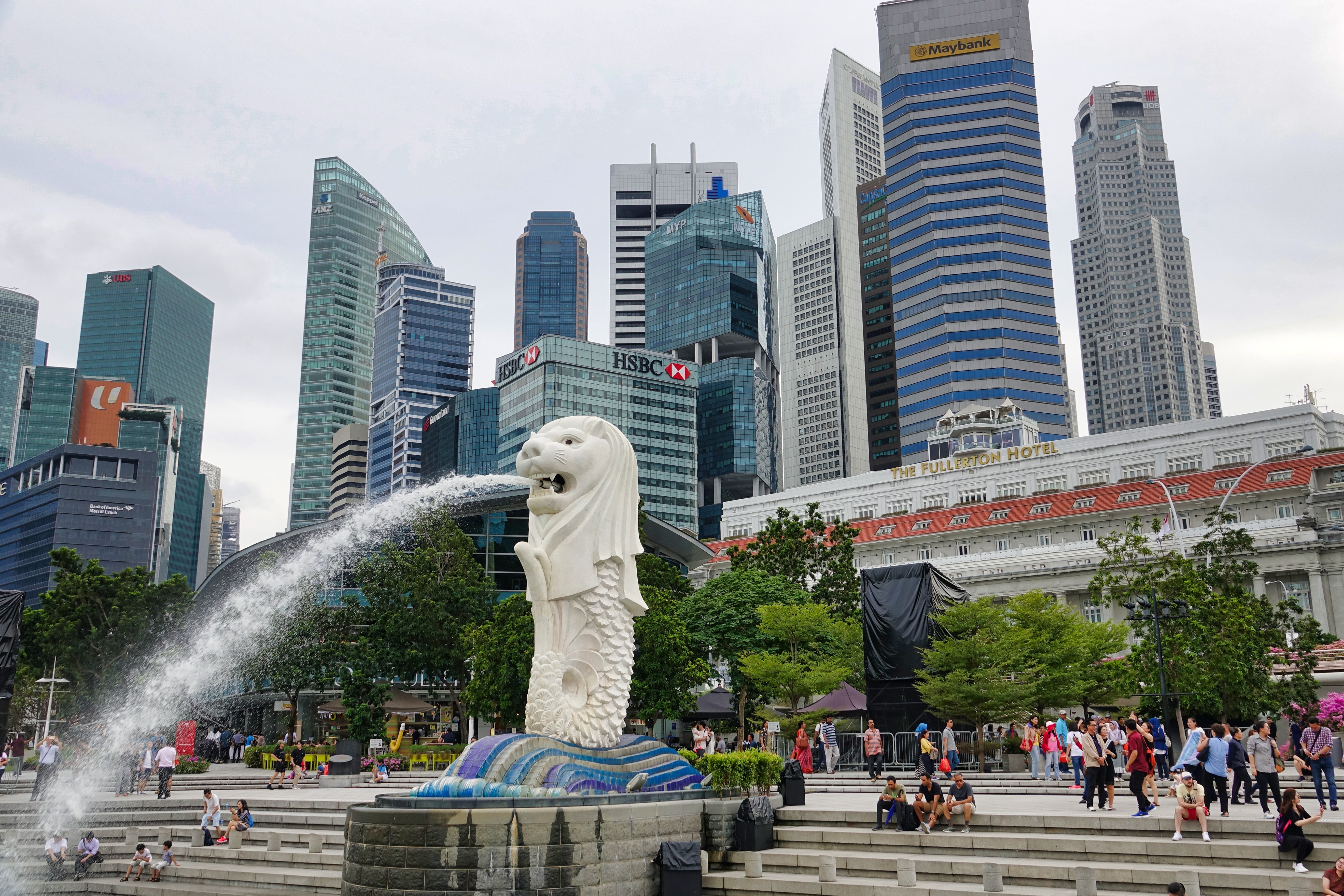
In recent years, Singapore's development performance has remained remarkably impressive. As a vital global hub for finance, shipping, trade, and wealth management, Singapore continues to hold a prominent position within the Southeast Asian and global economic systems, thanks to its stable political environment, efficient government administration, mature legal framework, and extensive international networks. Data from the Monetary Authority of Singapore (MAS) indicates that its assets under management reached approximately SGD 6.07 trillion in 2024, representing a year-on-year increase of 12%. Of this total, approximately 77% of the funds originated from overseas, and roughly 88% of the assets were ultimately deployed outside of Singapore. The island-nation is not merely a city-state; it is a crucial node in Asia for the allocation of global capital, enterprises, talent, and information. The 2025 general election appeared to substantiate the stability of this system further. The People's Action Party (PAP) secured 65.57% of the vote, winning 87 out of the 97 seats in Parliament, a notable rebound from the 2020 general election, while the Workers' Party (WP), though retaining 10 seats, failed to expand its political influence. Lawrence Wong secured his first full electoral mandate since assuming the office of Prime Minister, and the political foundation for the PAP's prolonged governance appears solid.
However, Lawrence Wong's remarks following the election did not reflect a winner's high degree of optimism. He repeatedly emphasized that Singapore is facing an increasingly dangerous world, and that the government must prepare for external shocks, economic competition, and social shifts. Institutions such as the International Monetary Fund (IMF) have similarly pointed out that geoeconomic fragmentation, supply chain restructuring, stricter cross-border capital regulation, and slowing global trade growth could directly impact Singapore's highly open economic structure. Singapore's current prosperity remains built upon the development model that gradually took shape during the Lee Kuan Yew era. This model features the PAP's long-term governance as its political foundation, alongside an efficient bureaucratic system, state-directed resource allocation, meritocracy, multi-ethnic management, and deep integration into globalization. The long-term effective operation of this model has relied heavily on the continuous expansion of international trade, the free flow of capital and talent, the relative stability of the U.S.-led regional order, and the sustained rapid growth of Asian economies. The core issue, however, is whether Singapore can continue to replicate its past prosperity when these external conditions and internal social foundations undergo simultaneous transformations, which has evolved into a strategic question of profound significance.
First, financial openness is translating into capital legitimacy pressures. Singapore's success over the past few decades has been built largely on open finance, a low-tax environment, wealth management, and a professional services framework. A stable rule of law, strict property rights protection, efficient administrative approvals, and convenient international settlement mechanisms have established Singapore as a key aggregation hub for Asian high-net-worth individuals and multinational capital. By the end of 2024, the number of single-family offices (SFOs) in Singapore had surpassed 2,000, compared to approximately 700 in 2021, an increase of nearly twofold in just a few years. This expansion indicates that Singapore is rapidly emerging as a private wealth management center for Asia and the world, while also reflecting global capital's trust in its political stability and institutional security.
Yet, the more open, convenient, and secure a financial system is, the more susceptible it becomes to serving as a "clearinghouse" where multinational capital with highly complex origins seeks re-packaging. The massive money laundering case uncovered in Singapore in 2023 involved approximately SGD 3 billion in assets. The illicit wealth was closely tied to overseas online gambling, fraud, and other underground economic activities, with funds transferred and preserved through bank accounts, luxury residences, vehicles, jewelry, luxury goods, and even corporate entities. The crucial significance of this case lies not only in the staggering sum involved, but also in how it vividly exposed the potential links connecting Southeast Asia's underground economy with Singapore's formal financial system. Here, criminal proceeds generated in jurisdictions with lax regulation, such as Myanmar, Cambodia, and Laos, are funneled through underground banks, casinos, virtual assets, and cross-border payment networks before entering Singapore's banking, trust, family office, real estate, and high-end consumption systems to be ultimately "laundered".
In these cases, the MAS took regulatory enforcement actions against nine financial institutions, imposing total fines of SGD 27.45 million. The compliance failures involved customer risk assessment, verification of the source of funds, abnormal transaction monitoring, and high-risk account management. This demonstrates that the issue was not merely criminals bypassing regulations, but rather that certain financial institutions and professional service providers lacked or were unwilling to conduct sufficiently deep scrutiny into the authenticity of funds and ultimate beneficial owners when vying for high-net-worth clients. Lawyers, accountants, bank relationship managers, trust companies, corporate service providers, fund managers, and real estate brokers formed the professional service network necessary for complex wealth to enter the legitimate system. The more Singapore seeks to expand its wealth management, family office, and private banking businesses, the greater the costs it must shoulder in identification, vetting, and accountability that match the scale of its financial sector.
Hence, Singapore is facing a dilemma. If it continues to emphasize the ease of capital entry, approval efficiency, and tax advantages, its financial system may remain exposed to infiltration by Southeast Asia's underground economy and cross-border gray capital, thereby damaging its international reputation. Conversely, if it significantly raises vetting thresholds, strengthens the verification of fund origins, and enforces ultimate beneficial ownership penetration, it risks undermining its competitiveness relative to wealth management centers such as Hong Kong, Dubai, and Switzerland. Whether Singapore can maintain its financial prominence in the future depends no longer merely on how much capital it attracts, but on whether it can prove that such capital is sufficiently clean, transparent, and credible. The previous financial competition model centered on convenience is gradually being forced to transition toward a new phase centered on capital quality and regulatory credibility.
Second, the elite governance model faces tests of social carrying capacity. Another pillar of the Lee Kuan Yew model is social governance centered on a strong government, an elite bureaucracy, and meritocracy. Through public housing, educational selection, employment policies, ethnic quotas, and social administration, Singapore shaped a city-state with a complex demographic structure and limited resources into a highly stable political community. This system continues to exhibit strong resilience to this day, as evidenced by the results of the 2025 general election.
However, stable election results do not mean that the social foundation has remained unchanged. Meritocracy historically provided ordinary citizens with a pathway to alter their destinies through examinations, education, and public sector advancement, while also furnishing legitimacy for elite governance. Nevertheless, when disparities in family wealth, educational investment, school resources, residential locations, and social networks continue to widen, uniform examination and selection rules do not automatically translate into equality at the starting line. Lawrence Wong's own ascent from an ordinary middle-class family to the highest leadership tier can still be viewed as a symbol of the effectiveness of Singapore's social mobility mechanisms, but isolated success stories are increasingly struggling to fully address public anxieties regarding class rigidity.
Racial issues similarly show that overall stability and structural disparities can and do exist simultaneously. Data from the 2020 census indicated that the median monthly household income was SGD 7,972 for ethnic Chinese households, SGD 8,500 for Indian households, and SGD 5,704 for Malay households. Calculated on a per-household-member basis, the median monthly work income per capita was SGD 2,603 for Chinese households, SGD 2,521 for Indian households, and SGD 1,594 for Malay households, indicating that relative disparities in income, education, and occupational distribution among different racial groups persist and remain pronounced. The 2024 IPS Survey on Race, Religion and Language showed that 65.4% of respondents perceived the level of social harmony as high or very high, up from 57.1% in 2018. At the same time, however, the proportion of respondents indicating that they would judge someone's behavior based on their race rose from 35.2% in 2018 to 43.5%. Regarding employment and advancement, 18.4% of Malay respondents and 16.7% of Indian respondents reported having experienced racial discrimination, compared to 3.7% of Chinese respondents. On the other hand, there has been discontent among minority groups such as Malays regarding issues of workplace disparities and unfairness. These data and analyses illustrate that while Singapore has successfully established a low-conflict multi-racial order, significant gaps remain in the perception of fairness across different ethnic groups.
The growth of the migrant population has further reshaped the preexisting social structure. As of June 2025, Singapore's total population reached 6.11 million, of which approximately 1.91 million were non-residents, accounting for over 30%. High-net-worth individuals, multinational executives, ordinary foreign professionals, construction workers, and domestic helpers occupy completely different positions regarding political rights, housing eligibility, social security, and living space. The influx of global wealth has driven up the high-end housing and consumer markets, while low-skilled foreign labor has long sustained construction, logistics, manufacturing, and domestic care. Together, the two sustain Singapore's globalized economy while creating sharply defined social stratification. The social challenges facing Singapore in the future are no longer confined to traditional racial relations, but rather center on how to continue sustaining a sense of fairness and communal identity amidst the overlapping boundaries of ethnicity, nationality, wealth, and class.
Third, Singapore's strategic intermediary role faces pressure for repositioning. The country's most important national capability has long been its ability to shape itself as an intermediary and connector between different systems. It is deeply integrated into Chinese and Asian manufacturing networks while maintaining close ties with the United States in finance, technology, security, and international rules. At the same time, it relies on ASEAN to secure regional political space and disperses external risks through multiple connections with Europe, Japan, India, and the Middle East. This strategic positioning is not a simple diplomatic balancing act, but an entire mode of economic survival. The key factor enabling Singapore to become a hub for global trade, shipping, capital, and corporate headquarters was that, although the past international system harbored competition, markets, technology, capital, and supply chains remained highly compatible.
However, the current development is that U.S.-China competition is expanding from the diplomatic and security domains into technology standards, investment screening, financial sanctions, data flows, critical industries, and supply chain security. In the past, Singapore could deeply connect with China economically while relying on the U.S. for security and advanced technology, thereby maintaining a low-cost strategic balance between the two. Yet as the rule boundaries of disparate systems become increasingly clear-cut, the costs of this model will continually escalate. Determining which Chinese capital can continue to be absorbed, which U.S. technology and financial rules must be abided by, and which Southeast Asian gray economies must be severed will all become concrete and sensitive policy choices. Singapore does not necessarily need to openly pick a side between China and the U.S., but it must make increasingly unilateral decisions on a growing number of industrial, financial, and technological matters.
Historically, Singapore reaped benefits by connecting to a generally compatible global system. In the future, Singapore will need to maintain connections among systems that are increasingly incompatible with one another. This role demands not only diplomatic acumen, but also stronger industrial foundations, technological capabilities, rule-making authority, and regional governance responsibilities.
It is particularly noteworthy that Singapore cannot merely enjoy the dividends generated by Southeast Asian economic growth and capital flows while considering scam compounds, underground finance, human trafficking, and money laundering networks as merely internal issues of neighboring countries. Southeast Asia's underground economy has taken on cross-border, industrialized, and financialized trends. As the region's most mature financial and professional services center, Singapore inevitably occupies a major terminal point in the chain of criminal proceeds legalization. Its future strategic credibility will depend not only on its ability to maintain financial and trade efficiency, but also on its capacity to participate in shaping a more transparent, controllable, and credible regional economic order. Shifting from a traditional intermediary hub to a high-credibility hub will be a necessary condition for Singapore to preserve its strategic value, yet this transformation also entails higher regulatory costs, more complex diplomatic choices, and greater regional responsibilities. Whether its prosperity can endure ultimately depends on whether it can redefine the boundaries of financial openness, repair the foundations of social equity, and forge new, irreplaceable value amidst the fragmentation of the global order, all while preserving efficiency and stability.
Final analysis conclusion:
Singapore currently shows no obvious signs of decline. PAP retains a robust political base, and its bureaucratic apparatus, financial system, and international networks maintain high competitiveness. However, the open finance, elite governance, and strategic intermediary status that underpinned its past success are translating into fresh pressures concerning capital legitimacy, social carrying capacity, and national positioning, respectively. While the institutional framework left behind by Lee Kuan Yew can continue to function, the task confronting Lawrence Wong is no longer simply replicating the development path of the Lee Kuan Yew era, but rather preventing the conditions of that model's past success from gradually transforming into structural burdens for future development.
______________
Zhou Chao is a Research Fellow for Geopolitical Strategy programme at ANBOUND, an independent think tank.


