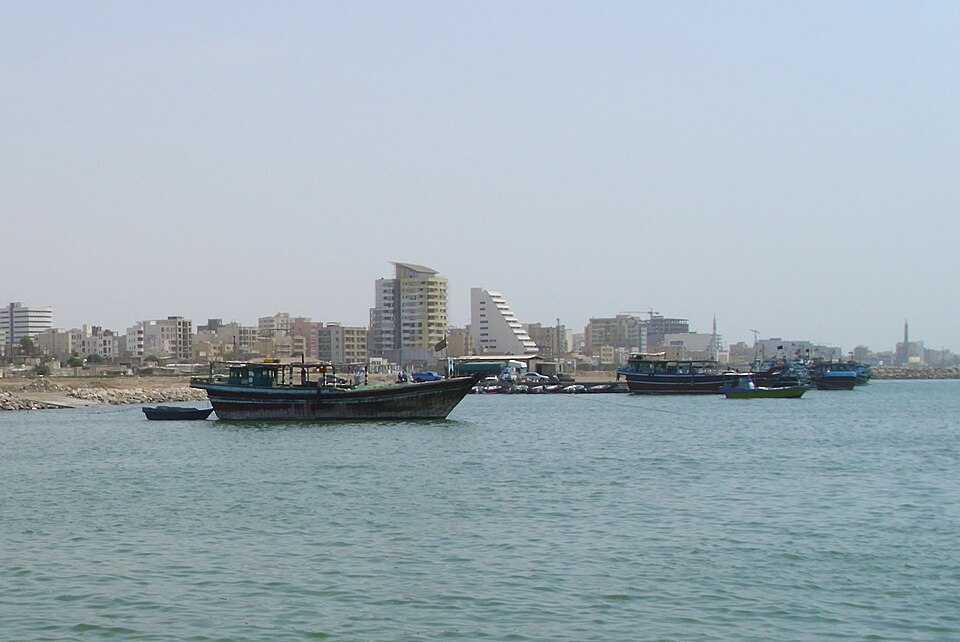
Recently, tensions have once again ignited between the United States and Iran over the passage through the Strait of Hormuz. U.S. President Donald Trump stated that the U.S. military will reinstate the blockade on Iranian ports in the Strait of Hormuz and levy a 20% transit fee. As a vital global energy shipping choke point, the Strait of Hormuz bears the heavy responsibility of transporting 21% of the world's seaborne crude oil and 27% of its liquefied natural gas. This directly influences fluctuations in international energy prices and dominates the direction of the geopolitical landscape in the Middle East. For a long time, the U.S. and Iran have engaged in a sustained game of chess over control of navigation through the strait and regional dominance in the Middle East, with the state of confrontation continually escalating. Relying on its network of permanent military bases in the Persian Gulf, the U.S. has sustained its military deterrence to continuously weaken Iran's military capability to blockade the shipping route. The Trump administration has even repeatedly and publicly disclosed military operational concepts, planning to directly deploy troops to occupy the Iranian coastal zone on the northern shore of the strait in a bid to completely control this world-class strategic waterway.
ANBOUND's founder Kung Chan pointed out that if the U.S. wishes to control the coastal zone of the Strait of Hormuz, the main obstacle naturally comes from Iran which is already in the anti-Western camp. However, the spatial distribution characteristics of Iran's domestic population are the key variable determining the difficulty of the U.S. military's occupation operations. If the population size of the controlled area is smaller, it would be easier for the U.S. side to take control, and local resistance and opposition would face great difficulty in organizing effectively, while the Iranian regular army could easily be destroyed. After all, long-term resistance requires a large population with a high level of support.
Looking at spatial population distribution, although the coastal area of the Strait of Hormuz possesses irreplaceable geostrategic value, it is a typically vast but sparsely populated remote frontier within Iran.
Iran's total population is approximately 89 million, and its population and economic core circles are highly concentrated in the northern Caspian Sea coast and the western Zagros foothills oasis zone. The resident population of the single metropolitan area of the capital, Tehran, has surpassed 14 million, and it alone accounts for more than 15% of the country's total population. The Hormozgan Province, which guards the entire strait, has a total jurisdictional area exceeding 70,000 square kilometers, yet its resident population is maintained at only 1.8 to 2 million, even lower than the resident population of over 3 million in the Gaza Strip. It inherently lacks the manpower reserves to wage a nationwide, sustained resistance.
Focusing further on the core military operational area, the 50-kilometer-wide narrow coastal core strip on the northern shore of the strait encompasses key targets such as major ports, offshore strategic islands, and coastal towns, with a resident population of only 1 million to 1.3 million. Its population density is far lower than that of mainstream coastal economic belts globally. The entire coastal region lacks contiguous large urban agglomerations. The population is highly concentrated in a few core port towns and offshore islands, while the vast inland hinterland consists of uninhabited deserts. This makes it difficult for Iran to rely on terrain to construct a multi-layered defense-in-depth system, which also becomes the essential geopolitical advantage for the U.S. military to conduct amphibious landings and rapid occupation operations.
First, the defense nodes are highly concentrated, and a single-point breakthrough can dismantle the defense system of the entire region.
Bandar Abbas is the capital of Hormozgan Province, the largest dual-use military-civilian port in southern Iran, and simultaneously the main base of the Islamic Revolutionary Guard Corps (IRGC)'s navy and the command hub for shore-based anti-ship missiles. Currently, the resident population of the main urban area of Bandar Abbas and its contiguous suburban residential areas reaches 600,000 to 700,000, accounting for half of the population along the entire coast of the strait. In this concentrated area lie all key infrastructures, including desalination plants, large water storage tanks, port shipping lanes, land access routes, and airports. As long as the U.S. military completes its control of the port city, it can cut off the north-south flow of goods, fresh water supply, and maritime shipping along the coast. The remaining scattered villages, towns, and small islands will lose their collaborative support and the hub for organizing coordinated resistance. The U.S. airstrike on coastal water supply facilities in June 2026 confirmed this logic when two concrete water storage tanks with a total capacity of 2.5 million liters were precisely destroyed, instantly plunging 10 surrounding villages into a drinking water crisis under temperatures of 45°C. This demonstrates that by effectively controlling Bandar Abbas, half of the issues along the coast of the strait are resolved.
In addition to the mainland coastal ports, key offshore islands serve as the keys to blockading the shipping route, but they generally suffer from the shortcomings of sparse resident populations and fragile livelihood guarantees. The resident population of all the islands combined is only 200,000 to 250,000. Among them, Qeshm Island, the largest island in the Persian Gulf with a total area of 1,340 square kilometers, hosts a large number of underground missile sites, drone launch stations, and high-speed speedboat fleet docks. It is the main maritime fortress of Iran's nearshore defense, yet its resident population is only 150,000. The three strategic small islands of Hormuz, Larak, and Abu Musa have no natural surface runoff, relying entirely on small desalination equipment and cross-island shipping for all fresh water. The resident population of each single island is only a few thousand people, and the vast majority of the areas on the islands are military fortifications, with civilian settlements being scattered and extremely small in scale.
Aside from the core coastal ports and islands, only the two small towns of Minab and Jask possess large-scale populations. Minab has a resident population of about 80,000, with the fishing economy as its mainstay. Meanwhile, Jask has a resident population of about 20,000 and is being heavily developed by Iran as a new port for crude oil export. Most of the remaining coastal areas consist of desolate deserts and salt flats, with only dozens of fishing villages populated by a few hundred people scattered around. They are separated from each other by the desert, making land travel difficult and preventing the formation of a contiguous defensive front.
Second, extreme climate and water scarcity shortcomings drastically weaken local defense and guerrilla capabilities.
The sparse population along the coast of the strait is mainly constrained by the following harsh natural and historical conditions. On one hand, the coast of the Strait of Hormuz belongs to an extremely hot and humid marine desert climate. Summer temperatures frequently break through 45°C or even 50°C. Due to the extremely high humidity, the perceived temperature and heat index often reach the limits of human survival, making it highly unsuitable for large-scale settlement. Compared with highland cities in inland Iran such as Tehran and Isfahan, which feature large diurnal temperature variations and moderate humidity in summer capable of supporting populations in the tens of millions, outdoor operations along the coast of the strait cannot be sustained for more than three hours in summer. Farming, large-scale wild military deployments, and long-term civilian guerrilla warfare are all severely restricted by the climate.
On the other hand, there is an extreme shortage of surface water. The Zagros Mountains run across southern Iran, blocking Indian Ocean moisture from penetrating deep into the coast. There is not a single perennial river along the entire northern coast of the strait, and the salinity of the groundwater exceeds standards, rendering it undrinkable. The local population relies 100% on desalination plants and long-distance inland water pipelines for domestic and military fresh water. Qeshm Island and Bandar Abbas each have only one to two large core desalination plants, while other villages and towns rely on small units. If the U.S. military controls the water supply, an extremely simple military operation, then this region will have no choice but to submit to control and occupation. In March 2026, the U.S. military launched airstrikes on the main desalination plant on Qeshm Island, directly causing 30 villages to lose water and completely depleting emergency water supplies for hospitals. Local citizens were forced to pressure the garrisoned troops to demand peace talks, fully proving the decisive role of water resources in regional stability.
Finally, there is a unique demographic structure here, and not all inhabitants are ethnically Persian.
Not only is the population along the coast of the strait small, but its ethnic and religious structures also differ vastly from those of the inland core areas of Iran, resulting in a weaker sense of national identity among the regional population. In the coastal areas of the strait, the proportion of Sunnis is extremely high. Iran is the quintessential Shia nation globally, with over 90% of the country's main Persian ethnic group being Shia Muslims. However, the local indigenous Bandari people along the coast and offshore islands of the strait are mostly Sunni Muslims, with only the garrisoned troops, administrative officials, and immigrants from the north being Shia. On Qeshm Island, local Sunni residents account for over 70% of the population, and in the suburban fishing villages of Bandar Abbas, the Sunni population exceeds half. Sectarian differences have persisted for decades, and local protest demands have long included the distribution of religious resources and equal administrative rights. This means that if Iran wishes to mobilize all social forces, it faces a certain degree of difficulty.
This is, in fact, the cultural sphere of the Bandaris, which literally means "people of the port". They are the mixed-race descendants of Persians, Arabs, Balochis, and Black Africans brought over historically through the slave trade in the past, and their cultural background is completely distinct from the inland Persian culture of Iran. Local women wear distinctive, colorful or black Bandari masks, creating a sharp visual contrast with the traditional black chador worn by women in inland Iran. The local dialect integrates a large number of Arabic and Swahili vocabulary, making them culturally closer to the opposite shore of the Persian Gulf than to Iran. Historically, they have long traded and intermarried with Gulf Arab countries such as Oman and the United Arab Emirates, and their cultural and commercial ties with these places are far stronger than their connections with the highland cities of inland Iran. A large number of them work and intermarry across borders, and their sense of identity with the Persian national narrative is weak.
Kung Chan's analysis and assessment suggest that if Trump takes military action there, it is feasible for the U.S. military to fully control the coastal region of the Strait of Hormuz; for this, controlling water resources is the key. Yet, is Iran fully prepared for this? The answer should be no. The Iranians believe that they can accomplish the task of deterrence by relying solely on missile systems. Currently, the Iranians are actually exploiting Trump's lack of geostrategic knowledge to intimidate him, rather than Iran itself actually possessing that kind of control capability. Once a real war breaks out, the Iranians may be exposed for what they truly are, and a Western-controlled "state within a state" that can penetrate deep into Iran at any time could emerge within Iranian territory, further squeezing Iran's overall geopolitical space for survival.
Final analysis conclusion:
The Strait of Hormuz is a vitally important global energy shipping lane, and the competition between the U.S. and Iran over its control is ongoing. If Trump makes up his mind, it is feasible to some extent for the U.S. military to fully control this coastal strip. The region is vast but sparsely populated; defense nodes are highly concentrated, and a single-point breakthrough can dismantle the defense system. Meanwhile, the extreme climate and water resource shortcomings turn population and water resources into strategic weapons, which will drastically weaken local defense and guerrilla capabilities. Furthermore, the demographic structure of this region is unique, as the inhabitants are not all Persian, showing major differences from the inland. Therefore, once war breaks out, a Western-controlled Iranian "state within a state" may emerge.
_____________
He Yan is a researcher at ANBOUND, an independent think tank.


