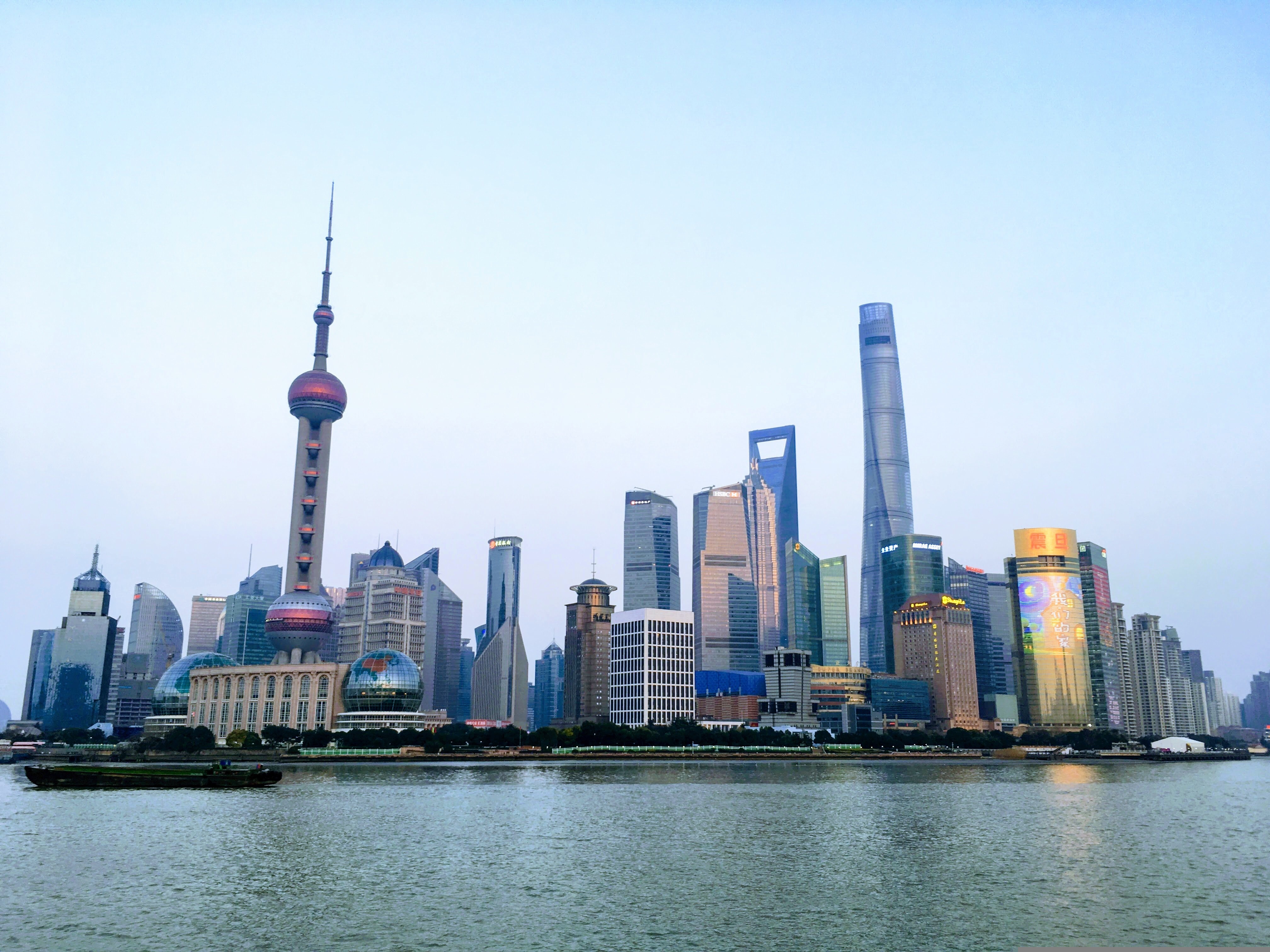
For over a century, Shanghai has consistently served as the driving force of China's economy, a cornerstone city whose status has rarely been shaken. From its opening as a treaty port in the late Qing dynasty, to its rise as one of the largest cities in East Asia during the Republican era, and its transformation into a heavy industrial hub after the establishment of the People’s Republic of China, Shanghai has increasingly become the bellwether of the national economy since the launch of the reform and opening-up era. To the older generation, "Shanghai-made goods" were a symbol of quality while for the younger generation, Shanghai is synonymous with a financial center, a fashion capital, and an international metropolis. No matter how times have changed, Shanghai has always stood at the very forefront. However, in the present day, looking from the perspective of its internal structural issues and economic growth potential, Shanghai's economic potential is declining, and it is increasingly challenging for the city to sustain its role as the pillar of the Chinese economy in the future.
Data do show that Shanghai's status as China's top economic city remains unquestionable. In 2025, the city’s GDP reached RMB 5,670.871 billion, a year-on-year increase of 5.4%, with its total economic output continuing to rank first among all Chinese cities. Whether in finance, trade, shipping, high-end manufacturing, or scientific and technological innovation, Shanghai still delivers impressive results. The annual China International Import Expo (CIIE), the Lujiazui Forum, and various high-end international conferences consistently attract global attention.
Yet, when broken down, one will see the underlying concerns regarding the growth potential of Shanghai's economy are multiplying.
First, the aftershocks of the real estate collapse persist, and the burden is growing heavier. Shanghai's development over the past few decades has shared the same fundamental flaw as the rest of the nation, which was the over-reliance on real estate. The problems arising from this elsewhere in China are only larger and more pronounced in Shanghai. The city's land transfer revenues peaked at nearly RMB 340 billion in 2021, but by 2025, this figure had dropped to around RMB 250 billion, and it is contracting further in 2026. For years, real estate and its related industries have accounted for approximately 20% of Shanghai's GDP, meaning that out of every RMB 5 of economic output, RMB 1 came from housing and land. While the real estate-driven economic model has clearly collapsed, its inertia remains, along with the debt and operational costs. Furthermore, the larger the scale of past infrastructure construction, the more staggering the maintenance costs become, leading to a widening funding gap as revenues drop sharply. At the same time, Shanghai has the highest proportion of residential buildings over 20 years old in the country, making urban renewal an urgent priority, yet no scalable, market-driven solution has been found in the short term.
Second, several major state-owned assets that serve as the backbones of Shanghai's economy are underperforming. Under a broad statistical scope, the revenues of Shanghai's state-owned assets account for over 60% of the city's GDP. Consequently, the performance of these state-owned enterprises (SOEs) directly impacts Shanghai's overall economy, and issues in this area are becoming increasingly apparent.
Bright Food Group, an iconic Shanghai SOE with a century-long history, has four listed subsidiaries, namely Bright Dairy, Bright Meat, Bright Real Estate, and Jinfeng Wine, all of which suffered net losses in 2025.
Bright Dairy, once one of the "big three" giants of the Chinese dairy industry, recorded an operating revenue of RMB 23.895 billion in 2025, a year-on-year decrease of 1.58%. Its net profit attributable to shareholders of the parent company turned into a loss of RMB 149 million, compared to a profit of RMB 722 million in the same period last year, representing a sharp year-on-year decline of 120.67%. With revenues falling for four consecutive years, its core profitability has essentially crumbled. The former dairy giant can no longer compete on the same level as other dairy industry companies like Yili and Mengniu.
Bright Meat, whose subsidiaries own household Chinese brands such as White Rabbit Creamy Candy and Maling Luncheon Meat, reported a net loss attributable to the parent company of RMB 132 million in 2025, down 161.3% year-on-year.
Bright Real Estate fared even worse. In 2025, its net loss attributable to the parent company widened by 285.26% year-on-year to RMB 3.654 billion. This established state-owned property developer, which has been rooted in Shanghai for over 30 years, only began posting losses in 2024, yet it managed to triple its losses in 2025. Asset impairment provisions alone exceeded RMB 2 billion, with the total loss wiping out 35.66% of its net assets at the end of 2024.
Jinfeng Wine, a leader in China’s yellow rice wine industry, saw full-year revenue of RMB 528 million in 2025, down 8.67%, with a net profit attributable to the parent company of just RMB 2.04 million. Without RMB 3.75 million in government subsidies, it would have seen a net loss for the year. Its net profit deducted non-recurring gains and losses has been negative for six consecutive years, and the capacity utilization rate of its three factories sits at just 35%.
Beyond the Bright Food group, many other large Shanghai state-owned enterprises are also facing unfavorable conditions.
At SAIC Motor, SAIC Volkswagen's sales fell to 1.024 million vehicles in 2025, while SAIC General Motors dropped to 535,000 vehicles, leaving SAIC Motor with a net profit attributable to the parent company of 10.1 billion yuan for 2025. In contrast, during SAIC's peak in 2018, SAIC Volkswagen sold 2.065 million vehicles, and SAIC GM sold 1.97 million vehicles, pushing SAIC's net profit attributable to the parent company to a staggering 36 billion yuan. The drop in both sales volume and profits over seven years signifies a structural shift. The era of internal combustion engine vehicles has passed, and the luster of joint-venture brands has faded. However, the corresponding products and business models have failed to catch up in time. As the industrial upgrading is underway, it has not yet achieved a true shift in tracks. Compared to BYD, Xiaomi, and even many new electric vehicle startups, Shanghai's automotive industry is struggling to demonstrate a leading market position.
Baosteel has long been a pillar of Shanghai's state-owned assets and a benchmark for the Chinese steel industry. However, in the first quarter of 2026, Baosteel's net profit attributable to the parent company fell 8.61% year-on-year to RMB 2.225 billion. This leader of China's steel sector is facing persistent downward pressure from a contraction in demand across the entire industry. The ongoing real estate slump has shrunk the demand for construction steel, while the manufacturing steel has also been affected by fluctuations in exports. Although Baosteel possesses product lines such as high-end automotive sheets and electrical steel, profit margins for these high-value-added products are also narrowing under the general contraction in demand.
Looking further at large aircraft manufacturing, the final assembly line for China's domestic large passenger aircraft, the C919, is located in Shanghai, and the Commercial Aircraft Corporation of China (COMAC)'s headquarters is also based there. This itself is an important strategic layout granted to Shanghai by the state, as well as an injection and support of central government resources. However, while the C919 is dubbed a domestic aircraft, it actually relies heavily on imports for many components, depending on supply chains from the United States, Europe, and other regions and countries. This means that any friction in the geopolitical environment can disrupt the supply chain. In recent years, the delivery schedule of the C919 has been repeatedly delayed. Although China’s domestic airlines have provided substantial support, resulting in a large backlog of orders, deliveries have stalled. Throughout 2025, only 15 C919 aircraft were delivered, which is equivalent to less than half a month's deliveries of the Boeing 737 in the same class, and far below the initial target of 75 deliveries set at the beginning of the year. As the final assembly base, Shanghai has built the factories, laid out the production lines, and stationed the personnel, but the planes cannot be produced. This also signifies that the related industrial growth would be affected as well.
Another concern for Shanghai's economy lies in its deep reliance on the port economy. The Port of Shanghai is the world's largest container port by throughput, but the fundamental problem with a port economy is that while net export figures appear strong, the vast majority of the goods are not produced by Shanghai itself. Electronic products from Jiangsu, machinery from Shandong, home appliances from Anhui, and various industrial goods from the middle and upper reaches of the Yangtze River converge on Shanghai via the golden waterway and overland transport. They are then shipped globally through Yangshan Port and Waigaoqiao Port, generating massive flows of goods. The immense traffic of Shanghai's foreign trade is actually a primary driver of its economy. Its tangible impact on Shanghai's growth is extraordinary, stimulating industrial localization and providing employment for hundreds of thousands of people. Shanghai acts like a massive conduit where goods flow in from the hinterland, are loaded onto ships, and are sent abroad. Within this conduit, Shanghai captures revenue from supporting services such as logistics, finance, trade services, and shipping insurance.
The greatest risk of this model is that the initiative for growth does not rest in Shanghai's own hands. Most of the goods are manufactured elsewhere, and the export orders belong to others. When the global economy is strong and exports are booming, Shanghai's port economy thrives alongside it. Once exports decline, the vulnerability of Shanghai's port economy is exposed. With no cargo to move, ports sit idle, logistics companies lose business, shipping finance shrinks, and demand for trade services drops, causing a shockwave across the entire chain. In recent years, although China's imports and exports have continued to grow rapidly, the global landscape has entered a phase of de-globalization, with economic uncertainty rising worldwide. Deep-seated contradictions persist between China and the US, Europe, and India, among others. If external demand weakens significantly due to international factors, or if exports from Jiangsu, Shandong, and the middle and upper reaches of the Yangtze River drop, the throughput of the Port of Shanghai will follow them down, hollowing out a major segment of the city's economy.
All in all, Shanghai's past growth relied on real estate, finance, foreign trade, and large state-owned manufacturing enterprises, the exact areas where Shanghai established an early and massive lead. However, having reached this stage of growth, a city's future is no longer determined by the size of its existing legacy assets, but by the pace of its new economy. Real estate and state-owned assets can no longer sustain Shanghai's future, while foreign trade faces extreme uncertainty. Although Shanghai is positioning itself in new economic sectors like semiconductors, artificial intelligence, and biomedicine, and indeed has received strong backing and resource injections from the central government, thereby achieving certain milestones, most of these new economic industries have yet to scale up and become reliably profitable.
The transition of a city from relying on its historic legacies to charting a new path involves a long adjustment period, and Shanghai is currently stuck in this transition, where old growth drivers are declining before new ones can take over. Even if the state continues to inject resources into Shanghai, these structural issues will not disappear on their own. It does not lack resources; rather, its legacy assets are simply too vast. Real estate and traditional state-owned assets occupy too large a proportion of Shanghai's overall economy. Therefore, in terms of growth potential and future prospects, Shanghai's economy is in the process of decelerating, and it may find it difficult to serve as the pillar of the Chinese economy in the years ahead.
Although Shenzhen's total economic output still trails Shanghai's, a comparison between the two reveals that the underlying logic of their economies differs significantly. In recent years, Shenzhen has become increasingly involved in fields such as electronic information, artificial intelligence, new energy vehicles, and biomedicine. It did not start chasing these trends recently. Instead, it began laying the groundwork step by step over a decade ago, and those efforts are now bearing fruit. Most importantly, from the perspective of urban economic competition, Shenzhen's sectors align precisely with China's current strategic direction, meaning that Shenzhen's industrial structure and the national agenda are moving along the same trajectory. On the other hand, Shenzhen's industrial structure is relatively asset-light with fewer historical burdens. With a much lower dependence on real estate, its resistance to transformation is naturally far smaller than Shanghai's. Data shows that Shenzhen's industrial value-added growth rate, its proportion of high-tech industries, and the contribution rate of its new economy are all significantly higher than Shanghai's. These indicators cannot be matched through short-term sprints, as they are the result of many years of accumulation. Moving forward, Shenzhen will likely continue along this path, featuring an industrial structure that is lighter, more resilient, and more closely aligned with national strategy.
From the standpoint of growth potential and long-term trends, unless Shanghai can achieve substantive breakthroughs in urban renewal, reverse the decline of its traditional state-owned assets, and accelerate the adjustment of its industrial structure, Shenzhen has the potential to surpass Shanghai further in economic growth potential. While this may not materialize in the immediate future, the broad direction of this trend is fundamentally present.
Final analysis conclusion:
Shanghai's economy faces multiple hidden concerns: the real estate-driven economic model is unsustainable, the performance of pillar state-owned assets including Bright Food, SAIC, and Baosteel is far from being ideal. At the same time, the city’s reliance on the port economy is high while facing elevated uncertainty. Although Shanghai's total economic output currently remains the highest nationwide, its status as the "dragon head" has become less secure when evaluated from the perspective of development potential and future prospects. If Shanghai fails to reverse the decline of its traditional state-owned assets, accelerate industrial restructuring, and achieve substantive breakthroughs in urban renewal, being overtaken by Shenzhen may simply be a matter of time.
______________
Xiaofeng Li is a Economist of China Macro-Economy Research Center at ANBOUND, an independent think tank.


