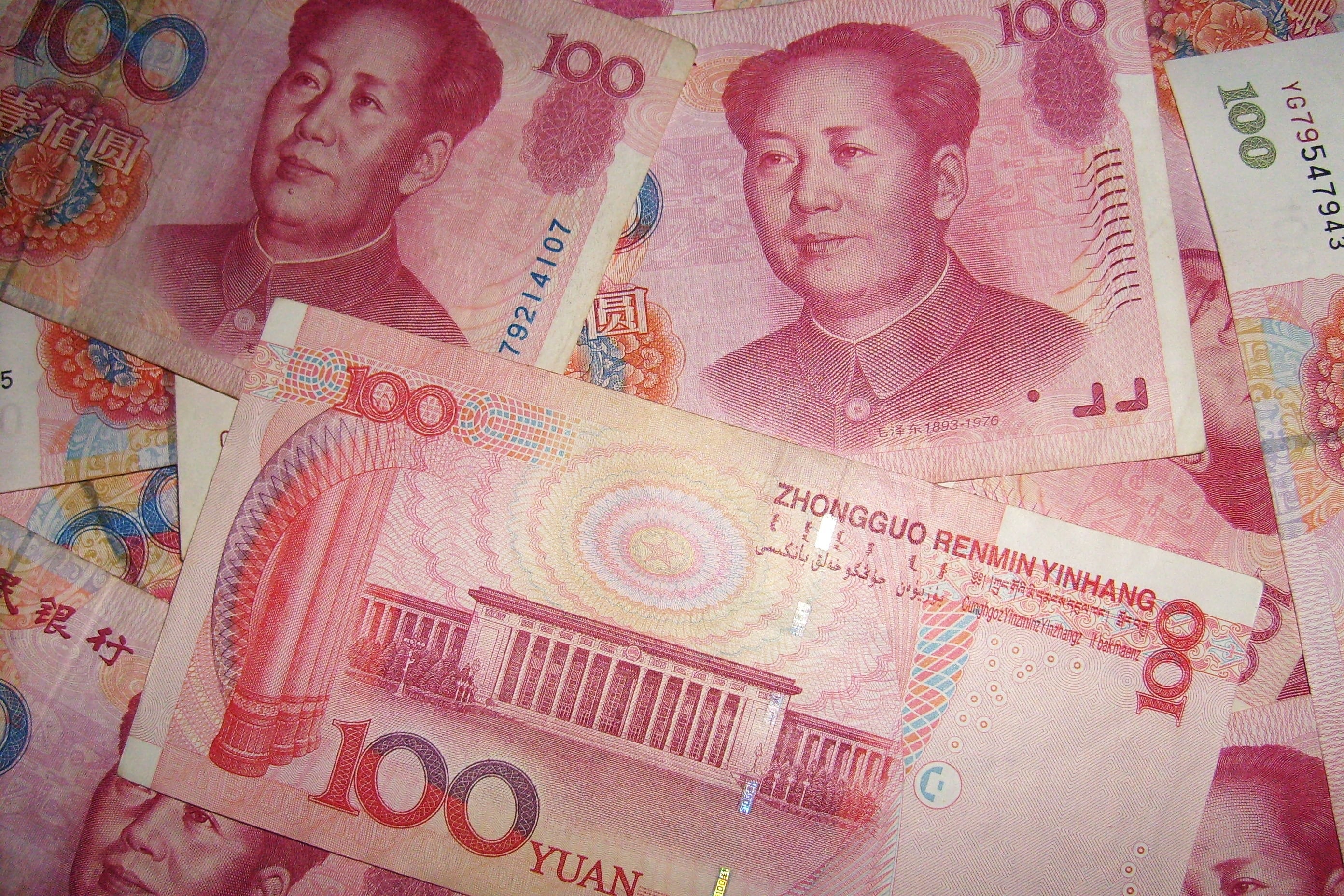
The People’s Bank of China recently convened its second-quarter monetary policy committee meeting. Judging from the signals released by the meeting, its statements regarding the economy and monetary policy showed little change compared to the first quarter. This implies that China’s economic performance and policy trends will maintain their existing inertia. In terms of economic performance, the "K-shaped" divergence previously mentioned by ANBOUND will continue. When it comes to monetary policy, in the absence of major economic fluctuations, the inertia of "moderate easing" will be maintained.
For economic growth in the first half of the year, the second quarter is likely to see a certain pullback following a surge in the first quarter, much like the pattern observed in the previous two years. This seasonal adjustment is not surprising. According to the latest inflation data released for June, the Producer Price Index (PPI) in China achieved a year-on-year growth of 4.1%, rebounding further from 3.9% in May, while the Consumer Price Index (CPI) receded from the previous 1.2% to 1%. Such results indicate that although the economy is shaking off a relatively prolonged period of deflationary distress, growth momentum remains insufficient. While the "strong supply, weak demand" situation has improved, the driving force is still weak. On the one hand, the rise in PPI is closely related to the short-term increase in raw material prices and is heavily impacted by external geopolitical changes, indicating the issue is not entirely endogenous. On the other hand, the price increase on the consumption side is significantly lower than that on the production side, which signifies that the situation of strong supply and weak demand has not been fundamentally reversed. In particular, consumer prices remaining at a low rate of growth would mean that China’s domestic terminal consumption demand remains insufficient. Under these circumstances, with both household consumption and investment maintaining a downward trend in growth rate, second-quarter economic growth may still be lower than that of the first quarter, though it remains on the track of achieving progress while maintaining stability. According to the media, most institutions still expect the year-on-year GDP growth rate for the second quarter to be around 4.5% and maintain a mean forecast of 4.7% for the year-on-year GDP growth rate in 2026.
Notably, in its assessment of the economic situation, the second-quarter monetary policy meeting changed its description from "achieving progress while maintaining stability" in the first quarter to the current "moving toward new and higher-quality development", indicating an improvement in the economic structure. Its specific addition of the evaluation of "structural divergence" is actually the "K-shaped" divergence scenario previously mentioned by ANBOUND. Although high-tech industries such as AI maintain robust growth, traditional fields like real estate continue to decline. Under these circumstances, the demand side, whether in terms of household commodity consumption or fixed-asset investment, faces a situation of divergence, leaving the macroeconomy on a low-growth trajectory. This rise of one and fall of another actually reflects a multilateral risk constraint on China's macroeconomic environment, resembling the "quadrilateral risk matrix" mentioned by ANBOUND’s founder Kung Chan. Despite the rapid development of new quality productive forces, this K-shaped divergence situation still requires the avoidance of fractures caused by "unilateral progress". In other words, while promoting the further development of new quality productive forces, the real estate and other sectors cannot be allowed to enter a "free fall" state. Rather, coordination with "risk prevention" policies is needed to achieve an "orderly clearing" of the market, thereby achieving a soft landing and economic transition.
Similar to the situation in the first quarter, in contrast to weak domestic demand, exports have improved significantly since the beginning of this year against the background of a "truce" in U.S.-China trade and increased external geopolitical risks, making foreign trade one of the primary drivers of economic demand growth. This state of "internal and external imbalance" has shifted the driving forces of economic growth. Consequently, the overall macroeconomic policy has undergone a shift, changing from the first quarter's emphasis on "placing the strengthening of the domestic economic cycle in a more prominent position" to "further strengthening the domestic economic cycle and optimizing the domestic and international dual cycles" to adapt to the new development situation. On the one hand, this reflects the long-term and arduous challenge for China to expand its domestic demand, as improving domestic demand cannot be achieved overnight. On the other hand, it also reflects policy flexibility, especially in seizing changes in the economic situation, grasping the direction of the global economic landscape, and tapping into external demand to boost the overall economy, thereby pursuing a path of open economic development rather than a self-isolated single cycle separated from the world. This change also lies in the need of the relevant authorities in China to grasp the significance of the "dual circulation".
As the economic performance in the country aligns with expectations, this means that the execution of monetary policy in the first half of the year has yielded positive results, and also presages that monetary policy will still maintain its existing inertia for a period of time to come. In fact, the statement on monetary policy from the second-quarter meeting basically continued the tone of the first quarter, which shows that the probability of a change in monetary policy is low.
In fact, regarding the understanding of this year's "moderately loose" monetary policy, researchers at ANBOUND proposed a "multi-pronged" and "targeted control" approach. Judging from policy implementation of the country in the first half of the year, although there was no major measures from the authorities such as cutting reserve requirement ratios or interest rates, market interest rates were kept on a continuous downward path, and market liquidity remained loose. These changes indicate that the connotation of "moderate easing" is being adjusted along with changes in economic structure and economic growth momentum, aiming to achieve a "dynamic alignment of the financial system with the transformation and upgrading of the industrial structure", as the central bank put it. From the second-quarter meeting, the wording on monetary policy was basically consistent with previous statements, meaning that monetary policy still maintains the policy inertia since the third quarter of last year, thereby ensuring that the macroeconomy runs on the "right track".
There is still one change regarding the future direction of monetary policy, namely "enhancing the forward-looking, flexible, and targeted nature of policy" has replaced the first quarter's "comprehensively utilizing multiple tools to strengthen monetary policy regulation". This adjustment indicates that China’s monetary policy still needs to be flexibly adjusted according to changing circumstances, reflecting a tone of "targeted control" on the basis of maintaining policy inertia. Enhancing forward-looking, flexible, and targeted characteristics also means that the likelihood of major policy changes is low, and adjustments will mostly belong to fine-tuning. If the economic trend does not experience major changes and can still maintain its current direction, then the intensity of policy regulation will be somewhat eased. This means that the role of monetary policy in economic regulation will somewhat “retreat” in the second half of the year, emphasizing coordination with fiscal policy and reform measures and taking on more of a supporting role.
The reason for this ultimately lies in the divergence of the economic structure. Under the condition of declining investment growth, the increment of social financing has continued to contract, and in particular, traditional bank credit demand has continued to recede. This situation of peaking stock indicates that the effect of aggregate-type monetary policies is constantly weakening. In addition to conventional open market operation tools like reverse repos or MLF, reforms of policy mechanisms and the financial system are bringing new focus areas for monetary policy easing. This change in the policy framework, particularly the reform of the interest rate mechanism, is the new path to achieving "moderate easing" in the next stage. This involves not only whether liquidity is loose or not, but more importantly, changes in the way the financial market operates and changes in the way financial resources are allocated, which hold more significant meaning for financial development and stability. In this regard, the market side still needs to shift its inertia of thinking to avoid misjudging the tone of macroeconomic policy.
From the perspective of the entire macroeconomic policy system, the focus of China’s future macroeconomic policy needs to change in accordance with changes in the economic situation. In particular, it should focus not only on the domestic cycle but also on both the domestic and international cycles. Monetary policy likewise needs to take both domestic and international factors into account, balancing the two tools of interest rates and exchange rates, balancing aggregate policies and structural policies, and balancing the promotion of new quality productive forces with the maintenance of real estate market stability to prevent economic divergence from leading to fractures. In other words, there is the necessity of balancing "stability and progress". That is to say, the monetary policy needs to return to the framework of the "quadrilateral risk matrix."
Final analysis conclusion:
Judging from inflation and other data, the characteristics of China’s economic structural divergence have become increasingly apparent in the first half of the year. Although this divergence can still maintain a state of low growth overall, for monetary policy, it requires the policy of "moderate easing" to show innovations. This requires not only the inertia of existing policy tools and paths but also the adjustment of new tools and frameworks.
______________
Dr. Wei Hongxu is a Senior Economist of China Macro-Economy Research Center at ANBOUND, an independent think tank.


