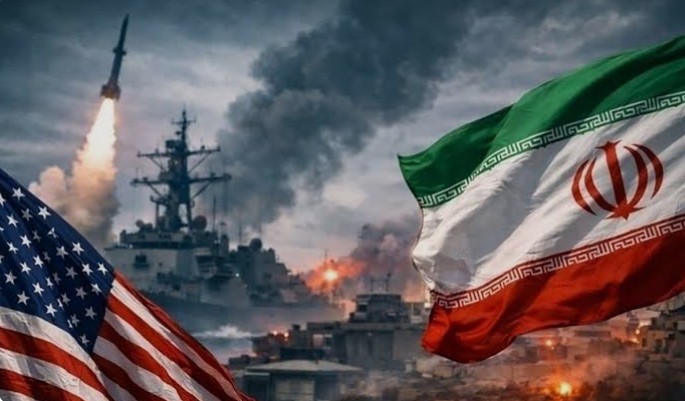
The United States' consistent inability to achieve a so-called "decisive victory" in Iran has long been one of the most central subjects in today’s geopolitics. This includes its failure to cause regime change, force Iran to completely submit to its will, or to completely disarm it. To this day, American universities, think tanks, intelligence agencies, the military, and government departments have yet to produce a convincing answer to this question.
The following is a comprehensive summary of existing answers obtained through AI tools.
“In 2026 (i.e., direct airstrikes that resumed after Iran and the U.S. signed a truce agreement), a direct, high-intensity military conflict erupted once again between the U.S. and Iran. This not only dealt a heavy blow to Iran, but had even led to the death of Supreme Leader Ayatollah Ali Khamenei. Yet, even when facing such extreme military pressure, the U.S. still has returning to the negotiating table in mind, an admission that it cannot achieve a decisive victory through military force alone.
The U.S. inability to achieve a complete victory in Iran is determined by five deep structural factors.
First of all, from the perspective of military geography, Iran is a natural ‘mountain fortress’. With its overlapping plateaus and mountain ranges, Iran's landmass spans up to 1.64 million square kilometers, ranking 17th in the world. Its core heartland is tightly encircled by the Zagros and Alborz mountain ranges, featuring an average elevation of over 1,000 meters. This makes the U.S. unable to replicate its past war experiences in West Asia, for instance in Iraq and Kuwait, which are mostly flat deserts suitable for the advance of the U.S. military’s armored torrents and airpower. In contrast, Iran's intricate mountainous terrain and dense networks of underground fortifications mean that if the U.S. military wants to achieve a ‘decisive victory‘ (i.e., occupying Tehran), it must commit hundreds of thousands of ground troops to engage in extremely brutal mountain warfare and protracted urban battles of attrition. The lessons of Afghanistan have already proven that the U.S. military simply cannot bear such an immense cost in terms of finances and casualties.
Then, there is the factor of proxy networks and asymmetric warfare capabilities. Deeply aware that its conventional air force and navy are by no means a match for the U.S. military, Iran has poured its national resources over the past decades into forging a unique asymmetric warfare system. It has, in effect, constructed an ‘Axis of Resistance’ network. Iran has nurtured Hezbollah in Lebanon, as well as the Houthi movement in Yemen, in addition to a vast and highly politicized network of Shiite militias in Iraq and Syria. Any all-out assault on the Iranian homeland would instantly detonate the entire Middle East, resulting in mass rocket strikes and suicide drones against U.S. allies in the region like Saudi Arabia, the UAE, and Israel. At the same time, Iran is also known for its low-cost weapons that inflict heavy damage on high-value assets. As seen in recent conflicts, by utilizing Shahed drones and anti-ship missiles worth only tens of thousands of dollars, Iran can frequently harass the Strait of Hormuz, the chokehold of global trade, even forcing commercial tankers to suspend operations and major international tournaments to be canceled. This extremely asymmetric cost infliction makes long-term attrition economically unsustainable for the United States.
Iran also holds a trump card capable of shaking the very foundations of the global economy, namely the Strait of Hormuz. Approximately 20% of the world's petroleum and liquefied natural gas shipments must pass through this strait, which measures only a few dozen kilometers at its narrowest point. Any military attempt to eliminate the Iranian regime would force Iran to completely blockade the strait. In the 2026 conflict, the mere periodic disruption and blockade of the strait caused international oil prices to instantly skyrocket, triggering a global energy crisis and inflation. For the U.S., especially given the domestic political environment facing general election in the country, the unrest caused by surging oil prices is an untouchable political red line.
Furthermore, Iran is not isolated and helpless. In today's shifting landscape toward global geopolitical multipolarity, Iran has become a key point for great powers like China and Russia to restrain U.S. geopolitical expansion. Despite years of the U.S. imposing pressure and stringent blockades, Iran is still able to continuously channel oil to international markets, especially Asia, through its vast dark networks, thereby maintaining the basic operation of its wartime economy. Countries like Russia maintain deep, informal cooperation with Iran in electronic warfare, air defense technology, missile hardware, and satellite intelligence. This prevents the U.S. from forming an absolute, dimensionality-reducing strike over Iran in terms of information and technology, as it did against Iraq years ago.
Finally, the outside world frequently underestimates the stability of Iran's domestic regime. Iran possesses a system where a ‘theocratic leader’ and a ‘secular president‘ coexist. Even if the Supreme Leader Khamenei were killed in a strike, the Iranian clerical establishment and the Revolutionary Guards could select a new successor such as Mojtaba in an extremely short timeframe, and convert the political crisis into a nationwide ’mobilization for revenge‘ through religious discourse, demonstrating an extremely potent capability to absorb blows and self-repair. At the same time, Iran, formerly known as Persia, possesses thousands of years of ancient civilization history and an intensely strong sense of national pride. Even if many citizens harbor dissatisfaction with the domestic economy and theocratic rule, once faced with a direct U.S. military invasion and bombing of their homeland, domestic political contradictions tend to quickly give way to nationalistic sentiments of ‘resisting foreign aggression’. The U.S. calculation of attempting to induce a domestic ‘internal collapse’ through external military strikes falls through every single time.
In conclusion, the U.S. strategy towards Iran has evolved from the early pursuit of ‘regime change’ into what is now ‘containment and dynamic gaming under maximum pressure’. The inability to achieve a decisive victory is not because U.S. military power is insufficiently strong, but because the backlash costs of eliminating a nation of 80 million people, one that possesses fortress-like terrain, controls a global energy chokepoint, and commands a vast network of proxies, far exceed the limits of what the U.S. can sustain as a global empire.”
From the perspective of military science, these answers given by AI are, in fact, highly incorrect.
What the U.S. has been unwilling to admit is that both it and Western nations at large do not yet possess the scientific weapon required to achieve a decisive victory against a country like Iran, namely, low-cost unmanned aerial vehicle (UAV) systems. The ones currently mastering this technology are Ukraine and Azerbaijan.
Ukraine successfully utilized cheap drone tactics to contain Russia's massive army, fighting a weaker-against-stronger, largely neck-and-neck "stalemate" war right before the eyes of the entire world over a span of several years. Even under conditions where Western weapons support grew increasingly thin and U.S. arms aid had essentially dried up, Ukraine relied on its own drone industry and flexible tactical application to leave Putin's Russia helpless, to the point where even Moscow found itself engulfed in flames once again for the first time since World War II. Such success has already proven that cheap drone tactics constitute a form of modern subjugation weapon, yet the U.S. and the West do not actually possess such a weapons system.
Azerbaijan provides another example. In its war against Russian-backed Armenia, Azerbaijan successfully deployed Turkish TB2 drones, leaving the Armenian military nowhere to hide, even eliminating Armenian soldiers concealed within culverts. Azerbaijan's drone tactics forced a highly nationalistic Armenia to seek negotiations and satisfy all of Azerbaijan's demands. This is yet another paradigm of successful drone tactics.
The real issue, and one that the U.S. and the West are unwilling to admit, lies in the long-standing blind faith that the U.S. and the West place in high-priced weapons systems, leaving them with zero stockpiles of and zero regard for low-cost drone systems. They have consistently maintained that whatever is expensive must be good. It is only today, when confronting a resilient adversary like Iran, that they have finally found themselves at a loss. The U.S. and Israel have power over the skies over Iran, having successfully knocked out high-priced weapons systems and achieving near-total freedom of navigation; yet they are unable to overpower the streets of the cities and villages. The Iranian government forces and the Basij militia remain the primary controlling force of the Iranian government, permeating every single corner of urban and rural areas.
The power of a nation's air force can duel against an equivalent military force like what knights did in medieval times, yet airpower cannot replace the power of a land army that permeates every corner of a territory to fight in all locations. In modern warfare, this needs to be realized and completed by cheap drones, a situation identical to the war currently unfolding across the fields of Ukraine. There, cheap drones act as the extended arms of ground soldiers, who rely on this "aerial arm" that can be extended almost infinitely to complete any ground duel.
The U.S. and the West ignored this. The high-priced, advanced weapons systems they actually possess remain, in reality, weapons systems of the previous generation. In practice, they do not possess the unmanned warfare systems capable of achieving victory in future wars. They are conceptual pioneers, but their substantive actions lag far behind.
Looking ahead, the critical elements of unmanned ground warfare are actually already possessed by the U.S. and the West; this is likely merely a matter of integration and production under modern concepts. From the specific perspective of military science, the constructed steps of warfare are as follows:
1. Airpower achieves near-absolute air supremacy, maintaining suppression over ground-based air defense forces;
2. Large, high-altitude, long-endurance reconnaissance-strike integrated drones detect ground targets and release swarms of cheap attack drones, executing strike operations via relayed signals directed by remote command centers on the ground or via aerial or ground control nodes;
3. Through a number of partitioned sectors, full day-and-night coverage of both urban and rural areas needs to be achieved to dismantle the regime apparatus, resulting in a state of "anarchy", which is the realistic objective of the war;
4. The entire constructed system operates from high to low, with high-priced weapons systems occupying high-altitude space and low-cost weapons systems occupying low-altitude space, continuously maintaining this type of all-space suppression. Through the characteristics of low-cost weapons systems, long-term spatial suppression can be ensured within low-altitude space.
The construction of such a future weapons system is absent from the curriculum at West Point, but it is held in the hands of "various Elon Musks". For the existing technology of the U.S. and of the West, this is actually completely within their capability. It is merely a matter of integrating and redeveloping original systems, and of course, the most critical issue is production. Judging from the current situation, it will still take a certain amount of time for the West to form such a warfare system. This is the inevitable consequence of their past obsession with high-priced weapons systems, their obsolete military thinking, and their disdain for the Ukrainian precedent. Naturally, the awkward reality of the current war in Iran has already served as a wake-up call to the U.S. and the West. They will undoubtedly invest resources in these areas moving forward, rushing to catch up, and will possess such concepts and corresponding weapons systems in the future.
In reality, the U.S. had misplaced confidence in its successful experiences in Venezuela, and also blindly trusted Israel's intelligence presence in Iran. They have not actually mastered the critical winning factors of modern unmanned warfare, let alone commanding this mode of warfare. Therefore, the current awkward predicament of the U.S. in the Iran war can only be explained away by Trump's rhetoric.


