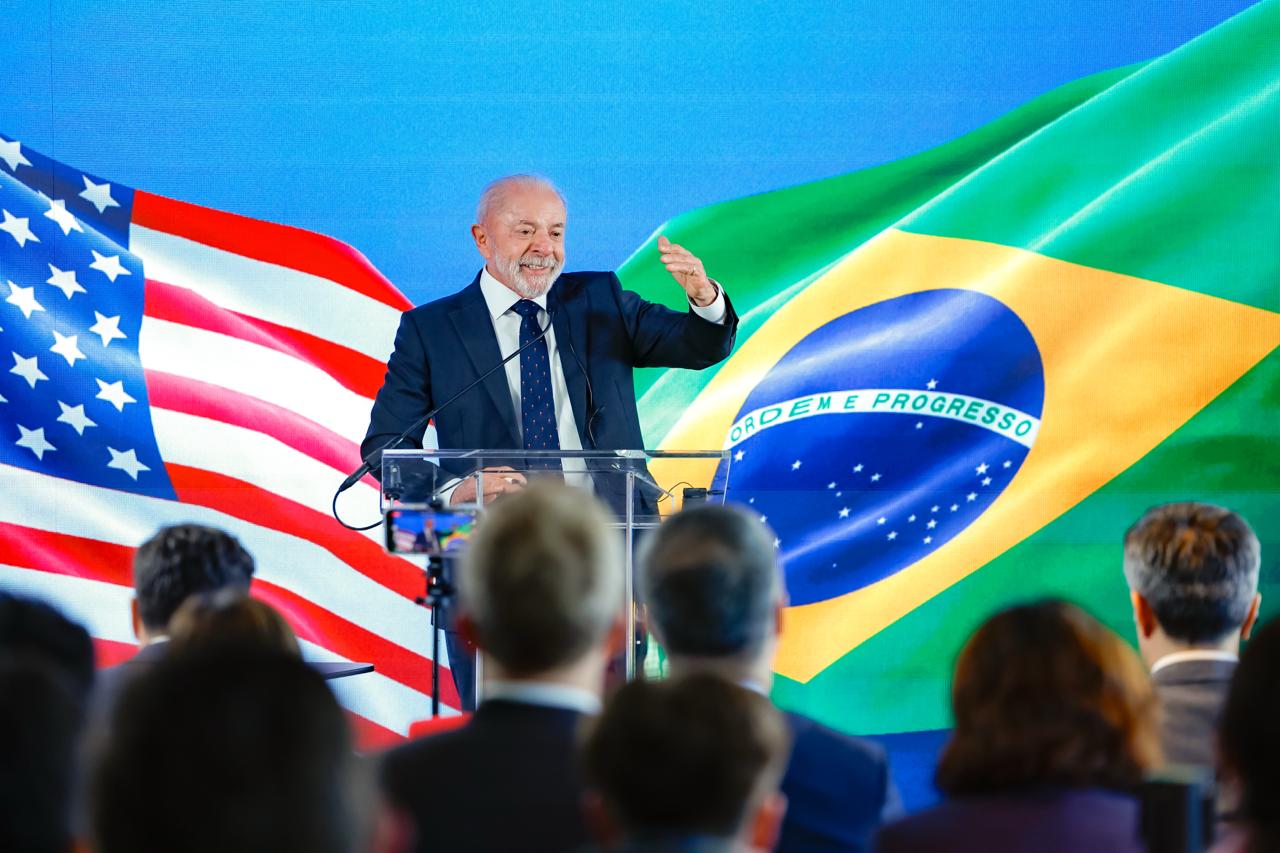
In recent years, Latin America’s political landscape has shifted. Previously, external observers believed that the left could carve out new political space by riding the wave of the Global South’s rise, resurgent resource nationalism, and anti-American sentiment. Reality, however, is proving that the return of the left has failed to resolve Latin America’s long-standing structural problems. Economic growth remains reliant on resource exports, fiscal expenditure depends on external cycles, and social governance is bogged down by public insecurity, corruption, and social polarization. At the same time, political mobilization increasingly relies on welfare promises and identity politics. Once the commodity dividend fades, inflationary pressures return, and fiscal space contracts, the vulnerability of these leftist governments' governing foundations is quickly exposed.
With the advent of the Javier Milei administration, Argentina has shifted markedly toward a right-wing path. Chile too has also moved right, and political competition in countries like Colombia and Brazil is accelerating in a rightward direction. Especially against the backdrop of Donald Trump re-emphasizing "America First" and a renewed consciousness of the Western Hemisphere order, Latin American elections are no longer merely domestic political affairs. Instead, they are increasingly becoming a vital link in the United States' reshaping of the inter-American political order.
In this current shift, Brazil is the most critical subject of observation for China, and the reason is clear. Brazil is not only Latin America’s largest economy and a member of BRICS, but also one of China’s most important economic and trade partners in the region. Over the past two decades, Brazil has largely shared in the dividends brought by China’s industrialization, urbanization, and expanding commodity imports. Resource-based products such as soybeans, iron ore, crude oil, and beef form the core pillars of Brazil's exports to China, sustaining Brazil's trade surplus, local fiscal revenues, the interests of agricultural states, and Luiz Inácio Lula da Silva’s leftist political coalition. In 2025, bilateral trade between China and Brazil reached approximately USD 171 billion, with China absorbing nearly 30% of Brazil’s exports and supplying about a quarter of its imports. Furthermore, Brazilian exports to China are highly concentrated in a few resource commodities like soybeans, iron ore, crude oil, and beef. The core of this relationship is that Brazil does not export high-value-added industrial goods to China. Rather, it exports mines, energy, and agricultural products. Therefore, the stability of Brazil's leftist government stems not only from its domestic governance capabilities but is built to a considerable degree on the external foundation of China’s continuously expanding demand. Without accounting for the Chinese economic cycle, it is difficult to truly comprehend the resilience of Brazilian politics or to judge the risks currently facing the Lula administration.
It is precisely in this sense that ANBOUND’s founder Kung Chan believes that Brazil, the last remaining leftist banner government in South America, is already somewhat near a breaking point. This assessment does not imply that Brazil will immediately erupt into a conventional financial crisis. The focus is rather on the fact that the external economic conditions and internal political balances upon which the Lula government relies to sustain itself are weakening simultaneously. That the Lula government has been able to maintain its footing over the past few years possesses an inherent abnormality. Logically, the slowdown in China’s real estate, infrastructure, and traditional industrial cycles should exert downward pressure on iron ore, energy, and commodity prices, meaning a resource-exporting economy like Brazil’s ought to have felt the strain much sooner. The reason the Lula government has managed to hold on is not a sudden improvement in Brazil’s growth model, but rather that China's demand for food, energy, and minerals has continued to provide Brazil with an external buffer. In this case, soybeans are a classic example. Chinese demand has pushed Brazilian agriculture to the center of the global stage, benefiting Brazilian farmers, ports, logistics, and local finances. Yet this prosperity does not equate to economic resilience. Instead, it is more akin to a resource-based stability propped up by external demand. Once the pace of Chinese imports slows, or if China proactively adjusts its purchasing structure, Brazil's trade surplus, exchange rate stability, fiscal expectations, and political support from agricultural states will all take a hit.
The danger of this external dependence is compounded by the fact that domestic economic pressures in Brazil have already begun to manifest. Although the Central Bank of Brazil continued to cut interest rates in June, lowering the benchmark rate to 14.25%, this level remains exceptionally high, illustrating that the Brazilian economy is caught in a vice between high inflation, high interest rates, and weak growth. High interest rates suppress corporate investment and household consumption, but for the sake of elections and social stability, the government finds it difficult to reduce subsidies, welfare, and public spending. The logic of Lula’s leftist governance essentially requires fiscal expansion and social redistribution to sustain his base among workers, low-income groups, and the Northeast region. However, Brazil's fiscal space is tight, and the market has consistently worried that government stimulus policies will drive up long-term risks. If this contradiction continues to worsen, financial markets will react ahead of voters, and exchange rates, bond yields, and capital flows will impose constraints on the government.
Other than economic pressures, the Lula government faces more complex political strains. On one hand, economic growth is increasingly unable to sustain leftist promises; on the other, the Brazilian right is reorganizing. Lula has not lost his competitiveness and even retains an advantage in some polls, but this does not mean the left is secure. Brazilian society is deeply fractured, and issues such as public safety, inflation, corruption, fiscal policy, and cultural values are all accumulating mobilizing energy for the right. Although the former Brazilian President Jair Bolsonaro’s family faces judicial pressure, its political symbolism has not vanished. Indeed, it continues to rally voters around narratives of being "anti-establishment", "anti-left", "anti-crime", and against "judicial persecution". Lula’s dilemma is that he must reassure the market while maintaining welfare. For this, he relies on the Chinese economy while avoiding being viewed by the United States as a geopolitical adversary. At the same time, and he must unite the left while proving to centrist voters that he is not an old-style populist. This balance was fragile to begin with, and it will only become more difficult to maintain.
Looking deeper, the Brazilian issue has transcended Brazil itself and the bilateral China-Brazil trade relationship, becoming part of the restructuring of the political order across the entire Americas. Kung Chan believes that if a right-wing government comes to power in Brazil in the future, the "Century of the Americas" could be fully realized, with Argentina, Chile, Brazil, and a Mexico that is already economically integrated with the United States, forming a U.S.-led political order across the Americas. The key here is not whether Latin American nations will continue to do business with China, as economic interests will naturally remain diversified. The real change lies in the fact that even if Brazil, Argentina, Chile, and Mexico continue their trade relations with China, they may be reabsorbed into a U.S.-led Western Hemisphere framework regarding security issues, ideology, electoral narratives, and diplomatic orientation. Hence, political change in Brazil is not merely a governance crisis for Lula personally, but could serve as a critical sign for the decline of the Latin American left and the reconstruction of the Western Hemisphere order by the United States.
Colombia provides another observational sample. While it is not Brazil, it is also a major South American power, and its electoral shifts reflect how right-wing American politics is re-intervening in Latin America. Recent results show that the far-right candidate Abelardo de la Espriella, openly endorsed by Trump, has narrowly defeated the leftist Senator Iván Cepeda in the second round of the presidential election. According to preliminary vote counts, with 99.98% of the ballots counted, De la Espriella received 49.66 percent of the vote compared to Cepeda's 48.7%, a margin of roughly 250,000 votes. This outcome demonstrates that Colombian politics has shifted from the leftist experimentation of the Gustavo Petro era toward right-wing politics centered on public safety, anti-narcotics, anti-leftism, and a pro-U.S. alignment. Trump's previous public endorsement of De la Espriella, framing the election outcome as vital to Colombia's future and its relations with the U.S., was no ordinary diplomatic statement and it was an overt political endorsement. Behind this lies a new trend where the United States is affecting Latin America not just through trade, investment, and military cooperation, but is directly reshaping Latin American politics through ideology, electoral mobilization, public safety issues, immigration questions, and anti-narcotics narratives.
Consequently, the issue of Brazil cannot be viewed solely from within Brazil, nor can it be looked at purely through the lens of China-Brazil trade. Rather, it must be observed simultaneously from the Chinese economic cycle and the inter-American order. Economically, Brazil is highly dependent on China’s commodity demand. Hence, the weaker the Chinese economy, the less stable Brazil's resource-driven growth becomes. Once Chinese demand shifts from quantitative expansion to structural adjustment, the boom in Brazilian agriculture and mining will face a repricing. Politically, the U.S. is leveraging Latin America’s public safety crises, immigration issues, the war on drugs, anti-leftist sentiment, and trade arrangements to reshape political alliances in the Western Hemisphere. As the largest nation in Latin America, if Brazil shifts from Lula’s leftist path toward a right-wing or center-right trajectory, the political map of the Americas will undergo a decisive shift, and the political space that China has cultivated in Latin America for many years will be significantly compressed.
ANBOUND notes that while Brazil will not collapse immediately, it has entered a high-risk window. In the short term, the Lula government still possesses a base of popular support and can use China-Brazil trade, energy exports, and social policies to maintain the status quo. Its medium-to-long-term problem is that Brazil has neither broken its resource dependency nor resolved its fiscal constraints, let alone found a sufficiently stable strategic balance between China and the United States. Even if Brazil turns to the right in the future, China-Brazil trade will not necessarily sever, but political trust, strategic coordination, and the depth of cooperation within the BRICS framework will all face shocks. Brazil's importance lies in the fact that this is more than just a change of government in another Latin American country. It represents a critical indicator of whether the Pink Tide is ebbing and whether a new era of U.S. dominance in the Americas is emerging.
Final analysis conclusion:
The core of the Brazilian issue is not whether the Lula
government will collapse immediately, but that both its economic foundation and
political environment are weakening. Brazil is highly dependent on Chinese
commodity demand. Once the Chinese cycle turns downward, Brazil's fiscal
position, exchange rate, and social policies will come under pressure. At the
same time, the United States is utilizing the resurgence of the right to
reshape the inter-American order. If a political right turn occurs in Brazil in
the future, the missing parts of the "Century of Americas" will be
largely complete, and China's strategic space in Latin America will contract
significantly.
______________
Yang Xite is a Research Fellow at ANBOUND, an independent think tank.


