Over the past two decades, the international community's primary approach to addressing Islamist-related extremism and terrorism has long centered around military strikes and administrative control. From the United States launching the "Global War on Terror", to the continuous strengthening of border controls, religious regulation, and anti-extremism legislation by various countries today, to targeted eliminations and transnational joint military actions against extremist organizations, all these measures have achieved certain results in weakening the physical capabilities of terrorist organizations and compressing their operational space. However, judging from the developmental trajectories from Afghanistan, Iraq, and Syria to the Sahel region, and from Al-Qaeda to the "Islamic State", as well as the "Islamic State Khorasan Province" (IS-K) and the Tehreek-e-Taliban Pakistan or Pakistani Taliban (TTP), extremism has not disappeared with the continuous advancement of military operations. Instead, within new social environments, it has continuously adjusted its form and acquired new incremental channels of dissemination, using religion as its ideological foundation.
For China, this issue is not a distant Middle Eastern topic, but a realistic challenge closely related to peripheral security and the construction of its Belt and Road Initiative (BRI). Especially in the Xinjiang and nearby regions, the development and evolution of Islam as an ideological foundation has a particularly direct social impact and shock. Notably, the internet and algorithms are now also profoundly changing the transmission methods of religious thought. The traditional dissemination system that previously relied on mosques, madrasas, and local religious authorities is being impacted by a transnationalized, decentralized, and fragmented network dissemination system. As it stands, an increasing number of young people engage with religious thoughts and even extremist narratives through short-video platforms, social media, and online communities. Consequently, the issue of extremism increasingly manifests as a competition of ideas and narratives, rather than merely a matter of security governance and armed conflict.
Hence, for China to seek policy solutions within massive and complex historical narratives is highly challenging.
ANBOUND's founder Kung Chan proposed in 2026 that, as a matter of policy, China should support and encourage the ideas of "Progressive Islam" and subsequently develop a distinct version of it. Within the framework of the international order and through a contemporary understanding of religious doctrines, this would promote the ideals of moderation, lower confrontation, and enhance greater national integration.
In fact, some Chinese scholars have had similar lines of thought in the past, but their methods are open to question. For instance, one viewpoint previously advocated for direct or even excessive substitution in doctrinal thought, yet this could lead to ideological opposition. There is also an excessive localization tendency, such as the tradition of "interpreting Islamic thoughts through Confucianism" during China's Ming and Qing dynasties, which in turn could lead to a rupture between different ideological trends. Compared with these viewpoints, as a think tank scholar, Kung Chan proposed the need to adapt to the broader trend of international Islam, working within existing frameworks while focusing on the exposition of Islamic doctrine and the study of scriptural interpretation, with the aim of developing a new generation of Chinese Islamic thought.
It is worth noting that the internal ideological trends within the contemporary Islamic world do not consist solely of the two tendencies of radicalization and conservatism. Over the past decade and more, from Indonesia and Malaysia to the Gulf states, and further to Muslim communities in Europe and America, a series of moderate, diverse, and modernized Islamic trends of thought has been gradually growing. Although these forces are not yet sufficient to fundamentally resolve the issues of conflict and terrorism, their widespread emergence in the world's most conservative Islamic countries in itself means that a new ideological space is forming.
For China, rather than viewing issues related to Islam primarily through a security lens, it may be preferable to engage with and support developments within Islam that are compatible with modern society. This could serve as a complementary approach to promoting stability in surrounding regions, countering extremism, and fostering intercultural dialogue and exchange.
In these respects, Indonesia provides a useful case study. Although debates and competing interpretations of Islam persist within the country, Indonesia is often cited as an example of what some scholars describe as Progressive Islamism. As the country with the world's largest Muslim population, Indonesia has a long-standing Islamic tradition that has frequently emphasized religious tolerance, diversity, and engagement with local cultural traditions. In recent years, several prominent Indonesian Islamic organizations have promoted concepts such as Humanitarian Islam and the indigenization of Islam (Pribumisasi Islam), arguing that Islam should contribute to social harmony, national development, and interreligious coexistence rather than serve as a vehicle for political confrontation or identity-based conflict. This perspective does not reject religion. Rather, it seeks to articulate forms of Islamic thought and practice that are responsive to the conditions of modern society while maintaining a distinct religious identity.
Indonesia's experience with Islamic developments has also evolved over time. Beginning in the 1980s, Saudi Arabia expanded its religious outreach by funding the construction of mosques and Islamic educational institutions in a number of countries, including Indonesia, and by establishing the Lembaga Ilmu Pengetahuan Islam dan Arab (LIPIA) or Institute for Islamic and Arabic Studies in Jakarta. According to some scholars, these initiatives contributed to the growing influence of certain Saudi-inspired interpretations of Islam, which were associated with increased religious conservatism and trends sometimes described as the "Arabization" of Indonesian Islam, especially those of the outward expressions of Salafi-Wahabi ideology. In some communities, longstanding local religious traditions increasingly coexisted with or gave way to more conservative forms of religious dress and stricter interpretations of Islamic law. These broader ideological shifts may be considered to coincide with the emergence of militant Islamist movements and a rise in extremist violence in Indonesia.
Kung Chan emphasized that Islam as a universal religion and such forms of the so-called "Arabized Islam" must not be lumped together, and the policy dimension must especially not be seen as a monolithic whole. In fact, Indonesia has done exactly this. There are Indonesian scholars and religious leaders strongly emphasize that Islam does not need "Arabization". They believe that Indonesian Islam should embrace local Nusantara culture, advocate diversity which is most noticeable in the country’s Pancasila or the five guiding principles of the state, respect the status of women, and support a secular democratic polity, in the spirit of the country’s national motto Bhinneka Tunggal Ika (Unity in Diversity). In fact, in recent years, Nahdlatul Ulama (NU), which possesses nearly 100 million members, is no longer content with cultivating the local sphere. Indeed, the organization now actively markets the "Indonesia model" to the international community, including the West and the Middle East, attempting to establish Indonesia as a beacon of global moderate Islam, thereby challenging the uniqueness of Middle Eastern countries.
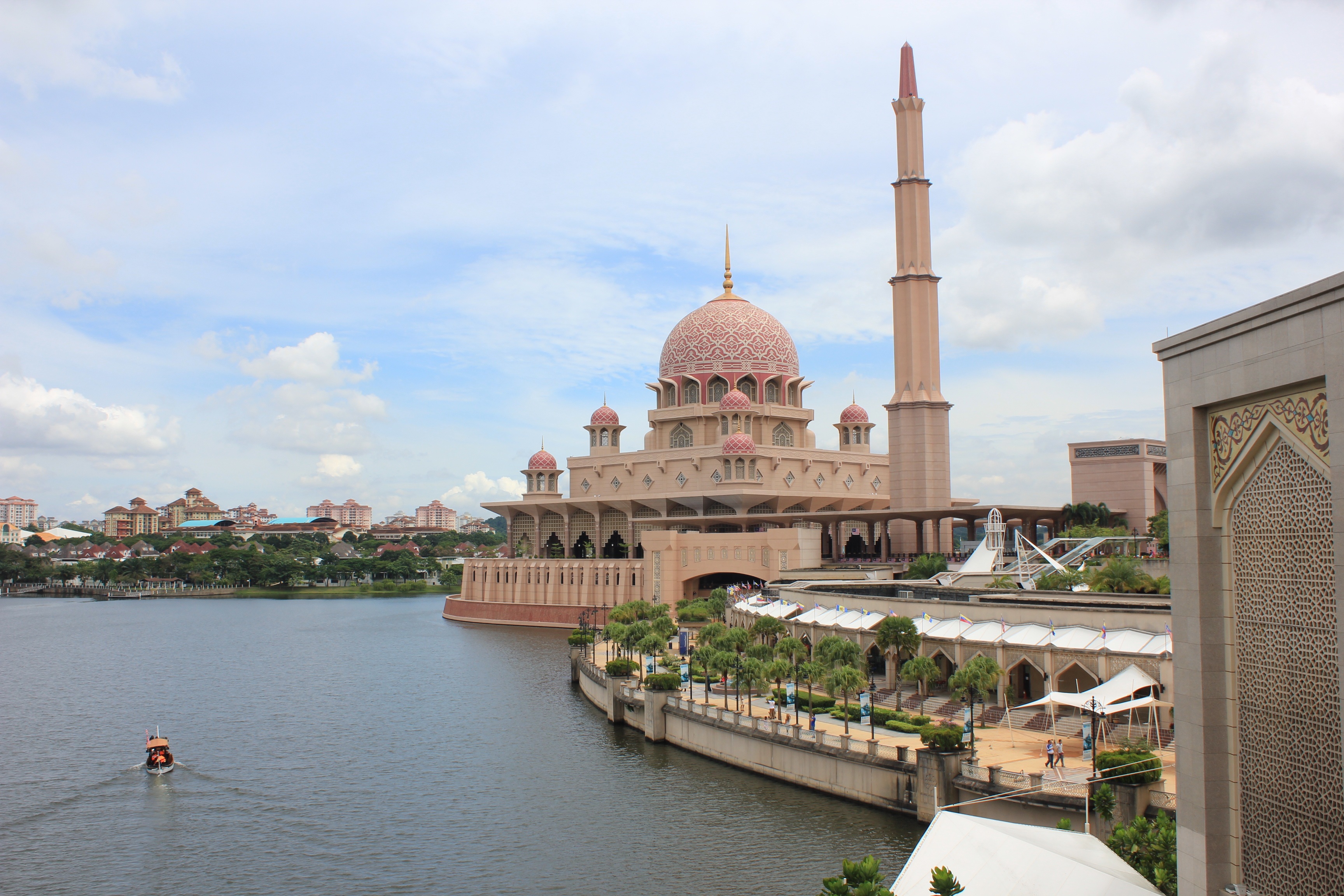
Malaysia is another example. The concept of "Malaysia MADANI" proposed by the Malaysian government in recent years has as its core not secularization, but rather the integration of modern governance concepts such as fairness, integrity, innovation, and social responsibility with Islamic values, attempting to prove that religious belief and modern nation-building are not contradictory. This exploration to a certain extent responds to the long-standing debate over "whether modernization must require de-religionization".
Furthermore, changes in the Gulf states are equally worthy of attention. In recent years, Saudi Arabia has continuously promoted the "moderate Islam" narrative, weakening the power of the religious police, expanding women's social participation, and opening up the cultural and entertainment industries. The UAE has actively promoted religious tolerance and inter-religious dialogue, attempting to construct a more open national image. Although these reforms belong more to state-led social transformation rather than religious theological reform in the strict sense, their essence remains the redefinition of the relationship between Islam and modern society.
The trend of the modernized evolution of the Islamic religion in European and American countries is becoming apparent as well. Within European and American Muslim communities, ideological trends emphasizing gender equality, social justice, environmental protection, and pluralistic inclusiveness have emerged long ago. Although the scope of influence of these trends of thought is currently limited, they collectively reflect an important fact that the Islamic world does not lack internal drivers for modernization, and it is itself undergoing a slow but real global process of ideological reorganization. Therefore, at the national policy level, China may consider playing a more active role in responding to and engaging with broader developments in contemporary Islamic thought and its evolving intellectual landscape.
A significant number of countries and regions surrounding China have Muslim-majority populations, which is an important feature of the broader regional environment. From Central Asia and South Asia to the Middle East and Southeast Asia, these regions are not only connected to initiatives such as the BRI, but also play important roles in China's energy cooperation, trade relations, and overseas investment. The stability and development of these regions are therefore important considerations in China's broader foreign and economic policy. While security cooperation and counter-terrorism efforts are necessary, they alone may be insufficient to address the broader social conditions associated with the emergence of extremism. If more currents within Islam develop that are compatible with modern state institutions, education systems, and economic structures, this may help reduce the ideological space available to extremist movements and increase the prospects for addressing extremism in a more fundamental way.
More importantly, this line of thought is closely aligned with the concept of mutual learning and exchange among civilizations that China has long emphasized. China does not seek to promote a particular ideological model. Regarding changes in doctrinal thought within the Islamic world, it may be insufficient to view them simply through the lens of "secularization" or "Westernization". The key question is how different civilizations can pursue modernization while maintaining their own characteristics. Therefore, supporting the exploration of moderation and modernization within Islam can be understood as supporting a more open, inclusive, and stable direction of development, rather than endorsing any specific religious sect.
The emergence of Islamist extremism and terrorism is associated with complex historical, social, and geopolitical factors, and addressing these issues is unlikely to be achieved through a single approach alone. Experiences over the past two decades suggest that while military operations and administrative measures remain important, their effects have largely been focused on suppression and containment, while addressing the broader ideological and social factors associated with extremism remains a significant challenge. As the internet and algorithm-driven forms of communication continue to reshape the landscape of religious discourse, extremist movements have increasingly involved competition over identity, values, and social narratives. In this context, trends toward moderation, diversity, and modernization within some areas of Islamic thought have contributed to broader discussions on possible approaches to addressing extremism and promoting social stability.
Final analysis conclusion:
For China, viewing issues related to Islam solely through
the lens of security may be increasingly insufficient in addressing the new
realities. A longer-term approach would be to, while continuing efforts in
counter-terrorism and security maintenance, pay attention to and engage with
developmental trends within Islam that are compatible with modern society,
considering them as one possible avenue for regional stability, addressing
extremism, and mutual learning and exchange among civilizations. Such a policy
orientation may contribute to addressing factors associated with extremism,
support more stable and sustainable development among countries along the BRI,
and offer additional perspectives for the development of a more inclusive and diverse
international order.
______________
Zhou Chao is a Research Fellow for Geopolitical Strategy programme at ANBOUND, an independent think tank.


