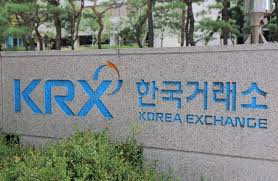
Recently, the South Korean stock market has experienced a roller-coaster ride of sharp rises and falls. These fluctuations are not only rare in South Korea but have also left global investors astonished. Whether the current situation is a "super cycle" brought about by the AI boom or a bubble driven by capital speculation remains debated. However, such market volatility is unusual and has perhaps transcended generalized market risks. Some market participants even believe that the volatility of South Korean stocks is a concentrated reflection of the contradictions inherent in the current global AI investment fever.
On June 26, the Korea Composite Stock Price Index (KOSPI) tumbled by over 8% during intraday trading, triggering its fifth circuit breaker of the year and halting market trading temporarily for 20 minutes. Prior to this, on June 23, the KOSPI index similarly experienced a deep correction of 9.99%. Not long before that, on June 18, it had just set a record high of 9,114 points. Under this roller-coaster volatility, South Korean stocks have triggered circuit breakers three times since June, and five times so far this year, whereas the KOSPI has only ever experienced 11 market-wide circuit breakers in its entire history.
Alongside the violent surges and plunges, the total market capitalization of the South Korean stock market has nearly doubled over the past five months, hitting a new high of over 9,000 points not long ago. The root cause of this roller-coaster market lies in the distorted structure of South Korean stocks. The rise in South Korean stocks has primarily been driven by two leading equities, i.e., Samsung and Hynix. Over the past year, the combined market capitalization of these two stocks as a proportion of the KOSPI index components rose from 22% to 57%. Visibly, the primary factor behind these roller-coaster gains and losses is the substantial surge in these two stocks, which have benefited from AI trading. This is related to the business lines of the two companies, as the AI investment fever has triggered a situation where memory chip supply falls short of demand, causing the earnings of Samsung and Hynix to increase massively, thereby driving up their stock prices.
According to institutional statistics, the global NAND flash memory market size reached USD 46 billion in the first quarter of 2026, a year-on-year increase of 3.5 times, which also exceeded the revenue scale of the entire year of 2023. The combined market size of Samsung and Hynix accounted for 90%. Samsung's consolidated revenue in the first quarter was KRW 133.9 trillion, a year-on-year increase of 69%. Its operating profit was KRW 57.2 trillion, a massive year-on-year surge of 756%. Among these, the semiconductor division's operating profit reached KRW 53.7 trillion, accounting for over 93% of the total profit, making it the core growth engine. Hynix achieved a revenue of KRW 52.6 trillion in the first quarter, breaking through the KRW 50 trillion mark for the first time, a quarter-on-quarter increase of 60% compared to the previous quarter and a year-on-year increase of 198% compared to the previous year. Its operating profit was KRW 6.6 trillion, similarly setting a new high, representing a quarter-on-quarter increase of 96% and a year-on-year increase of 405%. The extraordinary demand in the memory market has not only caused prices to rise substantially but has also pushed the market capitalization of both companies above one trillion U.S. dollars.
In fact, this round of memory chip supply and demand trend is not merely a wave created simply by AI. Memory chips are similar to commodities, and because of their high degree of standardization, they are extremely prone to being drawn into price wars, where they face massive depreciation pressures. The moment their production capacity is released is the day demand peaks. A senior researcher at ANBOUND notes that because the unit price of memory chips is not particularly high, the Bullwhip Effect is exceptionally severe. For decades, it has been characterized by such sharp rises and falls, with instability being the norm. In this regard, the skyrocketing stock prices of the two major memory giants and the fluctuations of the South Korean stock market are a reactive manifestation of this outcome.
Similar to the high concentration of U.S. stocks in the "Magnificent Seven" tech equities, the highly concentrated situation of South Korean stocks equally causes worries about the bubble formation of AI investments. This is also one of the root causes behind the recent continuous fluctuations of South Korean stocks. On June 29, the South Korean government, jointly with Samsung Electronics and SK Hynix Group, proposed a semiconductor industry investment plan of up to KRW 2,000 trillion (approximately USD 1.3 trillion) to drive AI-related investments. However, at the same time the plan was introduced, the shares of Samsung and Hynix did not continue to rise. SK Hynix fell 1.68%, and Samsung Electronics fell even further by about 4.86%. This actually reflects concerns over the "bubble formation" of AI investments. New investment plans, including those of Samsung and Hynix, have made AI investment "too crowded" now, while related risks are rising. On one hand, future returns carry a high degree of uncertainty and may fall short of expectations; on the other hand, rising costs, including sharp increases in the prices of raw materials such as chips and metals, may affect future sales and drag down future investment returns. This is similar to U.S. stocks, where price hikes for Apple products led the market to worry that the costs of future AI products would be too high, which in turn affected the trend of U.S. tech stocks. Therefore, although the massive investments by Samsung and Hynix are conducive to the development of semiconductor supply chain enterprises, the market's concerns have not been dispelled. Such concerns lie not on the supply side, but on the demand side. In other words, the market is worried that AI investment is overheating and will affect asset pricing and the direction of the stock market.
The big surge in South Korean stocks, other than the AI investment fever, is actually related to the size of the South Korean market pool. According to data from the Korea Exchange, the daily average trading volume of the South Korean stock market in May this year was KRW 65 trillion, whereas it was only KRW 16.7 trillion during the same period last year, a year-on-year increase of approximately 289%. In terms of US stocks, the daily average trading volume this year broke records by surpassing USD 1 trillion, while the daily trading volume of China's A-shares has also recently broken through RMB 3 trillion. In this regard, although South Korean stocks have experienced an AI investment fever similar to markets like the U.S. and Japan, the South Korean stock market, with its smaller market scale, is more prone to large fluctuations. Especially under circumstances where the market is highly concentrated in leading individual stocks, the sharp rises and falls are also a manifestation of insufficient market depth.
A similarity between the South Korean stock market and China’s A-shares is that the number of retail investors is similarly substantial. In the average trading volume of the nearly past half-year, retail investors firmly ranked first with a 50% share, foreign capital came second at 31%, and domestic institutions accounted for only 18%. Since the beginning of this year, foreign capital has seen a net outflow of USD 95 billion from the South Korean stock market, while at the same time, retail investors have made net purchases of USD 80 billion, becoming the main force supporting the market. Looking at foreign capital, under the circumstances of the AI investment fever, its early positioning in South Korean stocks involved factors of a global pursuit of AI, and its inflows also supported the earlier rise of South Korean stocks. On one hand, foreign capital is increasingly worried about the prospects of AI investment, and may perform position rebalancing or asset structure adjustments. On the other hand, under circumstances where expectations of Federal Reserve interest rate hikes are growing stronger, changes in the U.S. dollar exchange rate are also an issue to which foreign capital attaches increasing importance, and operations to sell emerging market stocks, including South Korean stocks, and return to the U.S. capital market are increasing. Restricted by global public fund risk control rules, the holding of a single stock must not exceed 10% of the total assets of the fund, and foreign funds have also recently had reasons for passive reduction of holdings brought about by the rise in scale due to rising stock prices.
Retail investors, by contrast, tend to do the opposite. They often exhibit an emotional investment pattern of buying after prices rise and selling after they fall, making them more susceptible to a company's short-term earnings performance. Hence, they often end up acting as the "bagholders" in the South Korean stock market. As of the end of May 2026, the margin trading balance of the stock market reached KRW 38 trillion, an increase of 32% compared to the end of 2024, showing that the enthusiasm of retail investors entering the market has run high along with the rise of the index. Meanwhile, retail investors have also experienced losses amidst the stock market fluctuations. From June 8 to 26, the market encountered a deep correction. Within two weeks, the scale of forced liquidations of stocks exceeded KRW 300 billion, 65% of retail investors suffered losses, and about twenty percent of accounts saw their assets nearly cut in half. Some data show that on the single day of June 26, when the broader market plunged and triggered the circuit breaker, retail investors made counter-trend net purchases of USD 5.9 billion, hitting a record high and becoming the bagholders of the market's violent surges and plunges.
As it stands, the warming up of the South Korean stock market is related to the South Korean government's promotion of capital market reforms. Since the current President Lee Jae-myung took office in 2025, he has continuously introduced a series of reform initiatives, proposing measures to "end the Korea Discount" and reshape the market, laying the policy foundation for this round of strengthening. Before winning the election, Lee Jae-myung even personally entered the market to invest KRW 41 million in ETFs to set an example. By June 2026, when the KOSPI stood above 9000 points, Lee Jae-myung's personal floating profit reached 155%. Such a demonstration further enhanced the enthusiasm of retail investor investment. This added further fuel to a market that is inherently volatile.
South Korean regulatory authorities have now realized the market distortion and have begun to frequently step on the brakes of the rapidly rising stock market. They have also issued warnings regarding leveraged and inverse products tied to Samsung Electronics and SK Hynix, and expressed clear concern over the continuous expansion of the margin trading and securities lending balance, floating the idea of taxing "unrealized gains" and so forth. These measures aimed at cooling down, because they were introduced hastily, instead further increased market volatility. Therefore, although South Korean stocks caught the global wave of AI investment and enjoyed the capital dividend, the high volatility and high concentration can no longer be called healthy.
Final analysis conclusion:
Under circumstances where differences of opinion over AI
investment are becoming increasingly obvious, the cyclical characteristics of
the industrial supply chain, as well as the inherent style and features of the
South Korean stock market, mean that the situation of sharp rises and falls in
the country’s stock market will likely still continue in the future. Given that
the two major enterprises, Samsung and Hynix, have already become indispensable
actors in global capital positioning, the South Korean stock market is highly
likely to become a canary signaling whether the global AI bubble will continue
or burst.
______________
Dr. Wei Hongxu is a Senior Economist of China Macro-Economy Research Center at ANBOUND, an independent think tank.


