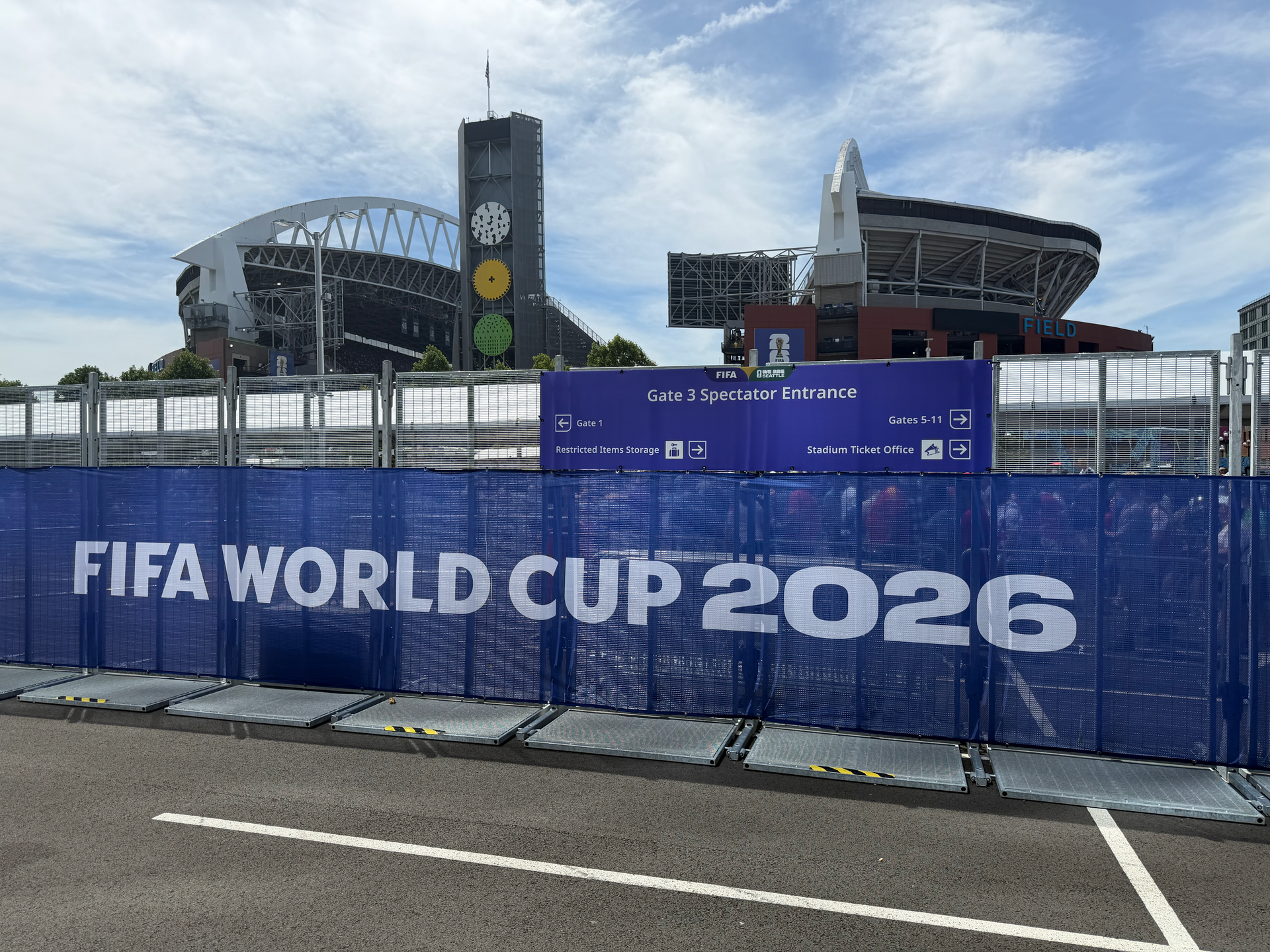
Since the start of this year's World Cup, a highly notable shift has emerged on the stadium's advertising boards. One can notice that the presence of Japanese manufacturing brands has visibly waned compared to the past. From the 1980s and 1990s through the turn of the century, Japanese companies were among the most ubiquitous sponsors of global sporting events such as the World Cup, the Olympics, and Formula 1. Brands such as Sony, Toshiba, Panasonic, Canon, Fujifilm, and JVC were long synonymous with televisions, cameras, VCRs, film, household appliances, and office equipment.
Back then, Japanese manufacturing possessed both the core technology and the end-consumer market. More importantly, it was a direct part of the daily lives of households worldwide. A mega-event like the World Cup, with its massive concentration of global viewers, was the perfect stage for Japanese consumer electronics and home appliance brands to flex their muscles. Today, however, a glance at the pitch-side ads reveals that the spotlight has largely shifted to service-sector brands from China, South Korea, and the United States, alongside capital from the Gulf states. While Japanese manufacturing still exists, it no longer commands the front row of the advertising hoardings.
ANBOUND's founder Kung Chan believes that global manufacturing is undergoing a transition of momentum, and the conspicuous decline of Japanese manufacturing ads at the World Cup serves as a clear signal. Gone were the days when Japanese corporations completely dominated World Cup billboards. As one of the world's premier showcases for global commercial power, the World Cup reflects deeper shifts. Companies willing to pay a premium for global exposure, those seeking to use the tournament to amplify their international presence, and those shifting away from mass-consumer branding all reflect broader changes in industrial structures, corporate strategies, and national competitiveness. The billboards may look like mere commercial marketing, but they reflect shifts in the power structure of manufacturing.
This shift is far from being an isolated phenomenon. According to statistics from fDi Intelligence, World Cup sponsorships were almost entirely dominated by American, Japanese, and Western European enterprises before 2006. Since then, however, the sponsorship structure has visibly pivoted eastward. At the 2022 World Cup in Qatar, the number of Asian sponsors surpassed that of Euro-American companies for the first time. Chinese corporate sponsorship accounted for a share comparable to that of U.S. companies for two consecutive tournaments, while Japanese sponsors were conspicuously absent. Looking at the 2026 World Cup, FIFA's core partners include Hyundai-Kia, Lenovo, Coca-Cola, Visa, and Adidas, alongside the likes of Qatar Airways and Saudi Aramco. The emergence of Gulf enterprises like Qatar Airways and Saudi Aramco demonstrates that sports sponsorship is no longer just a corporate marketing tool. Instead, it now carries undertones of national image-shaping and the spillover of capital influence. By leveraging a global mega-event like the World Cup, Gulf states are packaging their energy wealth, aviation hubs, tourism services, and national brands together, transitioning from mere energy exporters into major players on the global commercial and cultural stage. This signifies that both the manufacturing representatives and the capital forces on the global business stage are changing. Where Japanese corporations once stood as the face of Asian manufacturing, Chinese electronics, South Korean automobiles, and emerging-market capital now occupy far more space.
It is worth noting that Japanese manufacturing has not simply collapsed. Rather, its center of gravity has undergone a major shift. In the past, Japan's strength was on the consumer side. Products like televisions, cameras, audio-video recording equipment, home appliances, and automobiles faced ordinary consumers directly, making global exposure a natural necessity for these brands. Today, many Japanese enterprises have shifted to the mid-to-upstream segments of the industrial chain, concentrating heavily on semiconductor equipment, precision materials, industrial robots, machine tools, sensors, automotive components, and power devices. Companies like Tokyo Electron, Shin-Etsu Chemical, Murata Manufacturing, Keyence, Fanuc, and Yaskawa Electric remain vital to the global industrial chain. However, because their clients are primarily chip fabricators, automakers, and industrial firms, they do not need to repeatedly assert their presence in mass-consumer arenas like the World Cup. In other words, Japanese manufacturing has shifted from "selling to global consumers" to "selling to the global industrial chain", moving from frontline branding to backstage technology.
There is a positive side to this as Japan maintains formidable barriers to entry in many high-end segments. In semiconductor materials and equipment, for instance, Japanese firms remain irreplaceable in fields such as photoresists, silicon wafers, inspection equipment, etching and deposition systems, and high-end components. The AI-driven semiconductor investment cycle also continues to offer opportunities for Japanese businesses. SEMI forecasts that global sales of semiconductor manufacturing equipment will grow from USD 133 billion in 2025 to USD 145 billion in 2026 and reach USD 156 billion by 2027, driven primarily by AI, high-end logic, memory, HBM, and advanced packaging. Taiwan, South Korea, and Mainland China remain the most critical regions for equipment investment. This indicates that the new momentum in global manufacturing no longer stems from traditional home appliances and consumer electronics but from chips, computing power, data centers, advanced packaging, AI servers, and high-end equipment, and these are the exact sectors where Japanese firms are still highly influential.
Yet, this is also where the problem lies. If manufacturing remains "backstage" for too long, its technical barriers may endure, but its global brand influence will inevitably wane. In the past, Japanese manufacturing represented a lifestyle: Sony for televisions, Canon for photography, JVC for video recording, Panasonic for home appliances, and Toshiba for office equipment. Today, the direct impression of Japanese manufacturing among many young consumers has faded; instead, they are far more familiar with brands like Apple, Samsung, BYD, Xiaomi, Hisense, TCL, Hyundai, and Kia. While Japanese enterprises still hold immense value deep within the supply chain, their brand aggressiveness on the consumer side is a shadow of its former self. For a manufacturing powerhouse, this is no trivial matter. Global competition in manufacturing is not just a battle over components; it is equally a competition over brands, channels, ecosystems, and consumer mindshare. Being an "indispensable supplier" is certainly important, but if it cannot continuously roll out products aimed at global consumers, its image as a manufacturing superpower will inevitably contract.
Japan's Ministry of Economy, Trade and Industry (METI) admitted in its White Paper on International Economy and Trade 2025 that the volume of Japanese goods exported has declined and that the nation needs to develop new export goods, export enterprises, and export markets while increasing digital and service value-add. This effectively shows that Japan itself recognizes that its traditional export model is no longer sufficient. The dilemma facing Japanese manufacturing is not just about high costs, an aging population, or corporate conservatism. This also stems from product lifecycles being rewritten by new technologies. Japanese companies used to excel at perfecting hardware engineering, but they have generally been slow to react to smartphones, platform economy, software-defined vehicles, AI terminals, and digital services.
At the same time, Chinese manufacturing is becoming more and more noticeable. In the past, China acted primarily as the provider behind the scenes, such as supplying World Cup merchandise, jerseys, display screens, stadium seating, venue equipment, and construction machinery. The products were in the stadium, but the brands were not. Today, Chinese enterprises are entering the sponsorship frameworks, broadcasting systems, and global marketing arenas directly. Companies like Hisense, Mengniu, vivo, Wanda, and Lenovo have consecutively leveraged the World Cup to expand their international footprint. Behind this trend lies a transformation in Chinese manufacturing from exporting contract-manufactured goods to exporting brands, technology, and application scenarios. Chinese companies are no longer content with being mere suppliers. Instead, they want to build global brand recognition. Particularly in display equipment, major home appliances, smart terminals, new energy vehicles, power batteries, photovoltaics, and construction machinery, China has forged distinct advantages in scale, cost, supply chain integration, and iteration speed. This is the reason for the confidence that emboldens Chinese enterprises to step up to the advertising boards.
However, one should not jump to the simplistic conclusion that "Chinese manufacturing has won a total victory" merely because Japanese ads have dwindled and Chinese ads have multiplied. The reduction in Japanese manufacturing ads signals a retreat of its consumer-facing brands, but it does not mean its underlying technology has vanished. Conversely, the rise in ads from Chinese brands shows a stronger desire for globalization among Chinese firms, but it does not mean all core dependencies have been resolved. The most prominent advantages of Chinese manufacturing right now are scale and speed, while its shortcomings remain in foundational software, high-end industrial software, core equipment, advanced materials, precision components, global service networks, and brand trust. Especially in fields like semiconductors, aviation engines, high-end machine tools, medical devices, and industrial control systems, China still requires long-term accumulation. While advertising on billboards means more visibility, the deep recesses of the supply chain represent hard power. This distinction must be kept clearly in view.
South Korean manufacturing offers an alternative point of reference. The sustained presence of Hyundai-Kia within the World Cup sponsorship ecosystem demonstrates that South Korean enterprises have successfully held onto the global consumer brand lifeline. The hallmark of South Korean manufacturing is its ability to blend automobiles, electronics, entertainment, design, and national image. Samsung, Hyundai, Kia, and LG, coupled with K-pop, K-dramas, gaming, and K-beauty, collectively form South Korea's outward-facing brand ecosystem. South Korea may not possess China's manufacturing scale, nor Japan's deep accumulation in materials and equipment, but it excels at packaging manufacturing into global consumer culture. This is a lesson worth learning for China. When Chinese enterprises venture abroad, they cannot rely solely on price and production capacity. What they must also address should include brand aesthetics, user experience, after-sales service, cultural communication, and localized operations. Otherwise, no matter how much is spent on advertising, it will remain difficult to truly crystallize into enduring global brands.
All in all, Kung Chan's observation of manufacturing shifts through the lens of World Cup advertising offers a highly piercing entry point. World Cup billboards are not industrial reports, yet they visually display the shifting dynamics of global industrial power. Japanese manufacturing has largely receded into the backstage of the industrial chain, Chinese manufacturing is accelerating its journey to the forefront of global branding, South Korean manufacturing continues to fuse consumer brands with cultural exports, and the Gulf states are reshaping their national images through sports sponsorship. This evolution indicates that global manufacturing competition has expanded from pure product rivalry into a comprehensive contest encompassing technology, branding, capital, and national image.
Final analysis conclusion:
As the ads at the World Cup shift, the era of manufacturing is also changing. For China, being seen by global consumers is merely the first step. What matter the most is whether it can establish a firm foothold in core technologies, global services, brand trust, and supply chain organization. Billboards can let it being seen and heard, but a manufacturing superpower ultimately depends on the structural fortitude of its industrial system.
______________
Yang Xite is a Research Fellow at ANBOUND, an independent think tank.


