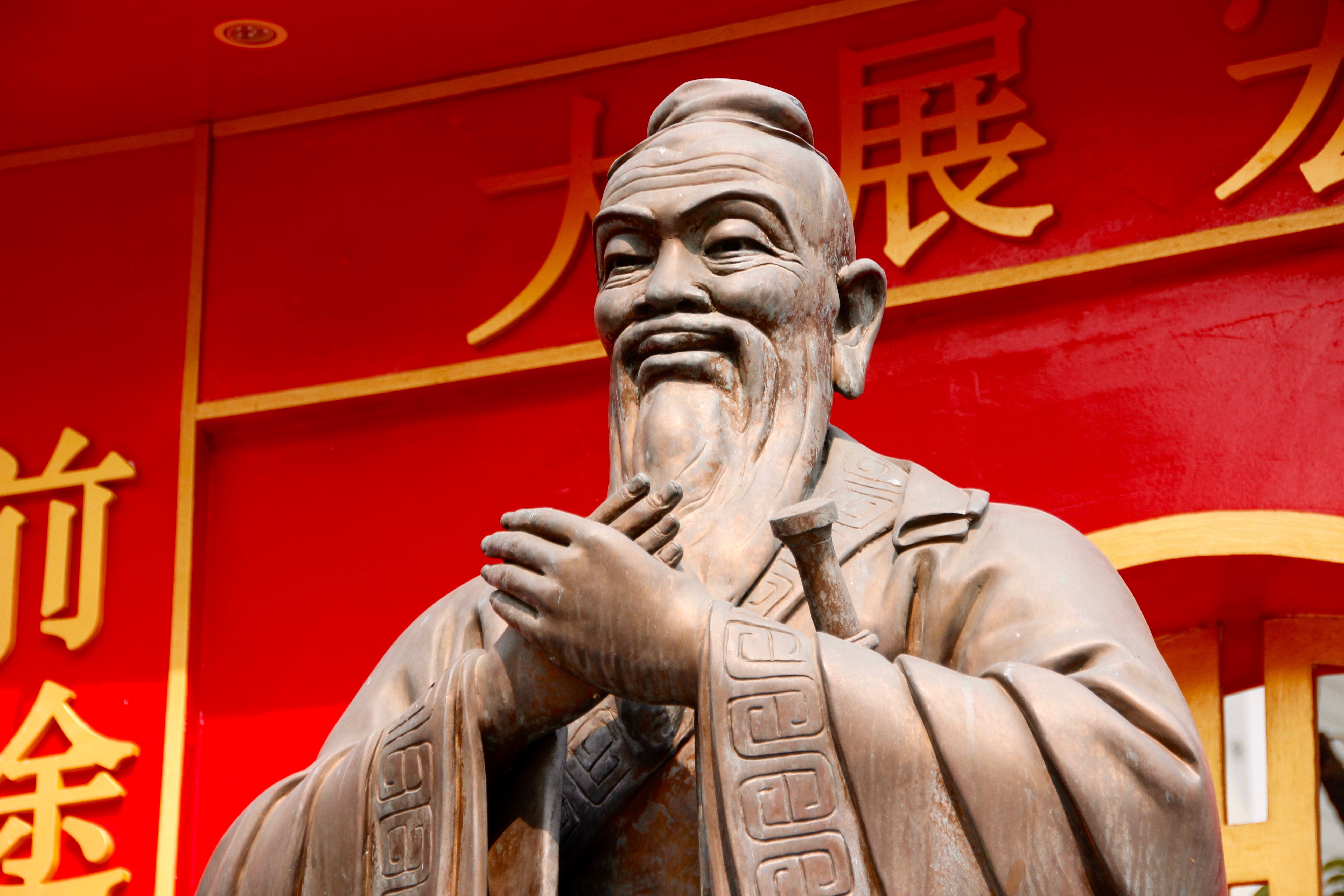
The "Confucian Gentleman Doctrine", which can also be understood as the "Way of the Confucian Gentleman ideal", is a concept I proposed in 2026. The essence of this concept is remarkably straightforward, which is the amalgamation of "Chinese Confucianism + the British Gentleman". By adopting the strengths of both traditions while discarding their respective shortcomings, one arrives at the core and inner meaning of the "Confucian Gentleman Doctrine". The concept is forward-looking yet deeply rooted in history. It is a highly idealized solution to societal problems, though it is one that possesses self-evident value and significance for the long-term development of Chinese society. Even those who only occasionally concern themselves with the future of China can see through the mists of history to discern this ideal and direction for the future of Chinese society.
In reality, the number of scholars in China who approach the subject in this manner is immense, far from being limited to me alone. Here, I will only briefly mention this.
The concept of the "Confucian Gentleman", or the attempt to merge the spirit of Chinese Confucianism with that of the English Gentleman, is not only something that has been advanced historically, but it also once constituted a highly crucial intellectual school of thought in modern China-Western cultural exchanges. It is also one that has continually evolved and transformed. In China, from the late 19th century to the early 20th century, this movement was promoted by a group of intellectuals who possessed a profound mastery of traditional Chinese learning while simultaneously having deep contact with Western civilization.
Among them, Gu Hongming, also known as Koh Hong Beng, was the most famous promoter of that period. In his celebrated work, The Spirit of the Chinese People, he conducted a systematic analogy between the two. Gu believed that the true English gentleman and the Chinese junzi (which loosely means "noble person") were essentially interconnected. Indeed, he explained junzi in English as "a man of noble character", and maintained that the British gentleman's sense of honor, duty, and respect for tradition corresponded highly with the Confucian concepts of li ("propriety") and yi ("righteousness"). He even posited that among the Western nations of that era, only the British, particularly the classically educated British aristocracy, were best equipped to understand the essence of Chinese culture, because they retained the shadow of that "religion of good citizen".
Modern and contemporary Chinese scholars such as Fei Xiaotong were also part of this lineage. In his research, Fei pointed out similarities between the Chinese shishen ("scholar-bureaucrat") class and the British gentry. He emphasized that both served as administrators of local society, not necessarily holding exalted official titles, but maintaining local order through their erudition, status, and moral prestige. Fei Xiaotong believed that the Confucian ideal of "cultivating the self, regulating the family, governing the state, and bringing peace to all" resonated, at its core, with the British gentry's emphasis on public service and personal morality.
During the late Qing and early Republican period, certain educators, particularly early figures like Cai Yuanpei, as well as Yan Fu, who was deeply influenced by British education, strove to find an ideal model of personality that could both preserve the ethical bottom line of Confucianism and possess the civilized demeanor of a modern citizen. This ideal personality was often described at the time as harboring Confucian benevolence and righteousness internally, while exhibiting the etiquette and spirit of the rule of law of a gentleman externally. This understanding was highly prevalent in preparatory schools for studying in the United States and Britain, such as the Tsinghua School during its initial stages, and was hailed as the localized practice of "scholar-bureaucrat education". Thus, Tsinghua University came to be an early cradle for the education of the "Confucian Gentleman Doctrine".
In contemporary political philosophy and new Confucian studies, some have also proposed the concept of "Confucian Gentlemanism". These scholars attempt to combine the moral self-discipline of Confucianism with the liberal personality under Western constitutionalism. They argue that the "restraint" inherent in the British gentlemanly spirit and the Confucian concept of "self-control and returning to propriety" can complement each other to form a moderate and rational modern personality.
These integrative Chinese-Western values focus primarily on explaining and emphasizing the hybridity across three dimensions. The first dimension is etiquette and ritual, as both Chinese and Western traditions place extreme importance on the propriety of demeanor and respect for others. The second dimension is amateurism, where the Confucian dictum that "the noble person is not an instrument" coincides perfectly with the early British gentleman's disdain for pure technical specialization and his reverence for liberal, polymathic learning. The third dimension is social responsibility, as both emphasize that greater capability entails greater responsibility, a form of noble obligation that requires the maintenance of restraint. Therefore, the "Confucian Gentleman" is not merely a rhetorical device; it is a concrete effort of modern and contemporary Chinese intellectuals, when faced with the conflict between "wholesale Westernization" and "stubborn adherence to tradition". Indeed, it is a compromise in personality solution. The search for and shaping of a new type of Chinese personality is precisely one facet of the inherent meaning of the "Confucian Gentleman Doctrine".
Against such a cultural backdrop, my purpose in proposing the "Confucian Gentleman Doctrine" is actually not to make an effort toward academic significance or academic innovation. The definitional direction and the essential characteristics of this doctrine focus on and pertain directly to social governance and the state paradigm. This issue relates directly to a paramount realistic challenge, namely, combating "societal de-gentrification". In other words, this is an exploration aimed at seeking policy solutions within the realm of public policy.
De-gentrification has been a global trend over a certain period in the past. In the mid-20th century, major Western cities experienced severe middle-class flight to the suburbs, known as "white flight", which left large areas of inner cities as slums, causing cities to lose their most critical sources of property and sales taxes, and bringing public finances to the brink of bankruptcy. In the West, de-gentrification was primarily driven by divestment. Theorists focusing on the struggles of grassroots communities claimed that, in the face of skyrocketing rents and the invasion of "gentries", indigenous residents, minority communities, artist groups, and left-wing activists launched a protracted anti-gentrification movement. Through squatting movements, tenant unions, and rent-strike negotiations, they forced local government intervention. In contemporary New York, this has reached its logical extreme with the election of Zohran Mamdani as mayor.
Although de-gentrification is theoretically highly attractive to youth demographics, its resurgence nevertheless leads to numerous problems, frequently plunging cities and communities into an awkward situation where they fail to satisfy either end of the spectrum. The wealthier residents move away, causing the commercial ecology of the neighborhoods to collapse and public fiscal revenues to decrease. This, in turn, leads to the deterioration of public safety and municipal maintenance. Some researchers in the West refer to this as the "crisis of spatial vacancy", emphasizing that if there is a lack of subsequent, meticulous planning tailored toward low-and-middle-income strata, de-gentrification will only cause cities and communities to slide back into impoverishment and desolation.
China's problems are no less serious. Because of inadequate management, some communities that were once showcased as models of "modernized living" have rapidly fallen into neglect, gradually taking on a semi-derelict character marked by unauthorized construction, makeshift additions, and extremely poor sanitary conditions. In some of China's major cities, enclaves of chronically underemployed drifters had already emerged in the past and today, various problematic social groups, including socially disruptive older men and marginalized lower-class youth subculture, can be found almost everywhere. During China's real-estate construction boom, the rapid urbanization aggressively promoted through government policy inevitably brought large numbers of low-income people into the cities. If the economy slows or sufficient desirable employment opportunities fail to materialize, cities across China can easily become trapped in a cycle of urban decline and de-gentrification.
Therefore, pro-gentrification transformation is actually a form of civilization construction and a necessary continuation of urbanization. Otherwise, an increasingly severe and obvious urban dilemma will become unavoidable. The introduction of the "Confucian Gentleman Doctrine" is precisely an urban governance concept and a value philosophy formed to resolve such problems.
When economic development enters the post-modern stage, modern cities will no longer rely primarily on factories, but rather on the knowledge economy. Pro-gentrification is precisely about forging living spaces for this group of intellectuals, like talents in technology, finance, and the arts, who are capable of driving economic growth.
The renowned urban economist Richard Florida actually advanced the theory of the "creative class" quite early on, pointing out the direction for the realization of pro-gentrification. Florida noted that the "creative class", composed of highly educated and highly skilled talents, possesses exceptionally high demands regarding the "urban experience" of their residential environment, such as the cultural atmosphere of cafes, galleries, and historical districts. Gentrification transforms what were originally dilapidated industrial ruins, such as New York's SoHo district, into vibrant cultural and creative neighborhoods. This is the sole pathway to attracting global capital and innovative talent, enabling modern cities to survive global competition and avoid deteriorating into "rust belts".
Academic research emphasizes rigor, whereas policy research emphasizes usability. Although the "Confucian Gentleman Doctrine" is grounded in policy research, it is merely a theory within policy analysis, and there is a vast array of urban governance theories that can be drawn upon in social practice. Furthermore, the phenomenon of de-gentrification in Chinese society is actually far more severe than what people currently see and are willing to admit. The endless stream of social declines emerging today can, at a cultural level, also be considered a form of societal de-gentrification. Therefore, the "Confucian Gentleman Doctrine" is in fact, a resistance against various vulgar and kitsch phenomena widespread in society through the introduction of two forces of Chinese historical culture and Western modern civilization. Consequently, it is clear that the doctrine also serves as the foundation for society to form elite governance.
While the "Confucian Gentleman Doctrine" is a requirement for personal cultivation at the micro level, it exerts the influence of international relations at the macro level. It can effectively integrate personal cultivation with macro international relations into a unified whole, which is highly conducive to promoting Chinese culture on the world stage, allowing China truly to become a respected global nation rather than a traditional, closed society.
In fact, successful empirical practices of the "Confucian Gentleman Doctrine" can be found in ethnic Chinese societies such as Hong Kong and Singapore, and its implementation will inevitably be a cultural construction project involving the entirety of society. Owing to its direct relationship with modern civilization, as a foundational model of elite governance, the doctrine will stand a great chance of being vindicated and developed once it receives the opportunity for promotion and practice.
Final analysis conclusion:
The "Confucian Gentleman Doctrine" is a resistance against various vulgar and kitsch phenomena widespread in society through the introduction of the force of Chinese historical culture and the force of modern Western civilization. Consequently, it also serves as the core foundation for society to form elite governance. The introduction of this concept is naturally forward-looking and deeply rooted in history. It is, after all, a highly idealized solution to societal problems, though this solution possesses self-evident value and significance for the long-term development of Chinese society.


