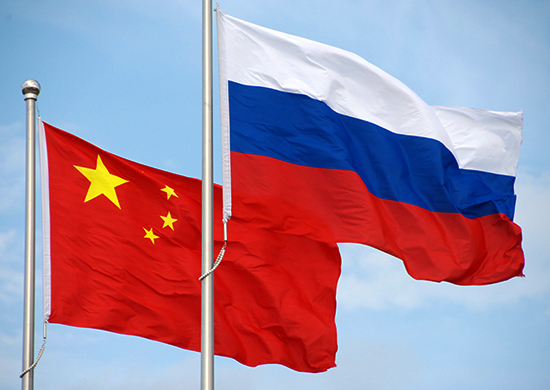
Russian President Vladimir Putin concluded his recent state visit to China, marking his fourth consecutive year setting foot in Beijing and his first foreign trip of 2026. Unlike the previous visits, the Russian delegation this time was unprecedented in scale, comprising five deputy prime ministers, eight ministers, the central bank governor, and the heads of various major energy giants. With a total of 39 personnel, it effectively amounted to relocating half of the cabinet. Undertaking such a massive mobilization, one of the core objectives clearly remains directed at that super-project which has remained unresolved for over a decade, namely the Power of Siberia 2 natural gas pipeline.
This energy artery, with a planned annual transmission capacity of 50 billion cubic meters and a total length exceeding 2,600 kilometers, would cross Mongolia into China. Since its proposal in 2012, it has consistently been stuck at the final stage of commercial negotiations. Russia is deeply anxious to achieve a breakthrough on the final agreement to fill the massive vacuum left by the European market, which has dwindled to nearly zero due to Western sanctions.
Regarding this visit to China by Putin and the subsequent negotiations over the Power of Siberia 2 pipeline, ANBOUND’s founder Kung Chan has proposed a five-point assessment. His main view is that China must maintain a high level of strategic sobriety on this issue, as the delay in negotiations itself constitutes a strategic advantage, whereas the real key to energy security lies in the diversified Southern Corridor previously proposed by ANBOUND. These five points progress sequentially, forming a comprehensive analytical framework for the current China-Russia energy issue.
First, when it comes to the Power of Siberia 2 pipeline, China needs to avoid conceding easily. Ideally for China, the deal should fall through rather than succeed. Russia has already capitalized extensively on the energy relationship between the two nations to influence and constrain China's policy resolve in many respects. Building further upon that foundation requires the utmost caution for China. The core of the current negotiating impasse has to do with the prices. According to various disclosures, Russia's targeted price for the pipeline's natural gas is approximately USD 265 per thousand cubic meters, while China's target is around USD 120, a gap of more than double.
In fact, for Russia, the gas source is located as far away as the Yamal fields in Western Siberia, where extraction costs are high, and the project requires building a new pipeline through Mongolia, which requires a massive investment. Conversely, China accounts for a high proportion of domestic pipeline construction and already possesses mature supply channels, including the Central Asia gas pipeline and diversified LNG imports. Hence, its bargaining power is incomparable to what it once was. More critically, historical experience demonstrates that a single, excessive energy dependence can translate into unpredictable strategic vulnerability. With Russia under severe financial and temporal pressure due to the loss of the European market, China has ample capital to exercise strategic patience, waiting for a price that truly aligns with market principles and national security interests, rather than rushing to sign under political pressure.
Second, what Putin values is not the mere financial revenue from energy, but rather Russia's standing in the global geopolitical landscape. In the current G2 great-power relationship, Russia has no seat at the table. Therefore, Putin is desperately trying to ride Trump’s coattails by leveraging the Ukraine issue, while simultaneously attempting to use energy ties to link Russia to China for the future, much like he did with Europe in the past. In such a scenario, Russia will in reality only be a mere disruptive factor capable of maintaining influence over Europe, whereas in the realm of global great-power relations, Russia actually holds only a secondary status. This anxiety of Russia within the China-U.S.-Russia triangular relationship is fully evident from the timing of Putin's delegation to China, which closely followed U.S. President Trump's departure from Beijing by only a few days.
As the Russia-Ukraine conflict enters its fifth year and Western sanctions continue to intensify, the European Union has set a final deadline to completely cut off Russian pipeline gas by the end of 2027. Russia's weaponization of energy has effectively lost its potency in Europe, and its national fiscal and strategic maneuvering space is being severely squeezed. Against this backdrop, shifting the focus of energy exports to the East and binding itself to China, which is the world's largest and most stable energy consumer market, has transformed from a strategic option into a survival necessity for Russia. As Rosneft has stated, Russia is willing to become China's "resource base". Through a super-pipeline spanning thirty years and valued at hundreds of billions of dollars, Russia hopes to deeply weld its economic lifeblood to China's. In doing so, within the landscape post-global-realignment, it aims to ensure it can rely on China to maintain at least an indispensable status, rather than being completely marginalized.
Third, Putin is an adept at playing the energy card. The new pipeline needs to be seen within the broader global geopolitical framework, particularly regarding what it signifies for Russia. By utilizing this pipeline, Russia can significantly strengthen its control over Mongolia and the oil-and-gas-producing nations of the Commonwealth of Independent States (CIS), binding them closely to Russia rather than to China.
The original planned route for the Power of Siberia 2 pipeline crosses through the territory of Mongolia. In recent years, Mongolia has interacted frequently with the United States and NATO. An energy artery routing through Mongolia means not only that China would have to pay exorbitant transit fees to Mongolia, but that the valve to China’s energy security would be placed in the hands of a third country whose political stance could face uncertainties. For Russia, this pipeline kills two birds with one stone. Eastward, it locks in the Chinese market; westward, it reinforces control over energy flows into Mongolia and across the entire Central Asian region. The pipeline enables Russia to influence the economics and diplomacy of the countries along its route, thereby consolidating its own sphere of influence in the post-Soviet space.
Fourth, since it has already been delayed for years in the past, for China, it can easily be stretched out for several more years in the future. Indeed, the longer it drags on, the more advantageous it is to China. In this sense, time is on China's side. If this drags on for a few more years, China's strategic advantage will only become more pronounced. From the fundamentals of supply and demand, Russia's urgency is intensifying by the day. The loss of the European market has left its natural gas exports facing a systemic crisis of having gas but nowhere to sell. As its National Wealth Fund loses liquidity and the war continues to drain resources, Russia is in desperate need of converting its massive natural gas reserves into immediate fiscal revenue and strategic leverage.
On the other hand, China's efforts to diversify its energy imports have yielded significant results. Construction of Line D of the Central Asia-China gas pipeline is progressing steadily, with Turkmenistan committing to increased gas supplies. Maritime LNG receiving capacity continues to expand, with over 10 million tons of new capacity added in recent years, as liquefied natural gas from Qatar, the United States, and Australia all compete for the Chinese market. China has ranked Russia as its largest natural gas supplier for three consecutive years, yet the share of Russian gas in China's total imports can be adjusted through alternative channels. Furthermore, China’s domestic shale gas development and its global leadership in renewable energy installed capacity constitute an invisible ceiling on natural gas demand and provide powerful alternative options. While instability in the Strait of Hormuz in the Middle East enhances the strategic value of overland pipelines in the short term, it also further solidifies China's resolve to build energy resilience. Consequently, China can remain entirely unhurried, leveraging the asymmetric pressure of time to wait for Russia to make substantive concessions on pricing and terms that better align with China's market principles.
Fifth, the pipeline blueprint most advantageous to China is the Turkmenistan-Uzbekistan-Tajikistan Corridor (TUT), which holds the real key to diversifying China's energy sources. What Russia fears most is this corridor genuinely being placed on the agenda, as it would effectively open a backdoor for China into Russia’s southern flank. The TUT Corridor refers broadly to the strategic channel aimed at deepening energy and infrastructure connectivity between China and Central Asian nations such as Turkmenistan, Uzbekistan, and Tajikistan. Originating from China and extending through Xinjiang, this strategic passage could practically cross the Caspian Sea to reach Azerbaijan and onward into Europe. Its strategic significance is extraordinary, and while its costs may be slightly higher, it offers the shortest route.
Currently, Lines A, B, and C of the China-Central Asia gas pipeline operate stably, and upon completion, Line D will boost total transport capacity to approximately 65 billion cubic meters per year. Concurrently, political mutual trust between China and Central Asian countries continues to deepen. On May 12 of this year, China and Tajikistan signed the Treaty of Permanent Good-Neighborliness, Friendship and Cooperation, solidifying their strategic partnership into a legal framework. In 2025, trade volume between China and the five Central Asian countries surpassed the USD 100 billion milestone for the first time, establishing China as the collective top trading partner for all five nations.
Therefore, the strategic significance of this Southern Corridor is clear and compelling. By bypassing Russia's traditional sphere of influence and drawing energy directly from the heart of Central Asia, it achieves genuine diversification of supply sources. It is not merely an energy corridor but an economic and strategic artery that deepens all-rounded cooperation with Central Asian and Eastern European nations, promoting regional stability and prosperity. For Russia, a Central Asia that is deeply integrated into China’s economic circle, with its energy lifeblood connected directly to China, and potentially even crossing the Caspian Sea to reach Azerbaijan, this means the emergence of a new center of gravity in its traditional backyard. This undoubtedly opens a backdoor at its strategic underbelly.
Final analysis conclusion:
Putin's recent visit to China with such a high-profile delegation clearly had as one of its core objectives the advancement of the Power of Siberia 2 pipeline, which is fundamentally an effort to secure a strategic fulcrum for Russia in the post-sanction era. Although the visit has concluded, the key agreement remains unresolved, revealing the pragmatic and sang-froid calculations of interests beneath the purported strategic coordination of the two nations. For China, the delay itself constitutes an advantage, as time continues to strengthen China's position as a buyer and enhance its supply diversification. The true long-term strategic key is not a single northern pipeline, but rather the westward, networked Turkmenistan-Uzbekistan-Tajikistan Corridor, which would be a more balanced strategic partnership, more dispersed risks, and a more autonomous supply chain. The outcome of it will profoundly shape the geopolitical landscape of Eurasia for decades to come.
______________
Yang Xite is a Research Fellow at ANBOUND, an independent think tank.


