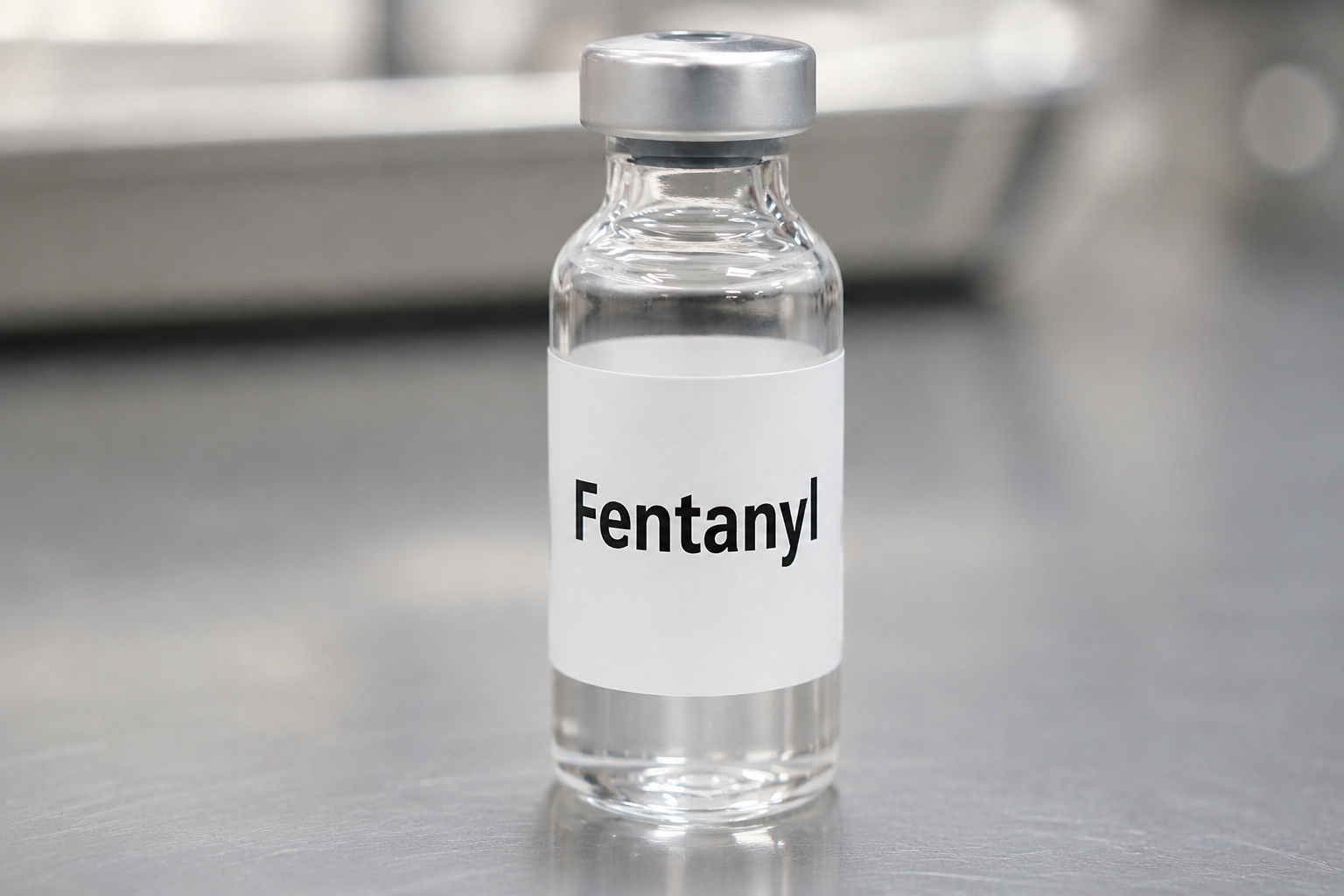
On May 11, ahead of Trump's visit to China, the Chinese Ministry of Public Security announced that China and the U.S. had jointly investigated a transnational drug trafficking case. Simultaneous enforcement actions were carried out in Liaoning and Guangdong, China, as well as Florida and Nevada in the United States, resulting in the arrest of five suspects, among whom two are Chinese nationals, and three are American nationals. This operation demonstrated the shared determination of both countries to severely crack down on illegal drug-related crimes. As President Donald Trump arrives in Beijing, the initiation of joint investigations into transnational drug smuggling and cooperation on cross-border financial regulation related to fentanyl will become key topics in high-level dialogues between the two sides. Currently, the two countries’ control over fentanyl has rapidly escalated from traditional drug governance into a strategic contest involving financial security, cross-border capital flows, and underground banking systems. Over the past few years, the U.S. government has continuously intensified its investigations and sanctions against Mexican drug cartels, Chinese underground banks, and cross-border money laundering networks. The deep-seated motivation for this goes beyond the drugs themselves. Indeed, it lies in the existence of a financial network capable of bypassing global financial regulations to achieve cross-border settlement without the actual cross-border movement of funds. The case of Zhang Zhidong serves as a landmark event marking the first systematic revelation of this system.
As a highly educated Peking University graduate who spent years operating across Mexico, the U.S., and the Caribbean, Zhang is accused of providing large-scale money laundering services for drug cartels and constructing an underground financial network spanning China, the U.S., and Latin America. Since his handover to the U.S. at a Cuban airport last year, the gradual disclosure of case details has led outside observers to realize that what he built was not an underground bank in the traditional sense. Instead, it was a highly platform-based, decentralized parallel settlement network capable of operating independently of the traditional cross-border financial system. It differs from the Hawala system, which uses transaction codes through shell companies, currency smuggling, and legal trades to mask foreign exchange transactions; it also differs from traditional "mirror accounts" or back-to-back currency swaps that rely on trading cryptocurrency or fabricating import-export trades to achieve illegal exchange. The core mechanism of this network can be summarized as "mirror transfers", i.e., a new type of clearing model that completes value transactions without any actual cross-border movement of funds.
The core of traditional money laundering is the "cross-border flow of money"; regardless of how methods evolve, funds essentially need to cross national borders. Because of this, global financial regulation has long built its monitoring mechanisms around bank accounts, the SWIFT system, cross-border remittances, and foreign exchange flows. However, the Zhang Zhidong case reveals a fundamental paradigm shift, where funds between the two countries never actually cross borders, and exchange is completed solely through internal circulation. On the U.S. end, the massive amounts of U.S. dollar cash earned by drug traffickers cannot enter the formal banking system. For them, the real challenge is not "making money," but "handling cash." The underground network controlled by Zhang Zhidong established a distributed cash collection system in the U.S., utilizing venues within Latin American and Asian communities that have a high demand for cash exchange. Shops, restaurants, casinos, and logistics warehouses can all serve as cash collection nodes. Traffickers deliver U.S. dollar cash in fragments to agents at these nodes. Once split and packaged within the U.S., the funds are deposited into banks or moved into cryptocurrency trading networks, and the capital circulates only within the United States. Simultaneously, there is another group of demand-side actors in China who are high-net-worth individuals, holders of gray-market capital, and business owners with foreign-exchange needs who wish to transfer assets abroad. Restricted by foreign exchange controls, they cannot legally exchange currency on a large scale and are therefore willing to pay a premium to acquire overseas U.S. dollar assets through underground channels. These individuals deposit the Chinese currency into an account system controlled by Zhang, which spreads across various locations in China and is disguised as trade, consulting, or supply chain enterprises. These funds likewise circulate only within the country. On the surface, they appear to be ordinary commercial transfers, but in reality, they have entered an underground clearing network.
The most critical step of "mirror transfers" lies in value hedging, where funds from both countries never engage in cross-border movement. American dollars remain in the U.S., and Chinese yuan remains in China. By utilizing local cash pools in both countries, dynamically adjusting exchange rate premiums, and employing numerous intermediaries to match varying levels of demand, underground banks form an invisible, parallel foreign exchange market. Value hedging is then completed based on internal ledgers. Once a Chinese client completes a capital injection or transfer to a local company, the corresponding amount of U.S. dollars is disbursed directly from the American drug traffickers' cash pool. These funds are then collected by the proxies, relatives, or shell companies of wealthy Chinese individuals in the U.S. to be used for real estate purchases, investments, and consumption, completely bypassing existing regulatory systems. Because it is the relationship between debt and value that crosses borders, rather than the funds themselves, a wide range of regulatory mechanisms are potentially undermined, including the effectiveness of foreign exchange controls, cross-border payment monitoring, and bank anti-money laundering systems. In turn, the enforceability of financial sanctions declines accordingly, and capital flow statistics become severely distorted.
The main reason why the Zhang Zhidong case transcends past drug crimes is that this underground banking system has achieved a preliminary capacity to operate independently of state financial regulation. Once initial clearing is complete, the underground banks further facilitate the integration of these funds into legitimate markets. In the U.S., dollars flow into casinos, real estate, luxury consumption, cultural and art trading, and cryptocurrency channels, creating a snowball effect for the assets. In China, because the yuan never actually leaves the country, it enters the capital market under the guise of ordinary commercial cash flows, driving procurement in material supply chains and expanding reproduction. The most resilient aspect of this structure is its natural decentralization. It does not rely on any single bank or core account, but rather operates through a massive number of dispersed nodes. If one account is frozen, they immediately switch; if a cash logistics point is busted, operations are quickly relocated to another city. Even if individual agents are captured, the remaining nodes continue to function normally. This is an operational logic far closer to a distributed network than early-generation organized crime. Furthermore, it is not a closed tool exclusive to a single syndicate, but rather a highly platform-based, underground financial infrastructure. Multiple criminal groups operate as "tenants", sharing the account systems, clearing channels, and cash collection nodes. Within this, the Mexican drug cartels are merely the most active users on this platform. This platform-based attribute means that even if a specific criminal group is destroyed, as long as the underlying network remains, new users can seamlessly plug into it, giving it a lifespan far exceeding that of any single organization.
It is worth noting that the dollar and the yuan assets accumulated by underground syndicates in both countries have long been reinvested into global trade chains. Historically, the Italian Mafia laundered illicit proceeds into legitimate businesses by monopolizing industries such as wine, olive oil, marble, and crystalware. Similarly, Mexican criminal cartels utilize the "clean" yuan in their domestic accounts to procure entirely legitimate Chinese goods on a massive scale, which are then exported to Latin America through conventional trade channels, thereby forming a complete closed loop: drug profits are generated in the U.S., achieve "mirror transfers" via the demand for capital flight, complete their value conversion domestically, and are ultimately funneled back into the Latin American market in the form of commodity procurement. The range of goods involved in this system is exceptionally broad, not only including fentanyl precursor chemicals, but also encompassing numerous categories such as rare metals, steel and concrete, electronics, machinery and equipment, telecommunications equipment, apparel, general merchandise, and even drone components, with the profits from these legitimate trades even surpassing those of traditional drug smuggling. Consequently, a triangular trade relationship centering on China, the U.S., and Mexico has solidified, continuously fueling the expansion of transnational underground economic networks.
Faced with this new type of threat, traditional anti-money laundering cooperation represented by the Financial Action Task Force (FATF), which relies on sharing suspicious transaction reports and tracking cross-border fund flows among member states, is clearly no longer effective. At the same time, the information-sharing efforts of financial intelligence units (FIUs) worldwide are still primarily centered around "cross-border funds". As criminal networks enter the era of "value transfer", their methods have become more covert and complex. These networks continuously integrate elements such as cryptocurrencies, stablecoins, anonymous communication, and cross-border e-commerce logistics, rendering transactions fully compliant in form so that they never trigger traditional suspicious transaction alerts. This means that state foreign exchange regulation is no longer facing isolated, individual loopholes, but rather a systemic and generational challenge. To resolve this dilemma, the direction of future collaborative governance must shift toward tracking the traces of value hedging behind "foreign trade orders". Only by digging deep into the value flows underpinning these transactions can criminal activities be truly identified and countered.
Final analysis conclusion:
The issue between the U.S. and China over the fentanyl problem, while on the surface appears to be about drug control, has in fact evolved into a battle over foreign exchange regulation. The “mirror transfer” model and decentralized underground financial platforms revealed in the Zhang Zhidong case mark a fundamental shift in the global money laundering paradigm, in which funds no longer need to move across borders, yet value can still be transferred. This completely bypasses the conventional anti-money laundering system, which is based on monitoring cross-border capital flows. This model tightly links drug dollars, the demand for capital flight from China, and gray supply chains, forming a closed-loop underground network that spans countries, currencies, and asset types. It not only significantly reduces the effectiveness of unilateral sanctions and foreign exchange controls but also fosters a platform-based underground economy capable of self-evolution. In the future, whether this new type of underground banking network can be brought into bilateral and multilateral governance agendas will directly shape the trajectory of global financial security.


