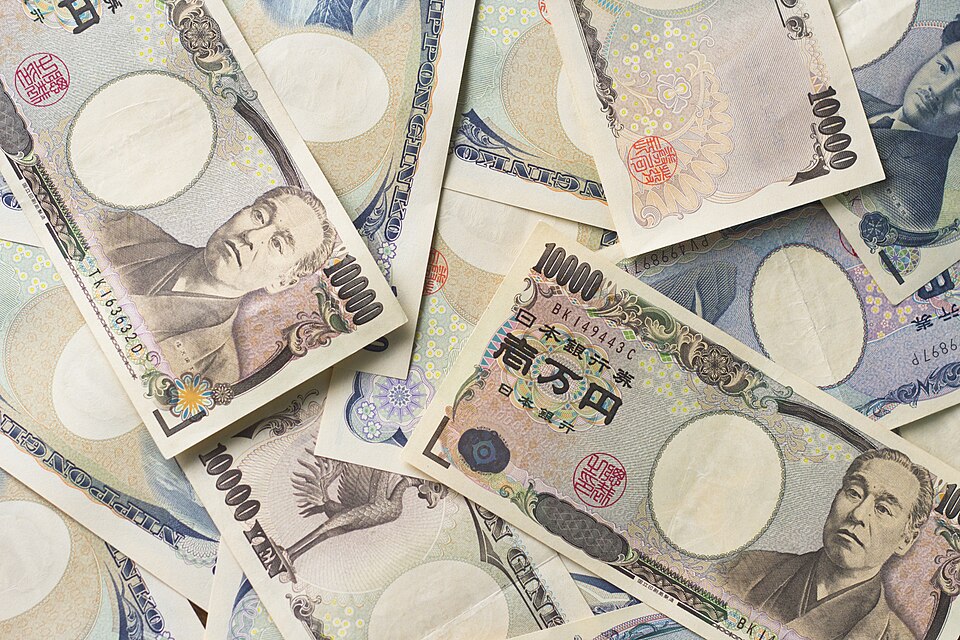
With the Bank of Japan (BoJ) and the U.S. Federal Reserve both recently opting to maintain their current policy stances, the JPY/USD exchange rate has entered a new phase. Reports indicate that the Japanese government began intervening in the currency market on April 30, a move that saw the yen surge by approximately 3% that day. Market analysis of BoJ account data suggests that authorities deployed roughly USD 34.5 billion during that initial action. On May 7, the yen climbed to a high of 155.04 against the dollar, marking an intraday gain of 1.8%. According to a Bloomberg analysis of the Japanese central bank data, the scale of this subsequent intervention is estimated at JPY 4.68 trillion (approx. USD 30 billion). The Japanese government has since reaffirmed its firm commitment to supporting the currency. These figures follow earlier data cited by Reuters, which suggested the April 30 intervention could have reached JPY 5.48 trillion (approx. USD 35 billion), a figure closely trailing the JPY 5.73 trillion (approx. USD 36.8 billion) spent during the previous intervention in July 2024.
Despite the large-scale market interventions at the end of April, which triggered a rapid appreciation of over 3%, the yen quickly retreated to the JPY 157 level over the subsequent trading sessions. Following the Japanese government's second intervention, the yen returned to above JPY 156 on May 8, and by May 12, the exchange rate had slipped back to JPY 157.5 against the dollar. This pattern of limited gains and rapid reversals, a return to pre-intervention levels within just a few days despite repeated actions, suggests a challenging outlook. In the view of researchers at ANBOUND, these developments indicate that regulatory intervention is unlikely to reverse the broader structural trend of yen weakness.
In recent years, market observers have identified JPY 160 as the Japanese government’s "red line" for currency intervention, based on the timing and frequency of official actions. While the Japanese government and the BoJ have stepped into the market multiple times to defend this threshold, the yen has consistently resumed its downward trajectory after only brief rebounds. On paper, Japan possesses ample ammunition to win a short-term "currency defense battle", with foreign exchange reserves standing at approximately USD 1.16 trillion as of the end of March. Yet, the exchange rate remains stubbornly entrenched in the danger zone. Notably, since Sanae Takaichi took office last year, the yen has maintained a position of relative weakness regardless of fluctuations in the greenback, steadily inching back toward the JPY 160 mark. Despite warnings from Japanese government and central bank officials, and even from the U.S. government and the Fed, these admonitions have so far failed to exert any lasting influence on the market.
Recent data indicate that, despite the Japanese government's frequent market interventions, financial institutions continue to test the "bottom line" of Japan’s financial regulators. This persistent "depreciation trade" stems, on one hand, from the fundamental disparities between Japan and the United States. On the other hand, it is driven by the constraints regarding "floating" exchange rates within the Japan-U.S. trade framework. The IMF has previously stipulated that under a "floating exchange rate", government interventions should not exceed three instances. In this regard, while the Japanese government possesses ample "ammunition" to defend its currency floor, both the frequency and intensity of its interventions are restricted, making it difficult to act with a completely free hand.
Over the long term, pressure on the yen remains difficult to effectively alleviate. As the BoJ has paused its rate hike cycle, a trend toward currency depreciation appears inevitable amid elevated inflation. In 2025, Japan's core CPI (excluding fresh food) rose 3.1% year-on-year to 111.2, marking the fourth consecutive year it has exceeded the 2% inflation target. The latest data for March shows core CPI at 1.8%, up from 1.6% in February, though this marks the second consecutive month it has sat below the Bank of Japan's 2% target. However, these figures were achieved only through the Takaichi administration’s subsidies for food and energy. The "core-core CPI" (which Japan defines as further excluding energy) moderated from 2.5% in February to 2.4%, yet it remains above the 2% threshold. Meanwhile, Japan’s first-quarter GDP was revised downward to an annualized contraction of 2.9%, suggesting that the economy has not only failed to achieve the expected mild recovery but has instead slipped into a deeper contraction. If one considers the short-term impact of energy risks stemming from the current U.S.-Iran conflict, the prospect of "stagflation" in Japan becomes even more pronounced. Researchers at ANBOUND have previously noted that, given Japan's current state of "micro-growth", the greater concern lies in the impact of interest rate hikes on the economy. In this sense, it is not just the Japanese government "walking a tightrope"; the BoJ also faces a dilemma. The central bank's monetary policy cannot fully serve as a backstop for Takaichi’s agenda. Furthermore, Takaichi’s fiscal expansion policies will inevitably weigh on the yen's credibility, ensuring that the trend of depreciation persists.
Meanwhile, the U.S. is also facing its own issues regarding sticky inflation. Since the beginning of 2025, U.S. inflation has taken on a new characteristic of persistent highs. Against the backdrop of the "trade wars" pushed by the Trump administration, both headline and core inflation reached 2.6% for the full year of 2025. Even if these figures represent a decline, they remain consistently above the 2% target. As of February 2026, the annual inflation rate held steady at 2.4%, with core inflation stabilizing at 2.5%. This is near their lowest levels since 2021, yet still exceeding the Fed’s policy goal. This has not only stalled the Fed's timeline for cutting interest rates but has also created headwinds for U.S. economic growth. Given the continuous increase in the U.S. federal deficit, any future rate cuts by the Fed are likely to be a gradual process. Consequently, the narrowing of the interest rate differential between the U.S. and Japan will likely take much longer than previously anticipated.
In the short term, geopolitical risks stemming from the U.S.-Iran conflict have exacerbated inflationary and economic pressures on Japan, which relies heavily on Middle Eastern energy. Although the Japanese government has implemented measures such as subsidies and the release of strategic reserves to offset rising energy prices, these actions have further increased government debt. Moreover, energy instability is a heavy blow to Japan’s manufacturing sector. Should the conflict persist, the pressure on the yen’s stability will only intensify. While the BoJ continues to pause rate hikes to maintain economic stability, the yield spread between the U.S. and Japan remains high as the Fed similarly slows its pace of rate cuts. It is worth noting that the heightened geopolitical risk from the U.S.-Iran conflict has not only delayed the Fed's easing cycle but also fueled safe-haven demand for the greenback, driving the dollar higher in the short term. Given the stark contrast in the economic and monetary trajectories of the U.S. and Japan, there is little reason for the yen to rebound in the near future. Since Japan ended its negative interest rate policy in 2024, the spread once narrowed as the Fed entered its own easing cycle; however, with trade wars increasing inflationary stickiness and disrupting central bank timelines, analysts point out that with the U.S.-Japan interest rate differential sitting as high as 300 basis points, intervention alone is unlikely to fundamentally reverse the yen's weakness.
At present, the U.S. dollar maintains its status as a dominant geopolitical currency, while the traditional safe-haven characteristics of currencies like the Japanese yen and the Swiss franc have increasingly faded. On one hand, the cost of borrowing in yen has risen following the BoJ's rate hikes. On the other hand, under the Japan-U.S. trade agreement, Japan has secured continued trade with the U.S. at the expense of increased investment in the American market and acceptance of various tariffs. This has deepened Japan's dependence on the U.S. economy and strengthened the correlation between the two, making it difficult for the yen to fulfill its role as a hedge against dollar risk. Consequently, a new dynamic has emerged where the yen tends to depreciate against the dollar regardless of whether the greenback itself is rising or falling.
The primary concern is that should the yen breach the JPY 160 threshold, it could trigger a repeat of the "black swan" event seen in 2024. At that time, the yen's sustained depreciation caused Japanese assets to lose their appeal, leading to capital flight and forcing the BoJ’s hand on interest rate hikes. Such hikes, in turn, further exacerbated stock market volatility. For a Japanese equity market that has only recently shown signs of recovery, this would signal a new period of turbulence, potentially sparking a fresh wave of international capital reallocation. Consequently, the timing and intensity of the Japanese government's market interventions remain critical to the market's direction. This is not merely a question of speculative gains, but a fundamental factor influencing international capital flows and the broader stability of financial markets.
Final analysis conclusion:
In the face of shifting geopolitical risks and evolving trade and economic landscapes, the yen’s sustained depreciation against the dollar has prompted the Japanese government and regulatory bodies to intervene in the currency markets. However, such measures may ultimately prove to be a mere temporary solution to curb speculation. Given the widening disparities in inflation and the growing gap in geopolitical influence between Japan and the U.S., the yen appears unlikely to shake off its long-term downward trajectory.
______________
Dr. Wei Hongxu is a Senior Economist of China Macro-Economy Research Center at ANBOUND, an independent think tank.


