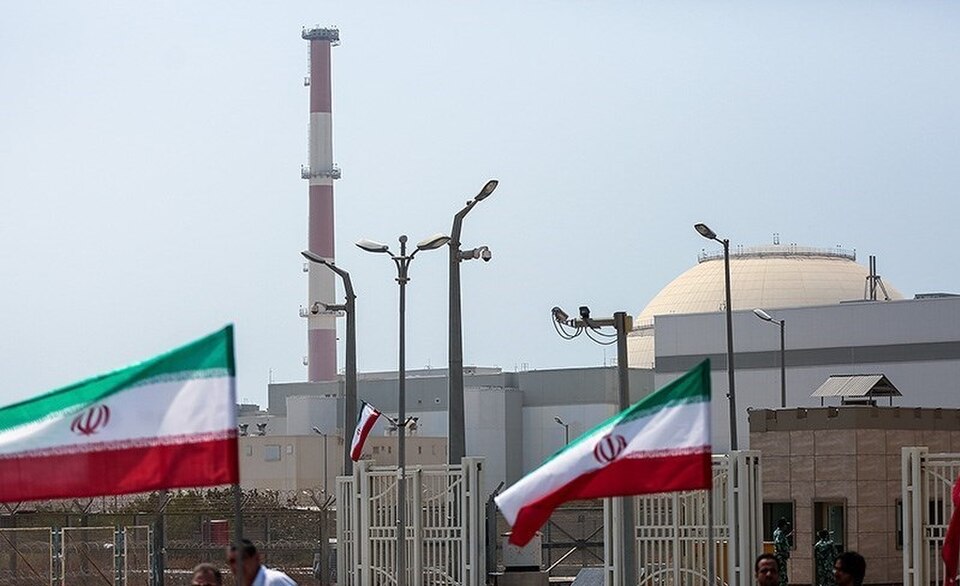
The conflicts involving the United States, Israel, and Iran continue to persist to this day, and perspectives on this warfare vary widely. According to ANBOUND’s founder Kung Chan, the core of this conflict has transitioned from concentrating on security to one of politics, and subsequently shifted again toward a deeper underlying emphasis on energy. In the future, the energy economy will be the norm, as will energy warfare. This "dual normalcy" represents a grave consequence of the current conflict.
Many have already seen that international oil prices briefly surged above USD 120 per barrel, reaching a four-year high. To fill the market deficit, over 30 countries globally were forced to release their strategic oil reserves. While the United States, Japan, Germany, and others each released volumes exceeding 10 million barrels in single instances, yet these efforts remained insufficient to stabilize the market gap, and market oil prices have continued to climb.
The impact of energy on the economy is profound, with the Asian market feeling the shock most acutely. Vietnam and the Philippines rely on the Strait of Hormuz for 87% and 96% of their crude oil imports, respectively, which has directly led to severe strain on both nations' energy supply chains. Simultaneously, countries such as Laos and Thailand have faced a grim reality, with gas stations closing and fishing industries grinding to a halt. This indicates the strategic deterrent power of the Strait of Hormuz as a global energy artery, as well as the decisive influence that energy transport networks exert on the world order.
Currently, the Strait of Hormuz has become the focal point of the conflict. Indeed, it has now fallen into a state of near "functional paralysis", with an impact exceeding any previous geopolitical crisis. According to the latest monitoring data from the International Energy Agency as of March 2026, the Strait of Hormuz typically handles an average daily oil transport volume of 20.1 million barrels, accounting for 20% of global oil consumption and 26% of global seaborne oil trade. Furthermore, it facilitates 23% of the world’s liquefied natural gas (LNG) transport. The energy exports of core global oil producers, including Saudi Arabia, Iran, Iraq, Kuwait, and the United Arab Emirates, as well as Qatar, the world's largest LNG exporter, must almost entirely pass through this strait to reach major economies in Asia, including China, Japan, and South Korea.
This energy choke point possesses a fatal geographic vulnerability. Its narrowest section spans only 30 to 40 kilometers, with the actual navigable channel measuring less than 10 kilometers, making it exceptionally susceptible to blockades or interference. Following the escalation of Middle Eastern tensions in late February 2026, transit volumes through the strait experienced a precipitous decline. According to the latest data from commodity tracking agency Vortexa as of March 23, the daily average number of tankers passing through the strait plummeted from a pre-war level of 125 to fewer than five, a drop of over 95%. On March 14, an extreme scenario occurred with zero transits recorded. Consequently, the transport of nearly 20 million barrels of oil per day has effectively been severed, leaving over 440 energy transport vessels stranded within the Persian Gulf.
Nevertheless, the more critical issue lies in the challenges and shifts that have yet to be fully recognized by the public, i.e., the emergence of energy warfare as a new form of conflict. This is because the continuation of war relies on energy, and more importantly, the ultimate victory in war depends on it.
Kung Chan believes that the conflict in Ukraine, serving as the world’s first large-scale unmanned war, further validates the assertion that energy is the core pillar of modern combat. Between October 2025 and March 2026, Russian strikes against Ukrainian energy infrastructure continued to escalate, resulting in a degree of destruction far exceeding previous levels.
Drones, unmanned surface vessels, and information-based command systems have become the essential equipment on the modern battlefield. The operation of their hardware depends entirely on a fuel-generator-electricity energy supply chain. Drone batteries require continuous charging, while frontline command, communication, and reconnaissance equipment need a 24-hour power supply. Should the battlefield power grid collapse, diesel generators and fuel become the sole lifeline for maintaining operations. Consequently, the key to neutralizing unmanned aerial vehicle tactics in modern warfare lies in concentrated strikes against infrared targets, such as generator sets on the battlefield.
According to official data from the Ukrainian Ministry of Energy as of March 2026, the Russian military's sustained strikes on energy infrastructure have resulted in the total destruction of 87% of Ukraine's coal-fired thermal power plants. Large-scale hydroelectric facilities retain only 15% of their pre-war generating capacity. The nation’s total installed power capacity has plummeted from a pre-war 55 GW to less than 9 GW, barely sufficing to maintain basic electricity for main cities, while 40% of the power grid infrastructure has suffered irreversible damage.
In January 2026, the destruction of Kyiv’s largest thermal power plant by missile strikes led to a city-wide loss of electricity and heating, disrupting service to over 5,600 buildings. The most direct battlefield consequence is that Ukrainian drone units on the front lines have seen their operational efficiency drop by 80% due to power shortages, with vast amounts of equipment rendered unusable due to the inability to recharge. A February assessment report from the United Nations Office at Geneva noted that the destruction of Ukrainian energy facilities had increased by 21% compared to the end of 2025. This energy crisis directly caused the country’s GDP to fall by 1.4% year-on-year in January 2026, leading to a continuous degradation of frontline combat capabilities.
Without fuel and generators, the war in Ukraine would end immediately, and its outcome would be instantly determined.
The situation is much the same in the conflict involving the U.S., Israel, and Iran. Iranian missiles pose a massive threat, having struck nearly all neighboring Arab nations, with airports, residential areas, and government departments all serving as targets. They have blockaded the Strait of Hormuz and have even brought Israel's Dimona nuclear facility within striking range, and targets have even been hit. How, then, does the Iranian missile offensive function?
A missile strike network requires command, positioning, and transport, and Iran has constructed a network of "underground missile cities" spanning the entire country. According to the latest monitoring by Western military institutions in March 2026, Iran possesses over 40 underground missile bases that integrate storage, assembly, launch, and command functions, serving as the core platforms for its long-range strikes. The operation of this system is highly dependent on energy. Missile radar detection, positioning and navigation, and command communications require a 24-hour power supply. Furthermore, the ventilation, temperature control, and missile maintenance equipment of these underground bases need continuous electricity, while the transport and loading of missiles are inseparable from fuel and electric power. Once the energy supply is interrupted, these missile cities will be reduced to "dead cities". Without the ability to lock onto targets or complete launch preparations, even a massive arsenal of missiles would be rendered entirely devoid of combat effectiveness.
The battlefield situation has already validated this logic. In March 2026, the Middle Eastern battlefields saw explicit strikes targeting energy infrastructure. On March 18, Iranian missiles precisely struck the Ras Laffan LNG Industrial City in Qatar, destroying two core production lines and instantly wiping out 17% of Qatar’s LNG production capacity, an annual loss of 12.8 million tons. On March 19, Iran launched further missile attacks on the Riyadh refinery in Saudi Arabia, dealing a direct blow to the global oil supply. The prerequisite for these two strikes was that Iran’s own domestic oil and gas production facilities and power grids remained intact, ensuring a stable and continuous energy supply.
In contrast, as of late March 2026, the U.S. and Israel have not yet designated Iran’s domestic energy production and power generation facilities as primary targets, instead remaining focused on conventional targets such as military bases and missile launchers. However, they may very well do so in the future; otherwise, this war will not end. Iran’s South Pars gas field, the Asaluyeh petrochemical hub, and its national thermal power plants are all fatal vulnerabilities within its war-support system. Once these energy infrastructures are precisely destroyed, Iran’s missile system will rapidly lose its operational power, and the tide of the war will turn immediately.
Kung Chan points out that from the conflict in Ukraine to the war between the U.S.-Israel against Iran, the form of modern warfare has become clear. Due to the development of digital technology, digital equipment has significantly increased its dependence on energy. The source of all digital devices, including artificial intelligence, is energy. Therefore, all modern wars of the future will be wars centered around energy. Facilities for the production, storage, transport, and generation of energy have become the most critical war resources, hence the primary strike targets in the early stages of conflict.
Modern warfare has entered an era defined by intelligence, unmanned systems, and information technology of drones, missiles, precision-guided munitions, electronic warfare equipment, and command and communication systems. However, all of these high-tech digital assets remain inextricably dependent on electricity and fuel. Compared to the destruction of enemy personnel or conventional weaponry, targeting energy infrastructure is more cost-effective and yields more absolute results. Once the networks for energy production, generation, and storage are dismantled, the tools of modern warfare lose all meaning and utility. The form of conflict then rapidly regresses to a primitive state. Even with advanced equipment at one's disposal, the capacity to conduct modern operations simply ceases to exist if there is no energy supply.
As things stand, energy has long since transcended its status as a mere resource to become a central theme in global geopolitical maneuvering and military confrontation, and it will continue to exert a profound influence on global security and economic structures. Whether it be maritime energy transport corridors or domestic production facilities, these are the strategic high grounds of modern warfare. In the future, those who control the energy supply will command the initiative in war. Likewise, those who destroy the energy system will secure the ultimate victory.
Final analysis conclusion:
The conflict involving the U.S., Israel, and Iran persists, and its core has shifted toward a struggle over energy. As a vital global energy artery, the "functional paralysis" of the Strait of Hormuz has triggered a surge in global oil prices and a widespread energy crisis. The conflict in Ukraine which serves as the world’s first large-scale unmanned war, alongside Iran's missile network, has validated the assertion that "energy is the pillar of modern combat". In the future, those who control the energy supply will command the initiative in war, and those who dismantle the energy system will secure the ultimate victory.
______________
Xia Ri is an Industry Researcher at ANBOUND, an independent think tank.


