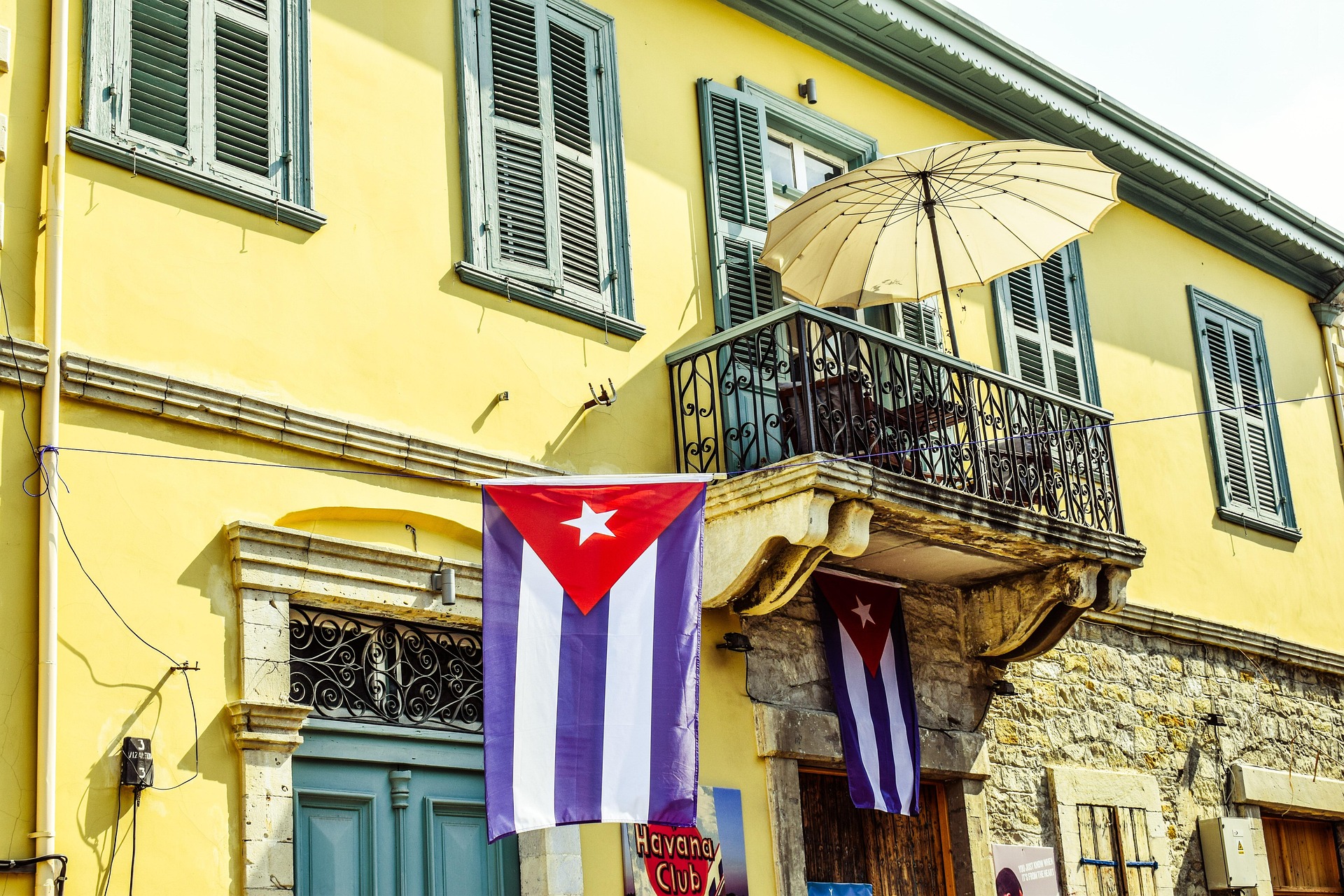
Cuba has undergone a series of noteworthy changes in recent times. On one hand, the United States has continued to intensify its economic and energy pressures on Cuba, while simultaneously signaling a willingness to negotiate. On the other hand, Cuba, while acknowledging the ongoing deterioration of its economic situation, has also unusually placed emergency reforms on the public agenda. In mid-March, Cuban President Miguel Díaz-Canel explicitly stated that urgent adjustments must be made to the most pressing and necessary aspects of the economic and social model. Following this, the Cuban government released a series of policy signals, including expanding the use of market mechanisms, adjusting foreign investment policies, and redefining the role of the Cuban diaspora within the economic system. Taken together, these developments indicate that Cuba is not simply implementing isolated policy adjustments, but rather rolling out a coherent and gradually evolving reform plan with clear boundaries.
In this regard, it is important to further clarify the nature of Cuba's reforms. According to a senior researcher at the ANBOUND, the reforms Cuba is currently pursuing are not a conventional form of institutional transformation, nor a full transition to capitalism. Instead, they represent a controlled reform aimed at transitioning from a highly planned economy to a limited market socialism, all within the existing political framework and ideological boundaries. This reflects Cuba's determination and that the reforms would not involve abandoning state control. Rather, they seek to introduce certain market incentives and restructure the economy in ways that alleviate long-term pressures on public finances, energy, foreign exchange, and the supply system, while maintaining one-party rule, the leadership of key sectors, and the socialist narrative.
Of course, Cuba's determination and willingness are unilateral, and whether the U.S. will support them is an entirely different matter. Based on a series of statements from figures like Marco Rubio and Donald Trump, their primary concern remains political, specifically the ruling position and changes within the Communist Party of Cuba (PCC). The gap between these two is quite significant, and Rubio's personal aspirations as a Cuban immigrant may not necessarily receive Trump’s unwavering support. Therefore, the likelihood of successful negotiations seems smaller than the possibility of failure. Nevertheless, Cuba's urgent desire for economic reform is clear and deserves attention.
First, looking at reforms that have already been rolled out or clearly put into practice, Cuba has in effect completed a first round of limited loosening within its existing system. The most significant step has been the legalization and expansion of the private sector. Since 2021, residents have been allowed to establish and operate small and medium-sized enterprises, with many businesses that previously existed as sole proprietorships beginning to transition toward more formal corporate structures. By 2024, the non-state sector accounted for 55% of retail sales, surpassing the state sector for the first time, a shift that carries clear symbolic weight. Alongside this, the private sector has been granted limited access to foreign trade. Although most import and export activities still need to be conducted through state platforms, the government’s absolute monopoly over foreign trade channels has been weakened. At the same time, Cuba has moved forward with monetary unification, bringing an end to the dual-currency system. In practice, the use of the U.S. dollar and other hard currencies has continued to expand, with mechanisms such as MLC stores and foreign-exchange transactions effectively driving a partial dollarization of the economy. Prices and subsidies are also being gradually adjusted, and there is greater autonomy in agricultural production and sales. Taken together, these measures indicate that Cuba has already begun to break away from the old equilibrium characterized by tight central control, rationing, and rigidity across several key areas, including consumption, trade, agriculture, and the monetary system.
The significance of this round of reforms goes well beyond surface-level changes. Monetary unification was intended to reduce distortions in domestic accounting and create the conditions for price reform. Cutting subsidies and loosening price controls aims to ease fiscal pressure while allowing greater room for market signals. Relaxing restrictions on agricultural sales and pricing is meant to address food shortages and supply imbalances. Expanding the use of the U.S. dollar and the euro in specific contexts, meanwhile, is a way to sustain basic circulation in an environment of foreign exchange scarcity. In other words, the true nature of Cuba’s first round of reforms is not simply about developing the private sector. Rather, it reflects an effort to use limited market-oriented measures to patch up an economic system long constrained by insufficient supply, fiscal strain, and a shortage of foreign currency.
Second, building on the changes already in place, Cuba is now moving toward a second layer of institutional reform. Of particular structural significance is the emergence of joint public–private enterprises. Under new arrangements announced in early March, Cuba has begun allowing state-owned enterprises to form partnerships with private capital. Within this framework, firms will gain greater autonomy in key areas such as the provision of goods and services, price-setting, employment arrangements, and wage determination. This is a critical development. It means that market-oriented mechanisms are no longer confined to the periphery outside the state sector, but are being introduced into the state system itself, beginning to directly shape how it operates. In institutional terms, this shift resembles an early stage of market-oriented reform of state-owned enterprises, similar to the adjustments China made in the early years of its reform and opening-up, when it sought to recalibrate SOE incentives through measures that delegated greater decision-making power and allowed firms to retain a larger share of profits.
At the same time, Cuba’s stance toward foreign investment is undergoing a deeper change. In November 2025, Cuban authorities made it clear that they would consider allowing investors to operate more freely in U.S. dollars, hire employees directly, and participate in the real estate market, to create a “simpler, more flexible, and more transparent” investment environment. Building on this, in March this year, Cuba further expanded the scope of openness to include the diaspora, announcing that Cubans living abroad, especially Cuban Americans and other expatriate communities, would be permitted to invest in and own businesses on the island. Notably, the explicit inclusion of the diaspora signals a redefinition of a group that has long been highly politicized. Rather than viewing it primarily as a potential political adversary or merely a source of remittances, Cuba is beginning to position it as an important channel for capital, technology, and external connectivity.
In Cuba’s recent wave of reforms, signals of fiscal decentralization and partial financial liberalization are also worth noting. For a long time, the Cuban economy has been highly centralized, but local governments are now being granted greater room to attract investment, develop local industries, and participate in energy projects. This suggests that Cuba is beginning to shift part of the responsibility for growth and economic pressures to the local level. Although the financial system remains predominantly state-owned, the gradual easing of financing channels, cooperation with foreign capital, corporate cash flow management, and the use of foreign exchange indicates that small but meaningful institutional openings are beginning to emerge. Taken together, these changes point to an effort by Cuba to rebuild a model of “market-oriented operation under state control”.
Cuba is in fact signaling a broader scope of potential reforms. Based on the latest information, a number of sectors have already entered the policy discussion stage or are moving towards clearer strategic direction. Among them, the opening of the energy and infrastructure sectors is the most urgent. In recent years, Cuba has been grappling with severe energy shortages. Widespread blackouts and insufficient fuel supplies have become routine, with nationwide power outages occurring frequently. Due to constraints on fuel imports combined with an aging power grid, the energy crisis has evolved from an economic challenge into a systemic issue affecting the country’s basic functioning, disrupting food transportation, public services, and industrial production. Against this backdrop, Cuba has begun encouraging private capital and foreign investment to participate in electricity generation, renewable energy, and infrastructure development. It has also explicitly proposed expanding investment in solar and wind power projects in order to reduce reliance on imported fuel.
Reform directions in other areas are worthy of attention as well. In the real estate sector, discussions are underway about allowing larger-scale development, loosening restrictions on multiple home ownership, and creating space for foreign and diaspora capital to participate in urban renewal. The further narrowing of the “negative list” of prohibited industries is intended to open more areas of the service and manufacturing sectors to private enterprise. Complementary labor market reforms aim to grant firms greater autonomy in hiring, dismissal, and wage-setting. At the same time, tax system reform has been placed on the agenda, with the goal of establishing a more coherent framework for corporate taxation and value-added tax. This would gradually replace the highly subsidized, administratively driven fiscal structure of the past and provide a more sustainable foundation for public finances.
It is crucial to emphasize that the key to Cuba’s overall reform agenda lies not only in what it is changing, but also in what it has made clear will not change. First, there will be no shift in the political system; one-party rule and the leadership of the PCC will not open to multiparty competition. Second, key sectors will remain under state control, particularly energy, finance, defense industries, strategic sectors, and the core channels of foreign trade. Third, the official narrative consistently frames these reforms as an effort to “improve socialism,” rather than to abandon it. These boundary conditions define the fundamental nature of Cuba’s current reforms. They do not amount to a revolutionary systemic transformation, but rather to a form of institutional repair with a strong emphasis on preservation instead of replacement of the system. All in all, it is an extension and adjustment within the existing political framework.
The greatest challenge facing Cuba’s reforms lies not in how extensive the policy agenda is, but in whether these measures can be translated into effective incentive structures. The expansion of the private sector, for instance, will remain constrained if supporting systems like foreign trade access, taxation, and financing are not aligned. Opening to foreign investment may have a limited impact if political and legal expectations remain uncertain, prompting investors to stay on the sidelines. Investment from the diaspora, while symbolically important, will also struggle to materialize if property rights are insufficiently protected or if channels for profit repatriation are restricted. Underlying all of these issues is a longstanding structural tension between political control and economic dynamism which is difficult to reconcile.
The current pressure from the United States has, in effect, pushed this contradiction to a point where it can no longer be avoided. Through energy restrictions, trade limitations, diplomatic isolation, and psychological deterrence, the U.S. is steadily compressing Cuba’s external room for maneuver, bringing its resource environment close to exhaustion and forcing it to make deeper concessions within a shorter timeframe. Hence, it is not surprising that Cuba has accelerated its reform efforts. The real uncertainty lies in whether these reforms can secure a degree of accommodation from the United States. If not, the likely outcome is a repetition of the past. Cuba has undertaken reforms before, but they failed to create a more open external environment. For any reform process, that remains a critical and potentially fatal constraint.
In the end, the decisive factor is an open environment, and that is exactly where the United States’ leverage lies. Without it, Cuba’s reforms will very likely struggle to succeed.
Final analysis conclusion:
Cuba’s current reform agenda is neither a conventional systemic
transformation nor a full-scale transition to capitalism. Rather, it is a
controlled process of change
that
operates within existing political and ideological boundaries, aimed at moving from
a highly centralized planned economy toward a more limited form of
market-oriented socialism.
______________
Zhijiang Zhao is a Research Fellow for Geopolitical Strategy programme at ANBOUND, an independent think tank.


