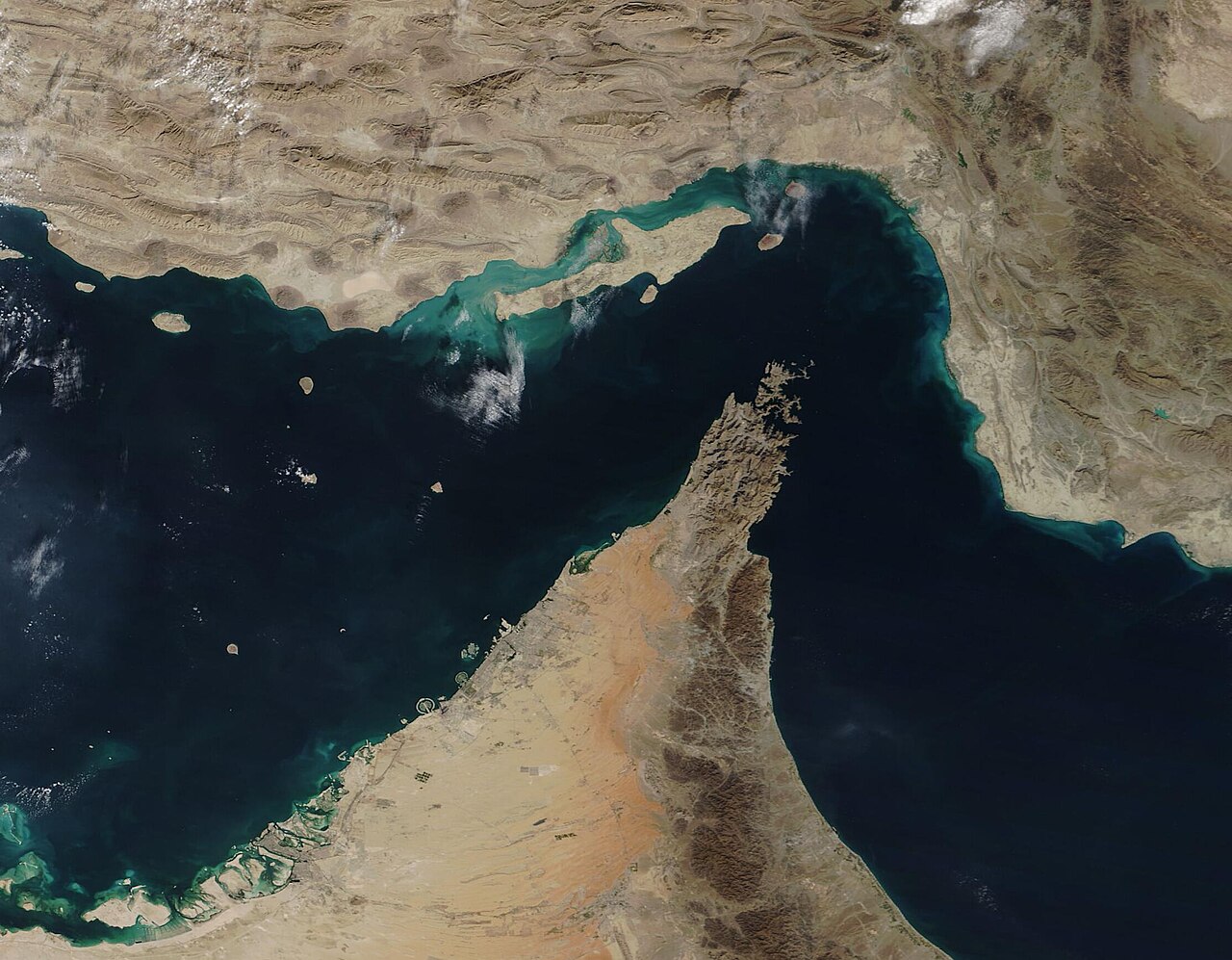
As the military conflict between the U.S.-Israel and Iran escalates and persists, its impact on the economy and financial markets is becoming increasingly evident as geopolitical risks spread. Reports of attacks on oil and gas infrastructure in the Middle East, coupled with Iran’s tightened control over the Strait of Hormuz, are driving a rapid surge in international energy prices. While the U.S. maintains absolute military superiority, Iran’s resilient resistance suggests that there is no immediate resolution in sight. This "black swan" event is now rippling through the global economy and financial systems via energy price transmission, triggering a fresh wave of volatility.
On March 6, WTI crude oil surged 12% intraday, breaking the USD 90 threshold. Brent crude rose approximately 8.5%, reaching USD 92 per barrel. Since the conflict intensified, U.S. WTI crude prices have seen a one-week gain of about 35%. On March 9, international oil prices continued to climb, breaching USD 100/barrel. WTI crude futures once surged over 22% at the opening, hitting a high of USD 111.24/barrel, while Brent crude futures spiked over 19% to peak at USD 110.70/barrel. Furthermore, following attacks on Qatari facilities, relevant LNG production has been suspended. Coupled with the blockade of the Strait of Hormuz, European LNG prices have soared by more than 50%. The escalation and expansion of the U.S.-Iran conflict are driving up traditional energy prices through heightened geopolitical risk. Recently, major OPEC producers, including Qatar, Iraq, and Kuwait, announced production cuts due to disrupted oil transportation. JPMorgan Chase estimates that if restrictions on the Strait of Hormuz persist, daily crude production in the Middle East could drop by more than 4 million barrels. Goldman Sachs recently stated that if flows through the strait remain depressed throughout March, oil prices could surpass the historic peaks of USD 147/barrel seen in 2008 and 2022. Qatari officials estimate that if the conflict continues, crude prices could break USD 150.
Some fear this conflict is triggering a new oil crisis. On the U.S. side, reports suggest a potential easing of sanctions on Russian oil, which, combined with increased domestic production, is an attempt to bridge the supply-demand gap caused by restricted Middle Eastern exports. The International Energy Agency (IEA) recently stated that despite the ongoing tensions and surging prices following U.S.-Israeli strikes on Iran, global crude market fundamentals show that supply "remains sufficient". Furthermore, the U.S. and its allies have not yet moved to release strategic petroleum reserves. Consequently, while the long-term oil market may balance out as other producers ramp up output, the short-term deficit will likely fuel significant price volatility for some time.
Even short-term oil price volatility is unwelcome news for President Donald Trump, who is acutely sensitive to U.S. inflation. Oil and natural gas do not merely impact the cost of gasoline and diesel; their effects ripple through the economy, driving up prices for food and industrial goods. Currently, U.S. consumer prices remain above the 2% inflation target. Fuel prices, in particular, are deeply tied to the political sentiment of American households and could prove to be a decisive factor in the success or failure of the upcoming midterm elections. While the January Consumer Price Index (CPI) rose 2.4% year-over-year and the Producer Price Index (PPI) climbed 2.9%, both showing signs of cooling, the December core Personal Consumption Expenditures (PCE) price index rose 3% year-over-year, indicating persistent inflationary pressure. Until inflation is controlled, it remains the epicenter of U.S. domestic political friction. President Trump has previously clashed with Fed Chair Jerome Powell over interest rate cuts, while the slow decline of inflation has served as the Federal Reserve's primary justification for its reluctance to lower rates. If oil prices cause inflation to rebound, it could severely test the patience and support of American voters.
Alongside sticky inflation, recently released employment data, previously a source of optimism, is now flashing warning signs. According to data released by the U.S. Department of Labor on March 6, nonfarm payrolls fell by 92,000 in February, sharply missing market expectations of a 60,000 gain. Revisions further darkened the picture. January’s job gains were adjusted downward from 130,000 to 126,000, while December’s figures were revised from an original gain of 48,000 to a loss of 17,000. Meanwhile, the U.S. unemployment rate ticked up from 4.3% to 4.4% in February. These downward revisions and the fresh contraction in payrolls suggest that the once-buoyant labor market is now facing a heightened risk of recession. JPMorgan recently noted that the convergence of surging oil prices, which is driven by the Middle East conflict and renewed tariff uncertainties, intertwined with a weakening labor market, has created a "tricky stagflationary backdrop" for the Fed. Goldman Sachs echoed this sentiment, stating that the weaker-than-expected February jobs report is a sign that the U.S. economy may be entering a period of stagflation. This divergence between cooling employment and stubborn inflation will likely make the Fed even more hesitant to commit to interest rate cuts, clouding the economic outlook and fueling fears of a return to the "Stagflation Era" of the 1980s.
Researchers at ANBOUND believe that while this risk is indeed plausible and could disrupt the Fed’s timeline for interest rate cuts, current "stagflation" differs fundamentally from the Cold War era in ways that will lead to very different outcomes. As Professor Li Xiao of Peking University’s School of Economics noted during the Fed’s aggressive tightening cycle in 2023, the contemporary environment is defined by structural characteristics that distinguish it from the 1970s. For one, the global energy landscape has shifted. The U.S. has transitioned from a net importer to a major exporter of petroleum, while OPEC’s grip on Middle Eastern supply has notably weakened. Furthermore, the economic makeup of the U.S. and Europe has evolved through technological revolutions toward service-oriented and highly financialized models. These shifts mean that the mechanics of inflation have changed. Despite President Trump’s "Return of Manufacturing" initiatives, these deep-seated energy and economic structures remain in place, suggesting that the impact of a potential "oil crisis" in the U.S. is limited. Rather than a repeat of the extreme volatility seen in the 1980s, the U.S. is more likely to experience "shallow stagflation".
However, for major economies such as Europe and Japan, the situation is likely to be far more dire. This is especially true for Europe, where energy markets have remained under constant strain since the outbreak of the Russia-Ukraine conflict. To date, Europe has struggled to find a truly effective substitute for Russian energy, and the EU has even discussed the possibility of a total cessation of Russian natural gas imports. This Middle Eastern oil crisis threatens to deal a devastating blow to an already precarious energy supply. Even more concerning is that sluggish demand has already pulled European inflation below the 2% target, yet the underlying economic weakness means this new energy crisis could accelerate the pace of recession. A rebound in inflation would likely drive further capital and manufacturing flight from Europe, deepening the economic downturn into a severe state of "stagflation". Japan also remains heavily reliant on Middle Eastern energy with few immediate alternatives. However, Japan’s overall position appears more resilient than Europe’s, as sustained policy expansion has helped domestic demand continue its recovery. While this oil crisis will inevitably push inflation higher, the Bank of Japan is already in the midst of a rate-hiking cycle; intensifying these hikes could help cool the economy and prevent further divergence in its recovery.
For China, the impact of an oil crisis is more nuanced. While Middle Eastern oil represents a significant portion of its imports, supply from other major partners like Russia remains stable. Furthermore, a degree of "special consideration" from Iran toward Chinese vessels allows China’s domestic oil industry to maintain operations in the short term. However, the long-term strategic outlook favors a U.S.-Israeli victory. Should the U.S. eventually gain tighter control over Middle Eastern and Iranian crude supplies, it would pose a serious challenge to China's energy security. On the other hand, the widespread adoption of various new energy technologies has reduced China’s overall reliance on petroleum as a fuel source. Increasingly, oil is valued more as an industrial raw material than as a primary energy input. Nevertheless, instability in the oil industry creates significant uncertainty for the manufacturing sector, which is detrimental to China’s long-term goal of steady economic growth. Paradoxically, the surge in energy costs could drive up oil prices enough to help alleviate current deflationary pressures. Consequently, for China, the Middle Eastern conflict and the resulting "oil crisis" is not a question of stagflation, but rather a matter of strategic risk management.
Final analysis conclusion:
The escalation of the Middle East conflict has dealt a significant blow to global oil and energy stability, potentially triggering a new oil crisis in the short term. However, unlike the widespread "stagflation" of the 1980s, major economies today face a different landscape of geopolitical risks and economic structures. This divergence suggests that the impact of stagflation will vary by region, adding a layer of complexity to the current crisis. Furthermore, the evolving energy map indicates that the duration of this oil crisis may be relatively limited.
______________
Dr. Wei Hongxu is a Senior Economist of China Macro-Economy Research Center at ANBOUND, an independent think tank.


